
How AI Is Transforming Medical Diagnostics in India — From AIIMS to Rural Villages
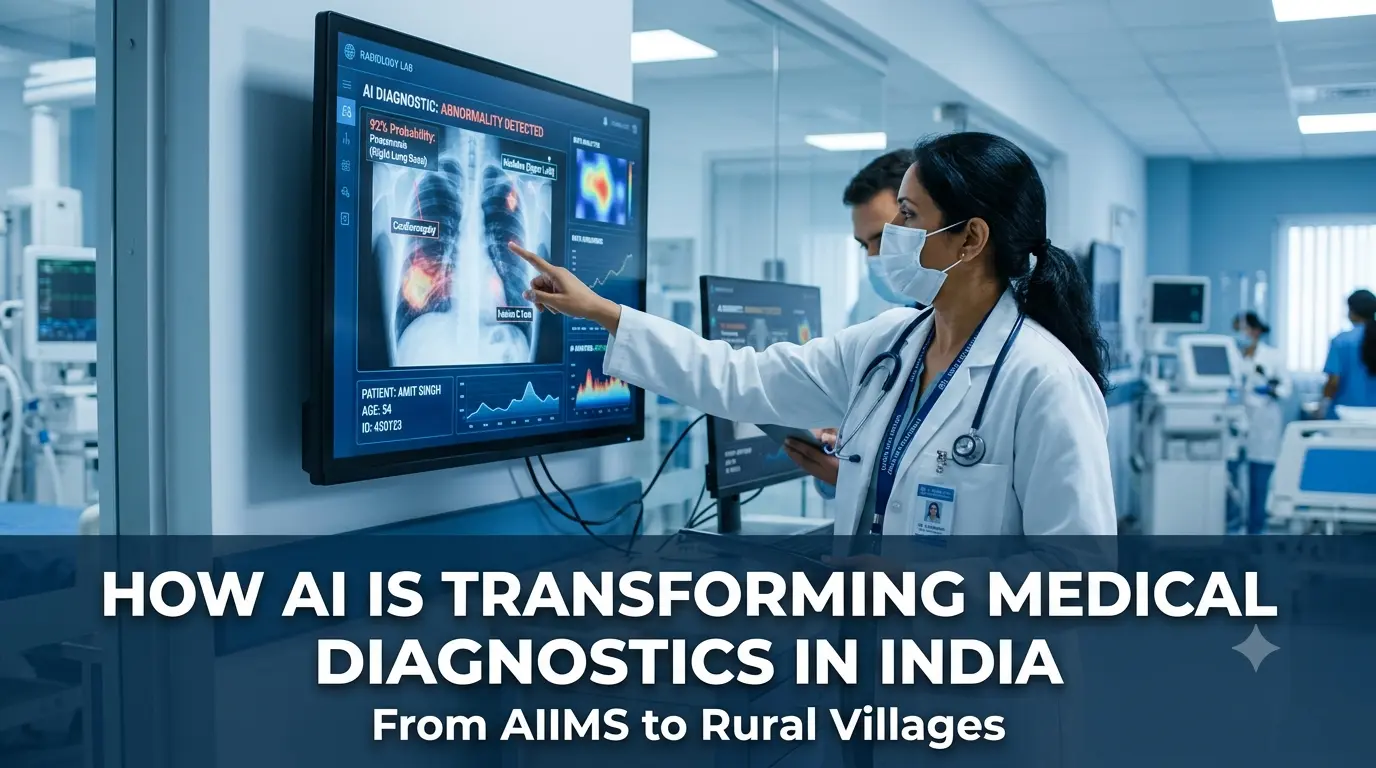
In August 2026, at India Health 2026 held at Bharat Mandapam in New Delhi — India's largest healthcare and medical technology exhibition — Time Medical unveiled something that would have seemed impossible a decade ago: India's first fully Made-in-India CT scanner. The announcement drew attention from over 8,000 healthcare professionals and 300 brands gathered at the three-day event. For a country that has historically imported virtually all its advanced medical imaging equipment, this moment represented a genuine inflection point.
But the CT scanner announcement was only one piece of a much larger transformation happening across Indian healthcare. Artificial intelligence is quietly reshaping how diseases are detected, diagnosed and managed across India — from the imaging suites of AIIMS New Delhi to community health centres in rural Rajasthan. As a pharmaceutical professional, I want to explain what this transformation actually means for Indian patients — not in the language of investor reports or technology press releases, but in terms of real clinical impact on the people who need healthcare most.
The Scale of India's Diagnostic Problem
Before understanding why AI diagnostics matters for India, it helps to understand the scale of the problem it is trying to solve.
India has approximately 0.3 radiologists per 1,00,000 population — compared to the WHO recommendation of 1.2 per 1,00,000. This shortage means that in many district hospitals and primary care centres, imaging studies — chest X-rays, CT scans, ultrasounds — sit unread for days or weeks while patients wait. In cancer diagnostics, where time-to-diagnosis directly affects survival outcomes, these delays are not merely inconvenient. They are life-limiting.
Simultaneously, India's disease burden is expanding in ways that create explosive demand for diagnostic services. The country has 101 million people with diagnosed diabetes — a condition that requires regular retinal screening, kidney function monitoring and cardiovascular assessment. It carries the world's largest tuberculosis burden. Non-communicable diseases including hypertension, heart disease and cancer are rising rapidly across both urban and rural populations. The diagnostic infrastructure available to serve this population was, until recently, entirely inadequate to the task.
This is the problem that artificial intelligence in medical diagnostics is beginning to address — not by replacing doctors, but by extending their reach, accelerating their workflows and enabling diagnostics at points of care that previously had no diagnostic capability at all.
What AI Diagnostics Actually Does — The Technology Explained
Artificial intelligence in medical diagnostics primarily uses deep learning — a form of machine learning that trains algorithms on large datasets of annotated medical images. The algorithm learns to identify patterns associated with specific diagnoses across thousands or millions of examples. Once trained and validated, the algorithm can analyse a new image and produce a diagnostic assessment — often in seconds — that matches or exceeds the accuracy of experienced specialists for specific, well-defined tasks.
This is a critical distinction: current AI diagnostic tools do not replicate the full cognitive complexity of a clinician's assessment. They are powerful, highly specialised tools that perform specific, well-defined tasks with exceptional accuracy. A chest X-ray AI can identify tuberculosis findings, pleural effusion and lung nodules with high sensitivity — but it does not take a clinical history, examine the patient, integrate social context or make treatment decisions. The clinician does that. The AI handles the image analysis component at speed and scale that no human radiologist workforce could match.
🛒 Recommended Product
While hospital-grade AI diagnostics require specialist equipment, personal health monitoring technology has become genuinely accessible. A smartwatch with ECG, SpO2 and continuous heart rate monitoring gives you real-time cardiovascular data — the same parameters that AI clinical decision support systems analyse. Consistent tracking of resting heart rate, oxygen saturation and HRV over time provides meaningful early warning signals for cardiovascular and respiratory changes.
View Smartwatch with ECG on Amazon →Indian Startups Leading the AI Diagnostics Revolution
What makes India's AI diagnostics story particularly compelling is that it is being driven not just by global technology giants but by homegrown Indian startups that understand India's specific healthcare context — the disease burden, the infrastructure constraints, the language diversity and the economic realities of a population where the majority cannot afford premium private healthcare.
Qure.ai — Making TB Detection Accessible Everywhere
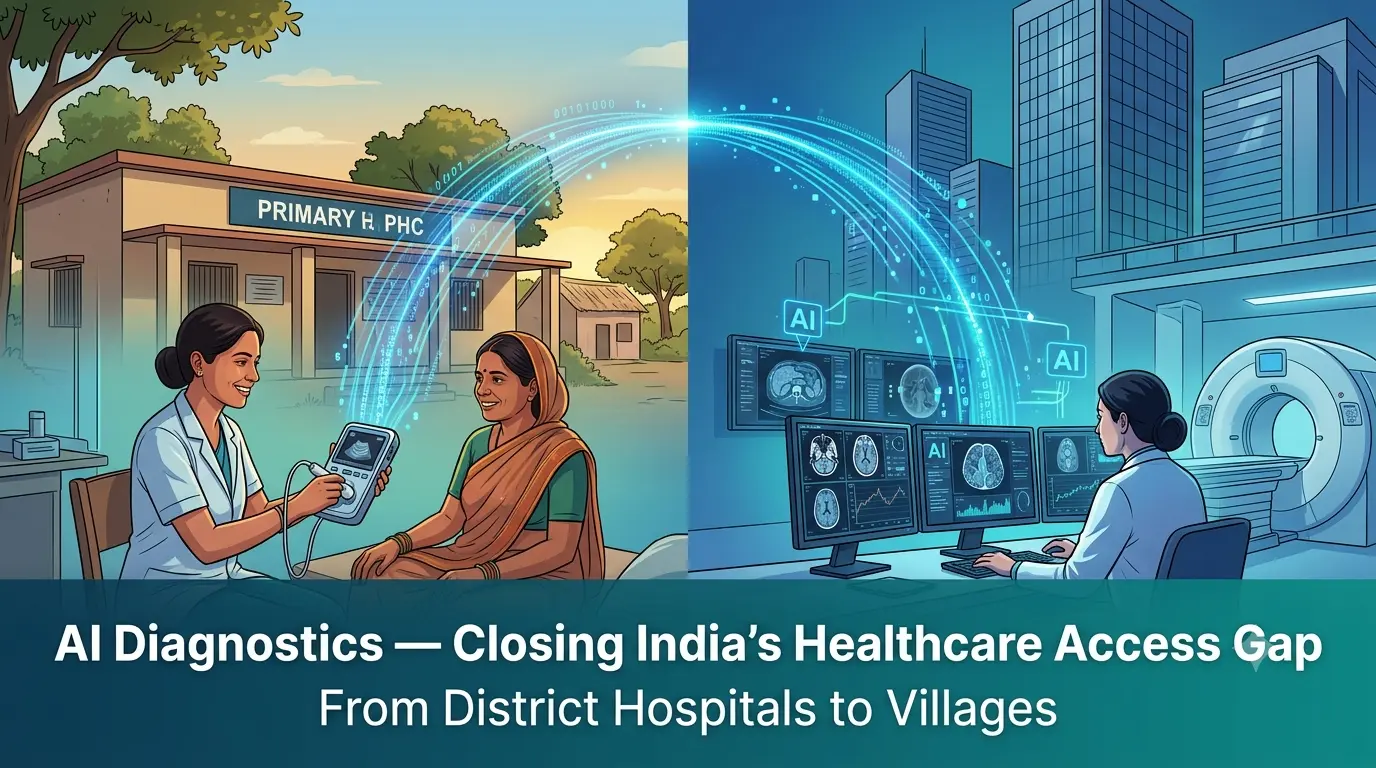
Mumbai-based Qure.ai has developed AI tools for chest X-ray and CT scan interpretation that are now deployed across multiple Indian states and internationally. Its chest X-ray AI — qXR — can detect tuberculosis findings, pneumonia, COVID-19 and other pulmonary conditions with accuracy that has been validated in multiple peer-reviewed studies. The clinical significance in the Indian context is profound: a primary health centre in rural Maharashtra with a basic digital X-ray machine and a tablet connected to Qure.ai's platform can now produce a preliminary diagnostic report within seconds — without a radiologist on site.
The TB application is particularly important. India has approximately 27 lakh new TB cases diagnosed annually. Early detection is the cornerstone of TB control — an undetected TB case means continued transmission in the community. Qure.ai's chest X-ray AI has been deployed in national TB elimination programmes, screening high-risk populations in districts where radiologist access was previously nonexistent. The system has contributed to a measurable improvement in TB detection rates in pilot programmes, with a 27% decline in adverse TB outcomes reported in some deployment areas.
Niramai — Breast Cancer Screening Without Radiation
Bangalore-based Niramai has developed something genuinely novel: a non-invasive, radiation-free AI-powered breast cancer screening solution using thermal imaging. Conventional mammography — the gold standard for breast cancer screening — requires specialist equipment, radiation exposure, a trained radiologist and typically a dedicated screening facility. In India, where breast cancer is the most common cancer in women and late-stage diagnosis dramatically reduces survival outcomes, the barriers to conventional mammography have meant that mass screening has remained largely aspirational.
Niramai's Thermalytix system uses a thermal camera to capture heat distribution patterns across breast tissue — a process that requires no radiation, no specialist technician and no dedicated facility. The AI algorithm analyses the thermal pattern and identifies areas of abnormality warranting further investigation. The system can be deployed in community settings, corporate health camps and rural health centres. It is not a replacement for mammography in women with detected abnormalities, but as a first-level screening tool for the vast majority of Indian women who currently receive no breast cancer screening whatsoever, it represents a meaningful advance in access.
Forus Health and MadhuNetrAI — Diabetic Retinopathy Detection
India has the world's largest diabetes burden — and diabetic retinopathy, the leading cause of preventable blindness, affects a significant proportion of long-standing diabetic patients. Early detection through retinal screening allows timely laser treatment that prevents progression to blindness. However, retinal screening requires fundus imaging equipment and an ophthalmologist — resources unavailable in most primary care settings.
Forus Health's 3Nethra portable fundus camera combined with AI analysis allows retinal screening at the point of care. MadhuNetrAI, developed through a collaboration involving NITI Aayog and Microsoft, has screened over 7,100 diabetic retinopathy patients in community settings. For an Indian diabetic patient living in a Tier 3 city who would otherwise never access retinal screening until vision loss was already significant, this technology represents a genuine improvement in their health trajectory.
India Health 2026 — What the Exhibition Revealed About India's MedTech Future
The India Health 2026 exhibition, concluded in late August at Bharat Mandapam, New Delhi, offered a clear picture of where Indian healthcare technology is heading. With over 300 domestic and international brands and 8,000 attendees — a 38% increase in visitors from the previous edition — the exhibition reflected genuine momentum in India's healthcare technology ecosystem.
Several themes emerged prominently from the three-day event. The Made-in-India CT scanner unveiled by Time Medical was the headline moment, but the underlying story was India's accelerating shift from importing medical technology to manufacturing it domestically. The Andhra MedTech Zone (AMTZ), with 187 manufacturers and 212 startups generating nearly ₹70,000 crore in annual business, represents a genuine domestic industrial base for medical device manufacturing that simply did not exist a decade ago.
AI-enabled clinical decision support, predictive analytics, digital diagnostics and medical imaging were identified as key drivers of change across the exhibition's knowledge sessions. DRGEM Healthcare showcased Raymo — an AI-enabled mobile X-ray system that can be deployed in settings without fixed imaging infrastructure. Faceecho.AI exhibited AI-based visual health screening solutions. The convergence of portable hardware and cloud-based AI interpretation is making diagnostic capabilities mobile in ways that could fundamentally change rural healthcare access.
The government's framework for this transformation is the SAHI (Strengthening of AYUSH, Health, and Innovation) programme and the Ayushman Bharat Digital Mission — which aims to create a unified digital health infrastructure across India that could eventually integrate AI diagnostic outputs with electronic health records, telemedicine platforms and insurance systems.
The eSanjeevani Example — AI-Assisted Telemedicine at Scale
Perhaps the most striking demonstration of what technology-enabled healthcare can achieve in India is eSanjeevani — the government's telemedicine platform. As of 2026, eSanjeevani has facilitated over 282 million consultations across India — making it one of the world's largest telemedicine deployments. AI assistance in triaging, scheduling and clinical decision support within this platform has been central to its ability to scale.
For a patient in a remote district of Odisha who previously had to travel 6 hours to reach a specialist, eSanjeevani combined with AI-assisted diagnostic support at the local health centre represents a qualitative transformation in healthcare access. The technology does not fully substitute for a specialist in-person consultation — but for the majority of primary care presentations, it provides a meaningfully better service than the previous alternative of no specialist access at all.
What This Means for Indian Patients — Practically
The question that matters most for this audience is not the technology itself but its practical implications for how Indian patients experience healthcare. Several things are changing in ways that are worth understanding:
Earlier disease detection is becoming accessible beyond metro cities. AI diagnostic tools deployed at community health centres and primary health centres mean that the first screen for tuberculosis, diabetic retinopathy, cervical cancer and other conditions no longer requires travel to a tertiary hospital. For conditions where early detection dramatically changes outcomes — particularly cancer — this is clinically significant.
Diagnostic turnaround time is reducing. In hospitals where AI tools are integrated into radiology workflows, preliminary assessments of chest X-rays and CT scans are available within seconds rather than days. Urgent findings — intracranial haemorrhage, pulmonary embolism, aortic dissection — can be flagged for immediate clinical attention through AI triage systems, reducing the time-to-treatment for life-threatening conditions.
The accuracy of routine diagnostic tasks is improving. For well-defined diagnostic tasks with abundant training data — chest X-ray interpretation for TB and pneumonia, retinal image analysis for diabetic retinopathy, skin lesion classification — AI systems have demonstrated diagnostic accuracy matching or exceeding that of experienced specialists in controlled studies. This does not mean AI is better than doctors overall — it means that for these specific tasks, AI provides a consistently high-quality second check that catches findings a busy human reviewer might miss.
The cost of some diagnostics is declining. As AI-enabled portable diagnostic tools replace expensive specialist-dependent infrastructure for certain screening tasks, the unit cost of those screenings decreases. This is particularly relevant for mass screening programmes targeting TB, diabetic retinopathy and cervical cancer in high-prevalence populations.
The Honest Limitations — What AI Diagnostics Cannot Do Yet
An honest account of AI diagnostics in India must acknowledge the significant limitations alongside the genuine advances.
AI diagnostic tools perform well on the conditions and image types they are trained on — they generalise poorly to conditions outside their training distribution. An AI trained on chest X-rays from urban Indian hospitals may perform differently on X-rays from rural centres with different equipment quality and patient demographics. Validation in Indian-specific populations and settings remains an active research area, not a solved problem.
Implementation challenges in smaller hospitals and rural facilities remain substantial. Reliable internet connectivity, power supply, trained staff to operate equipment and integrate AI outputs into clinical workflows, and procurement budgets sufficient to acquire these technologies are all prerequisites that many Indian health facilities currently lack.
Data privacy and patient confidentiality in AI healthcare systems remain inadequately regulated in India. The Personal Data Protection framework is still developing, and the standards governing how patient imaging data is stored, processed and used by AI companies need clearer regulatory definition.
Finally, the risk of automation bias — where clinicians over-rely on AI assessments and reduce their own cognitive engagement — is real and documented in international literature. AI diagnostic tools work best when they augment, rather than replace, clinical judgment. Building that culture of appropriate AI use within Indian medical practice requires training and institutional commitment that is still in early stages.
🧠 Final Thoughts
India's AI diagnostics story is genuinely exciting — not because of the technology itself, but because of what it could mean for the hundreds of millions of Indians who currently have inadequate access to diagnostic services. The TB patient in rural Bihar whose chest X-ray is analysed by AI within seconds rather than waiting weeks for a radiologist. The diabetic woman in a Tier 3 town who receives her first retinal screen at a community health camp using a portable fundus camera. The cancer patient whose CT scan is flagged as urgent by an AI triage system before the radiologist's morning round.
These are not hypothetical futures. They are happening now — at scale, across multiple Indian states, through a combination of government programmes, startup innovation and the kind of necessity-driven ingenuity that has always characterised India's approach to healthcare challenges. The India Health 2026 exhibition's Made-in-India CT scanner is a symbol of something larger: India is no longer merely adopting medical technology from elsewhere. It is beginning to define what healthcare technology looks like for the developing world.
References
- IMARC Group. India AI in Medical Diagnostics Market Report 2026-2034. CAGR 25.83%. imarcgroup.com.
- GlobeNewsWire. India's AI in Medical Diagnostics Market 2026-2030: Market Set to Triple in Size. March 2026.
- Exhibition News. India Health 2026 showcases country's expanding MedTech manufacturing. September 2026.
- Business News This Week. India Health 2026 Concludes Successfully. September 3, 2026.
- Lumichats. AI in Healthcare India 2026: From AIIMS to Rural Villages. March 15, 2026.
- Digital Health News. AI-Powered Radiology and Pathology in India: Transforming Medical Imaging and Diagnostics. March 2026.
- Qure.ai. qXR — AI-powered chest X-ray analysis. Clinical validation studies. qure.ai.
- Niramai. Thermalytix — AI-based breast cancer screening. niramai.com.
- NITI Aayog. National Strategy for Artificial Intelligence — Healthcare Applications. Government of India.
- Ministry of Health and Family Welfare. eSanjeevani telemedicine platform. 282 million consultations data. mohfw.gov.in. 2026.
Written by — Dharmil Pandya
Medical Writer | Founder, Healthier Tomorrow
#AIDiagnostics #MedTechIndia #AIHealthcare #HealthierTomorrow #IndianHealthcare #MedicalTechnology #QureAI #Niramai #AIIndia #DigitalHealth