
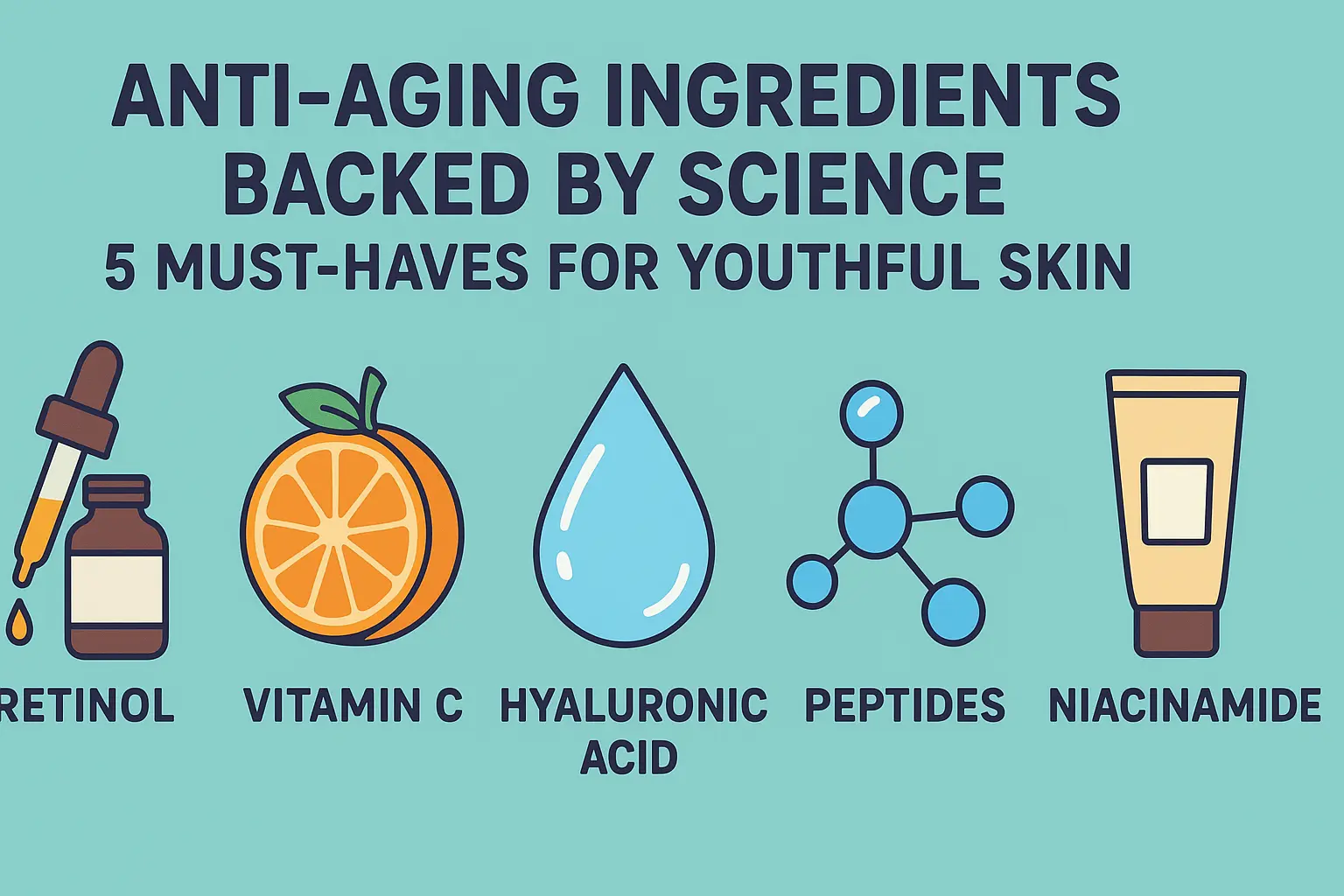
🌟 Anti-Aging Ingredients Backed by Science: 5 Must-Haves for Youthful Skin
Aging is natural—but let’s be honest, no one enjoys spotting new wrinkles in the mirror. That moment often brings self-doubt, nervousness, or even a dip in confidence. But here’s the good news: you don’t need expensive surgeries or harsh chemical peels to maintain a radiant glow.
Science has already given us some powerful, research-backed ingredients that fight signs of aging—naturally and effectively. If you’ve ever wondered which skincare ingredients actually work, keep reading. This blog breaks down how they work, when to use them, and the science that proves they’re worth it.
Let’s dive in! 🚀
1. Retinol: The Gold Standard of Anti-Aging ✨
Why it’s powerful: Retinol, a derivative of Vitamin A, is dermatologists’ #1 recommended ingredient for reducing fine lines and wrinkles.
How & When to Use:
- Start with 2–3 nights per week, gradually building up as your skin adjusts.
- Use a pea-sized amount at night.
- Always apply sunscreen the next morning (retinol makes skin sun-sensitive).
How it Works:
Retinoids boost cell turnover, stimulate collagen, and smooth out wrinkles—leaving skin firmer and more even-toned.
Science Says: Clinical studies show retinoids significantly reduce photoaging. They’re so effective that dermatologists also prescribe them for acne and other skin concerns.
2. Vitamin C: Your Morning Glow Booster 🍊
Why it’s powerful: This antioxidant is a must-have for protecting your skin against pollution and UV damage while keeping it bright and youthful.
How to Use:
- Apply Vitamin C serum in the morning after cleansing.
- Follow with moisturizer and broad-spectrum sunscreen.
How it Works:
- Brightens dull skin & fades dark spots
- Stimulates collagen for firmer skin
- Protects against free radical damage
Science Says: Studies confirm Vitamin C’s ability to improve radiance, fade pigmentation, and defend against sun-induced skin aging.
3. Hyaluronic Acid: The Ultimate Hydration Magnet 💧
Why it’s powerful: This miracle molecule holds up to 1000x its weight in water—instantly plumping and hydrating your skin.
How to Use:
- Apply on damp skin (morning & night).
- Seal with moisturizer to lock in hydration.
- Pairs beautifully with retinol, niacinamide, and Vitamin C.
How it Works:
- Deeply hydrates skin from within
- Smooths fine lines caused by dryness
- Strengthens skin barrier & boosts absorption of actives
Science Says: Hyaluronic acid is naturally found in the body and has been proven to improve elasticity, hydration, and texture.
4. Peptides: The Collagen Builders 🧬
Why it’s powerful: Peptides are tiny chains of amino acids that “talk” to your skin, signaling it to produce more collagen.
How to Use:
- Best in night serums or creams.
- Combine with retinol for amplified results (and less irritation).
How it Works:
- Firms sagging skin
- Softens fine lines
- Enhances repair & resilience
- Strengthens skin barrier
Science Says: Research has shown that certain peptides can improve skin firmness, elasticity, and reduce the appearance of wrinkles. A study published in the International Journal of Cosmetic Science highlighted the ability of specific peptides to increase collagen synthesis in vitro.
5. Niacinamide: The Multi-Tasking Skin Smoother 🌿
Why it’s powerful: Also known as Vitamin B3, niacinamide is a gentle yet effective all-rounder that suits almost every skin type.
How to Use:
- Use daily, AM & PM.
- Pairs well with Vitamin C, hyaluronic acid, peptides, and retinol.
How it Works:
- Strengthens skin barrier
- Regulates oil production
- Reduces inflammation & hyperpigmentation
- Improves uneven tone and fine lines
Science Says: Multiple clinical trials confirm niacinamide’s ability to reduce wrinkles, fade dark spots, and improve overall skin health.
✅ Final Takeaway
Anti-aging isn’t about reversing the clock—it’s about nourishing your skin with the right science-backed ingredients. Retinol, Vitamin C, Hyaluronic Acid, Peptides, and Niacinamide each play a unique role in keeping skin radiant, firm, and healthy.
🌞 Pro Tip: Use Vitamin C + sunscreen in the morning, and Retinol + peptides at night. Keep hyaluronic acid and niacinamide in both routines for hydration and balance.
👉 Want glowing skin that ages gracefully? Start small, stay consistent, and let these science-approved anti-aging heroes work their magic.
🛒 Recommended Product
Retinol is the most evidence-backed topical anti-ageing ingredient available without prescription. The Minimalist 0.3% Retinol serum is a well-formulated, affordable Indian option — start with 0.3% if you're new to retinol, use at night only, and always follow with moisturiser and morning SPF.
View Minimalist Retinol Serum on Amazon →References
- Zasada M, Budzisz E. Retinoids: active molecules influencing skin structure formation. Postepy Dermatol Alergol. 2019;36(4):392-397.
- Pullar JM, et al. The roles of vitamin C in skin health. Nutrients. 2017;9(8):866.
- Choi FD, et al. Oral collagen supplementation: a systematic review of dermatological applications. J Drugs Dermatol. 2019;18(1):9-16.
Written by — Dharmil Pandya
Medical Writer | Founder, Healthier Tomorrow
#anti-aging skincare, #retinol benefits, #vitamin C for skin, #best anti-aging ingredients, #youthful skin tips, #peptides for wrinkles, #hyaluronic acid hydration, #niacinamide skin benefits.
❓ Frequently Asked Questions (FAQs)
1. What is the most effective anti-aging ingredient?
Retinol is considered the gold standard for anti-aging. It boosts collagen production, smooths wrinkles, and improves skin texture with proven results.
2. Can I use Vitamin C and Retinol together?
Yes, but not in the same routine for beginners. Use Vitamin C in the morning and Retinol at night to maximize benefits and minimize irritation.
3. Is Hyaluronic Acid safe for daily use?
Absolutely! Hyaluronic acid is gentle, hydrating, and safe to use both morning and night—even for sensitive skin types.
4. Do peptides really reduce wrinkles?
Yes. Clinical research shows peptides stimulate collagen and improve skin firmness, reducing the appearance of fine lines over time.
5. Is Niacinamide suitable for sensitive skin?
Yes, niacinamide is one of the most well-tolerated ingredients. It reduces redness, improves barrier function, and works well with other actives.
6. How long does it take to see results with anti-aging skincare?
Most people notice improved texture and hydration in 4–6 weeks, but visible reduction in wrinkles and firmness may take 2–3 months with consistent use.