
Antifungal Resistance — India's Forgotten Health Crisis That's Getting Worse
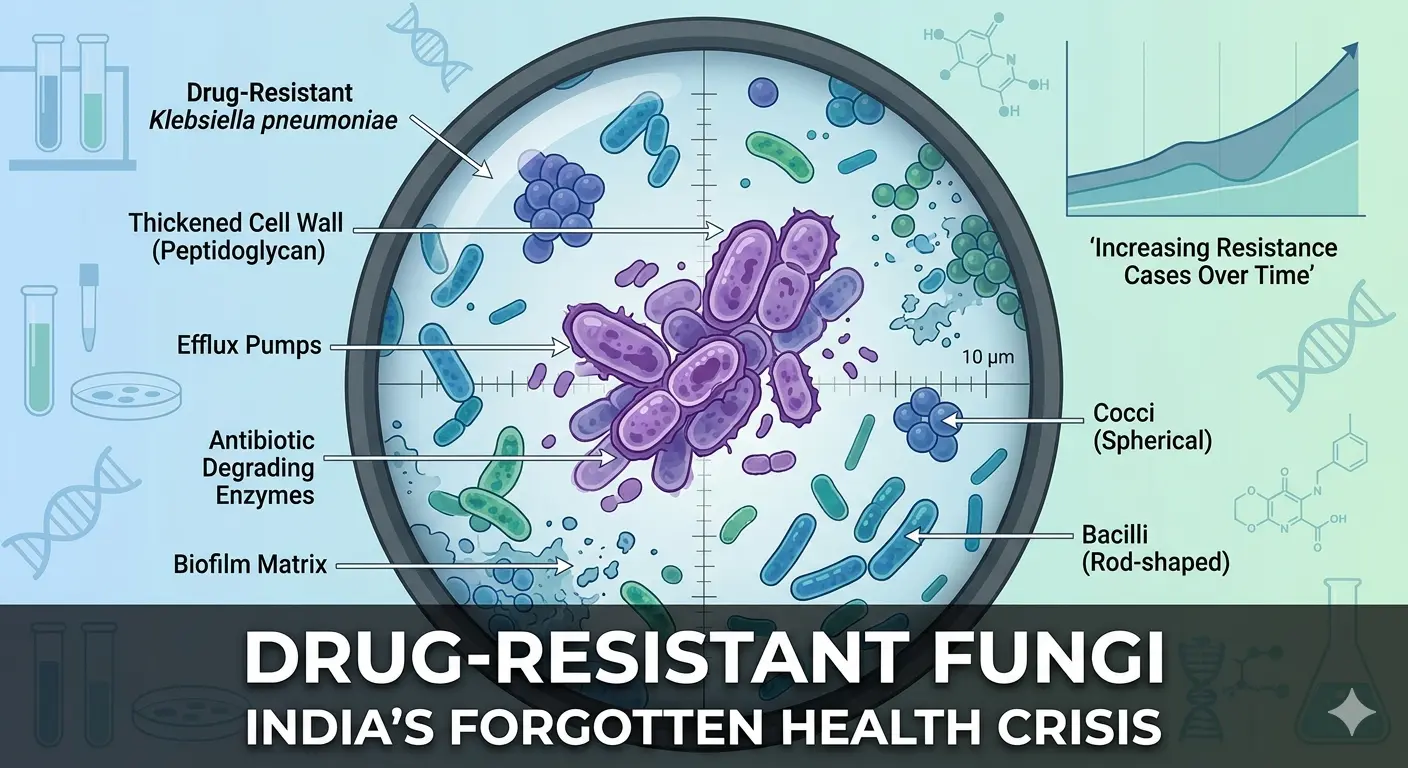
When we talk about drug resistance in India, most people think of antibiotic-resistant bacteria — superbugs like MRSA or drug-resistant tuberculosis. These are serious and rightly receive attention.
But there is another resistance crisis quietly growing — one that receives far less attention and poses equally serious risks, particularly for vulnerable populations.
Antifungal resistance.
A team of researchers led by medical microbiologist Paul Verweij at Radboud University Medical Center announced in June 2026 that an increasing number of fungi are becoming resistant to the medications used to treat them — posing serious risks for patients with weakened immune systems worldwide.
For India specifically, this warning carries particular weight.
What Are Fungal Infections?
Fungi are everywhere in our environment — in soil, air, water and on our skin. Most of the time, a healthy immune system keeps them in check without us even noticing.
Problems arise in two scenarios:
- Superficial fungal infections affect the skin, nails and mucous membranes. These are extremely common in India — ringworm, athlete's foot, oral thrush, vaginal candidiasis and nail fungus. Most Indians have experienced at least one of these in their lifetime.
- Invasive fungal infections occur when fungi enter the bloodstream or internal organs. These are far more serious and primarily affect people with weakened immune systems — cancer patients on chemotherapy, organ transplant recipients, people with uncontrolled diabetes, HIV patients, and those on long-term steroids or immunosuppressants.
Invasive fungal infections carry mortality rates of 20-95% depending on the fungus and the patient's condition — making antifungal resistance a genuinely life-threatening development.
Why India Is Particularly Vulnerable
India faces a unique combination of factors that make antifungal resistance especially concerning:
Climate and environment
India's warm, humid climate creates ideal conditions for fungal growth. Monsoon seasons in particular dramatically increase environmental fungal exposure — especially in agricultural communities.
The COVID-19 legacy — Mucormycosis
India experienced the world's largest outbreak of mucormycosis — the deadly "black fungus" — during the COVID-19 second wave in 2021. This outbreak was driven by injudicious steroid use and poorly controlled diabetes in COVID patients. It exposed how serious invasive fungal infections can be and how rapidly resistance can emerge under treatment pressure.
Widespread inappropriate antibiotic use
This is a critical and often misunderstood connection. Antibiotics kill bacteria — including the beneficial bacteria that normally compete with and suppress fungal growth in our bodies. When antibiotics are overused — as they frequently are in India — this protective bacterial competition is disrupted, allowing fungi like Candida to overgrow and cause infection. And if antifungals are then also misused to treat these infections, resistance emerges.
Over-the-counter antifungal availability
In India, many antifungal creams, tablets and shampoos are available without prescription. People self-medicate for skin infections — often using inadequate doses for insufficient durations. This is a textbook pathway to developing resistance. A fungus exposed to sub-lethal concentrations of antifungal medication doesn't die — it adapts and develops resistance.
High burden of diabetes
Uncontrolled diabetes significantly impairs immune function, making diabetic patients far more susceptible to invasive fungal infections. With 77 million diabetics in India — and many with poor glucose control — the population at risk is enormous.
The Three Main Types of Antifungal Drugs
As a pharma professional, understanding the antifungal drug classes helps explain why resistance is so serious:
- Azoles — including fluconazole, itraconazole and voriconazole — are the most widely used antifungals. They work by disrupting the fungal cell membrane. Azole resistance in Candida and Aspergillus species is already documented in India and is growing.
- Echinocandins — including caspofungin and micafungin — are the preferred treatment for severe Candida infections. Echinocandin resistance, while less common, is increasing and is particularly worrying because this is often the last line of treatment.
- Polyenes — including amphotericin B — are among the oldest and most powerful antifungals. They are highly effective but toxic and require hospital administration. When azoles and echinocandins both fail, amphotericin B is often the only remaining option.
When fungi develop resistance across multiple drug classes — a situation called multi-drug resistant fungal infection — treatment options become extremely limited and mortality rates climb dramatically.
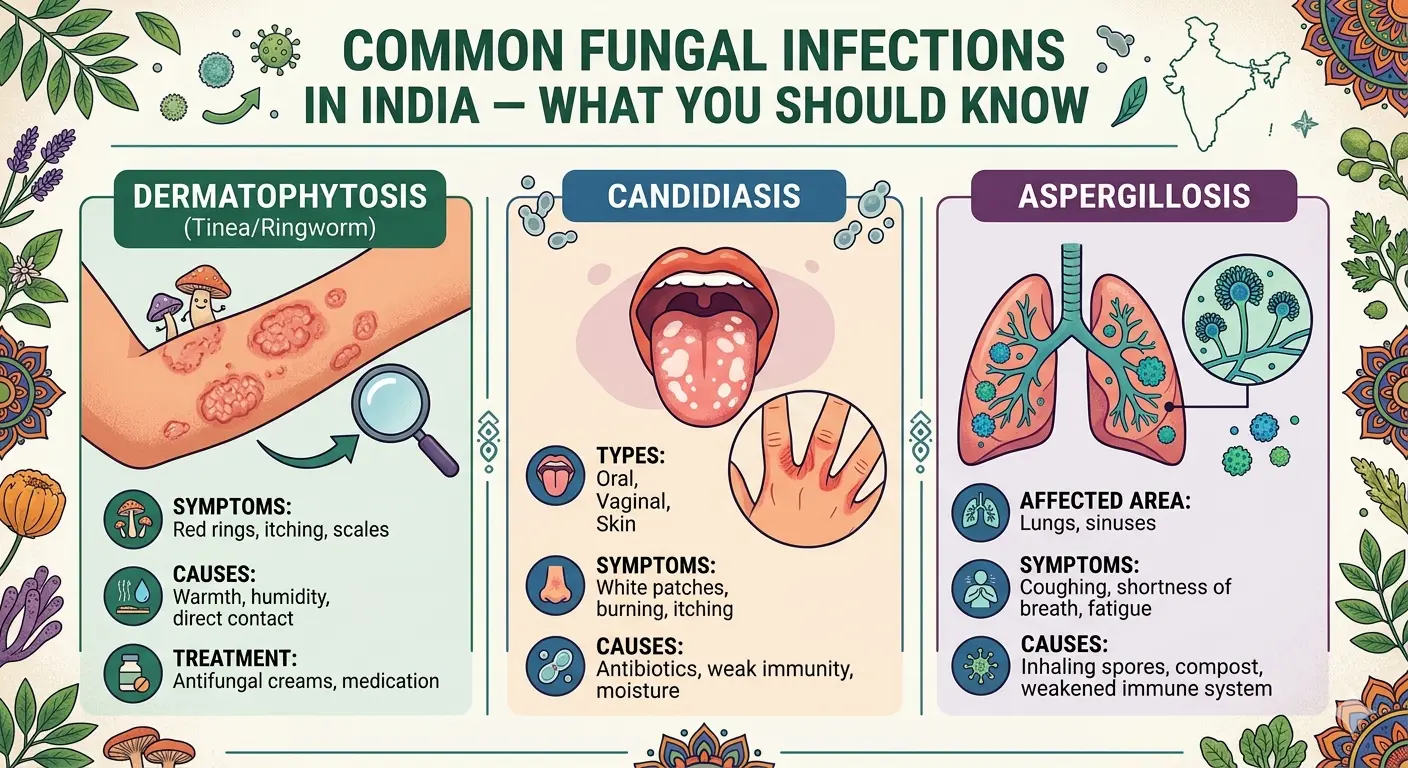
Common Fungal Infections in India — What You Should Know
Dermatophytosis (Tinea/Ringworm)
India is facing an epidemic of chronic, treatment-resistant dermatophytosis — particularly Tinea corporis (ringworm of the body) and Tinea cruris (groin area). A new resistant species, Trichophyton indotineae, has emerged in India and is already spreading globally. This species shows high-level resistance to terbinafine — the standard first-line antifungal cream used for ringworm.
Many Indians are unknowingly fuelling this resistance by:
- Using steroid-antifungal combination creams (like Quadriderm) long-term
- Stopping treatment as soon as symptoms improve rather than completing the course
- Sharing towels, clothing and bedding with infected individuals
Candidiasis
Candida infections affecting the mouth, throat, gut and genitals are extremely common in India, particularly in diabetics, antibiotic users and immunocompromised individuals. Drug-resistant Candida auris — designated a globally urgent threat by the CDC — has been detected in Indian hospitals.
Aspergillosis
Aspergillus moulds are abundant in Indian soil and agricultural environments. In immunocompromised patients, Aspergillus can cause life-threatening lung and systemic infections. Azole-resistant Aspergillus fumigatus has been detected in Indian agricultural soil — likely driven by widespread agricultural use of azole fungicides that share mechanisms with medical antifungals.
What You Can Do — Practical Prevention
For skin fungal infections:
- Keep skin clean and dry — especially skin folds, groin and feet
- Change inner clothing daily — cotton is preferable to synthetic fabrics in India's climate
- Never share towels, combs or clothing
- If you develop a skin rash — see a dermatologist rather than self-medicating with combination steroid-antifungal creams
- Complete your full course of antifungal treatment even if symptoms resolve early
For preventing invasive infections:
- Control your blood sugar — poorly controlled diabetes is the single biggest risk factor for serious fungal infections
- Use antibiotics only when prescribed by a doctor — overuse disrupts your protective bacterial flora
- If you are immunocompromised — discuss antifungal prophylaxis with your physician
- Wear masks in dusty agricultural or construction environments — particularly during and after monsoon
Regarding steroid-antifungal combination creams:
This is extremely important. Creams like Quadriderm and Candid-B — which combine a steroid with an antifungal — are widely misused in India for skin rashes. The steroid component reduces inflammation and makes the rash look better quickly — but it also suppresses the immune response that fights the infection. Long-term use of these combination creams is directly fuelling the epidemic of resistant dermatophytosis in India.
Use these creams ONLY as prescribed by a qualified dermatologist — not for self-treatment of any skin rash.
🛒 Recommended Product
A probiotic supplement supports the gut microbiome balance that helps prevent opportunistic fungal overgrowth — particularly relevant after antibiotic use, which disrupts the bacterial environment that normally keeps Candida in check. Multi-strain Lactobacillus supplements are the most studied for this purpose.
View Probiotic Supplement on Amazon →The Bigger Picture
Antifungal resistance is a global problem — but India's unique combination of climate, healthcare access patterns, diabetes burden and antibiotic overuse makes it a particularly urgent concern here.
The solution requires action at multiple levels — regulatory, medical and individual. As India's drug regulators work to restrict inappropriate combination products and improve surveillance, each individual can contribute by using antifungals responsibly, completing treatment courses, and seeking professional medical advice rather than self-medicating.
Your skin rash may seem minor. But how you treat it today has implications for the resistance patterns that affect all of us tomorrow.
References
- Chakrabarti A, et al. Antifungal drug resistance in Asia. Lancet Infect Dis. 2021;21(12):e350-e360.
- Pfaller MA, Diekema DJ. Epidemiology of invasive candidiasis. Clin Microbiol Rev. 2007;20(1):133-163.
- WHO. Fungal priority pathogens list. Geneva: WHO; 2022.
Written by — Dharmil Pandya
Medical Writer | Founder, Healthier Tomorrow
#AntifungalResistance #Superbugs #PublicHealthIndia #PharmaInsights #HealthAwareness