
Anxiety in India Has Risen 123% — The Crisis Nobody Is Talking About
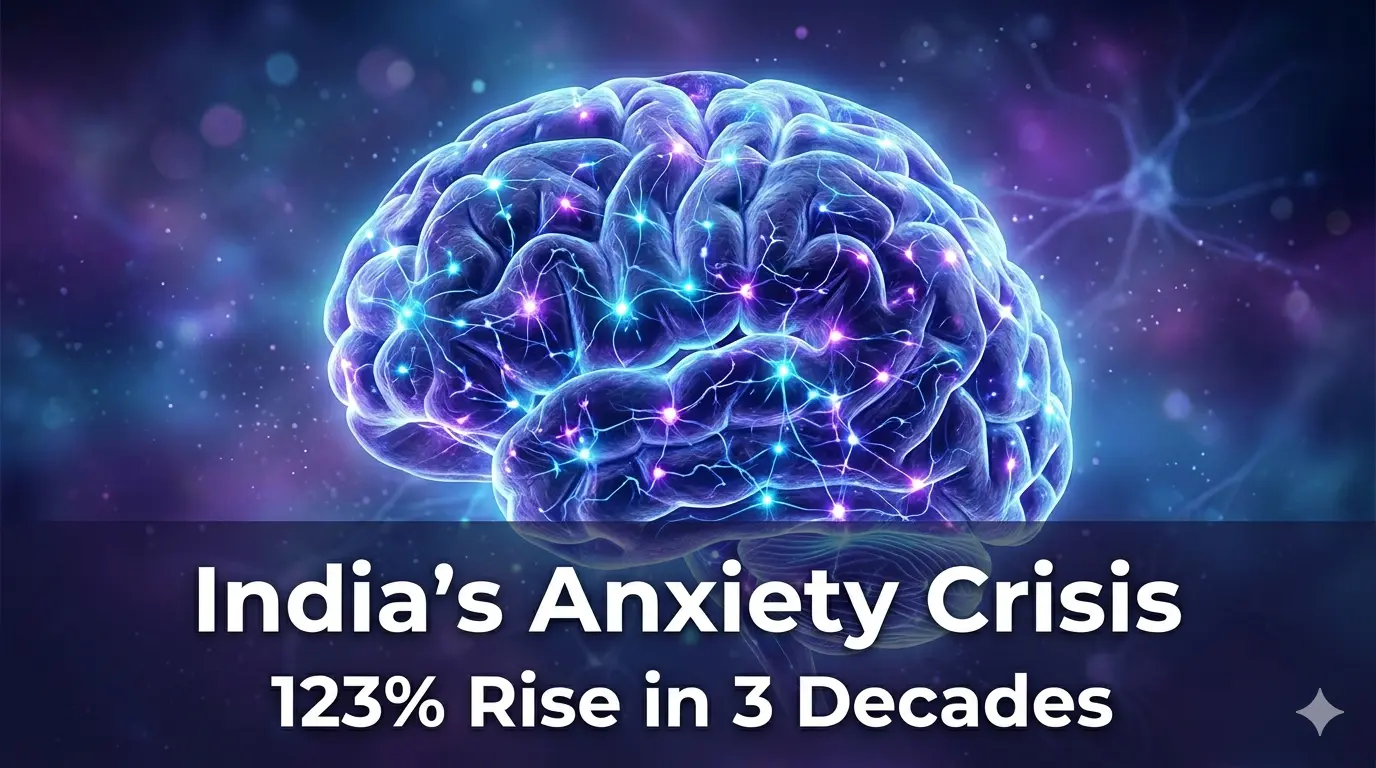
India is facing a mental health crisis of unprecedented scale — and most of us don't even realise it.
A major new analysis from the Global Burden of Disease Study, published in The Lancet, has revealed a deeply alarming reality: anxiety disorders in India surged by 123% between 1990 and 2023. Major depressive disorder rose from 2,147 to nearly 2,800 cases per lakh population during the same period.
South Asia — and India specifically — was identified as one of the regions experiencing the largest growth in mental health burden globally. Among women and girls, the situation is even more severe, with disability-adjusted life year rates increasing by 44.2% in just three decades.
These are not just statistics. These are your colleagues, your neighbours, your family members — and perhaps even you.
What Is Anxiety — Really?
Anxiety is one of the most misunderstood conditions in India. Most people dismiss it as "overthinking" or "being too sensitive." But anxiety is a recognised medical condition with measurable biological changes in your brain and body.
When you experience anxiety, your brain's amygdala — the region responsible for processing fear — becomes hyperactive. It sends distress signals that trigger your body's fight-or-flight response even when there is no real threat. Your heart rate rises, your breathing quickens, your muscles tense, and your body floods with cortisol and adrenaline.
In the short term, this response is protective. In the long term, when it becomes chronic — it is deeply damaging to your physical and mental health.
Anxiety is not a character flaw. It is a neurological response that, in many cases, becomes dysregulated due to a combination of genetic, environmental and lifestyle factors.
Why Is Anxiety Exploding in India?
Several interconnected factors are driving India's mental health crisis:
Rapid urbanisation and lifestyle changes
India's shift from rural, community-based living to urban, isolated lifestyles has happened faster than any society can healthily adapt to. The joint family system — which provided built-in emotional support — is rapidly dissolving in cities. People are living alone, working longer hours, and spending less time in meaningful human connection.
Social media and digital overload
India now has over 850 million internet users. The average Indian spends more than 7 hours daily on screens. Social media creates constant comparison, fear of missing out, and dopamine dysregulation — all of which are directly linked to anxiety and depression.
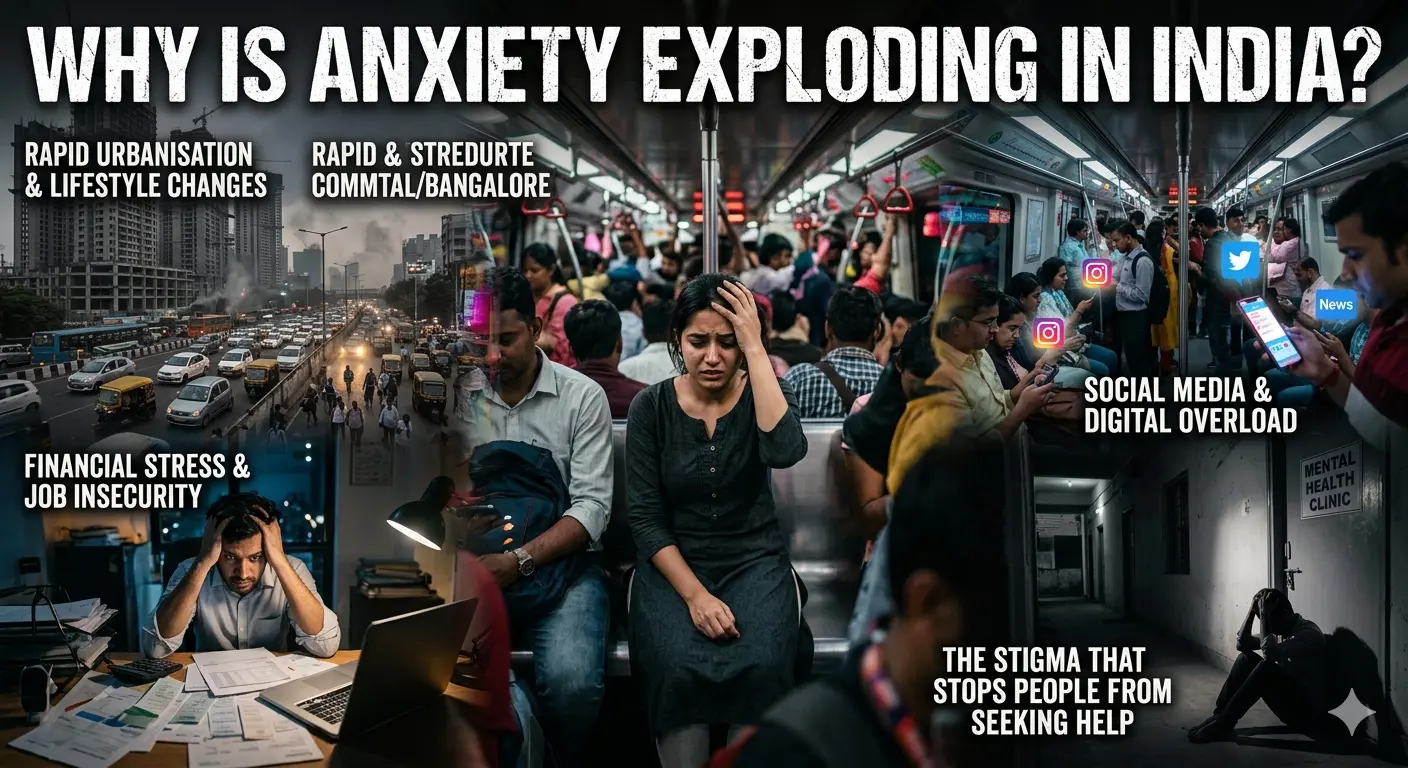
Financial stress and job insecurity
Rising cost of living, competitive job markets, educational pressure and economic uncertainty create a chronic background hum of financial anxiety that affects hundreds of millions of Indians daily.
The stigma that stops people from seeking help
Perhaps most damaging of all — India's deep cultural stigma around mental health means that the vast majority of people suffering from anxiety never seek professional help. They suffer in silence, self-medicate with alcohol or substance use, or are told to simply "pray more" or "think positive."
According to the World Health Organisation, India has fewer than 0.3 psychiatrists per 100,000 people — one of the lowest ratios in the world.
How Anxiety Affects Your Body — Not Just Your Mind
This is something your pharma background can help you understand clearly — anxiety is not just a mental condition. It has profound physical consequences:
- Cardiovascular impact: Chronic anxiety significantly raises the risk of hypertension and heart disease. The constant cortisol release damages blood vessel walls over time.
- Immune suppression: Prolonged stress hormones suppress immune function — making you more susceptible to infections, slower to heal, and more vulnerable to autoimmune conditions.
- Digestive disruption: The gut-brain axis means anxiety directly affects your digestive system — causing irritable bowel syndrome, acid reflux, bloating and chronic stomach discomfort.
- Sleep destruction: Anxiety and insomnia feed each other in a vicious cycle. Poor sleep worsens anxiety. Anxiety worsens sleep. Both together accelerate physical aging and cognitive decline.
- Hormonal disruption: Chronic cortisol elevation disrupts thyroid function, reproductive hormones, and insulin sensitivity — directly contributing to PCOS, thyroid disorders and metabolic disease.
Signs You May Have Anxiety — Not Just Stress
Normal stress resolves when the stressor goes away. Anxiety persists even when the threat is gone or isn't clearly identifiable.
Watch for these signs:
- Persistent worry that is difficult to control
- Physical tension — tight shoulders, jaw clenching, headaches
- Irritability that feels out of proportion
- Difficulty concentrating or remembering things
- Avoiding situations that trigger worry
- Sleep disturbances — difficulty falling or staying asleep
- Racing heartbeat or shortness of breath without physical cause
- Constant feeling that something bad is about to happen
If you experience five or more of these regularly — please speak to a mental health professional. This is not weakness. This is wisdom.
🛒 Recommended Product
Ashwagandha has the strongest evidence base of any herbal supplement for anxiety reduction in India — with multiple randomised controlled trials showing significant cortisol reduction and improved stress scores. Standardised KSM-66 root extract at 300-600mg daily is the evidence-supported dose.
View Ashwagandha Supplement on Amazon →What Actually Helps — Evidence-Based Approaches
Cognitive Behavioural Therapy (CBT)
CBT is the most extensively researched psychological treatment for anxiety and has the strongest evidence base of any therapeutic approach. It helps you identify and challenge the thought patterns driving your anxiety. Available through psychiatrists and clinical psychologists.
Regular physical exercise
Exercise is one of the most powerful natural treatments for anxiety. It reduces cortisol, releases endorphins and improves brain-derived neurotrophic factor (BDNF) — a protein that literally grows new neural pathways. Even 30 minutes of brisk walking daily produces measurable anxiety reduction within 4-6 weeks.
Pranayama and mindfulness
Controlled breathing directly activates the parasympathetic nervous system — your body's "rest and digest" mode. Specific practices like Anulom Vilom, Bhramari and box breathing have been shown in studies to significantly reduce anxiety symptoms within weeks of regular practice.
Sleep hygiene
Fixing your sleep is often the fastest way to reduce anxiety. Consistent sleep and wake times, eliminating screens before bed, and keeping your bedroom cool and dark can produce dramatic improvements in anxiety levels within 2-3 weeks.
Reducing caffeine and ultra processed foods
Caffeine directly stimulates your nervous system and can significantly worsen anxiety — especially in sensitive individuals. Ultra processed foods cause blood sugar instability and inflammation that amplify anxious feelings.
Medication — when appropriate
For moderate to severe anxiety, medication prescribed by a qualified psychiatrist can be genuinely life-changing. SSRIs, SNRIs and other medications are safe and effective when properly prescribed and monitored. There is no shame in taking medication for a medical condition.
A Note on Seeking Help in India
Finding mental health support in India has become easier in recent years:
- iCall — free counselling service by TISS Mumbai: 9152987821
- Vandrevala Foundation — 24/7 helpline: 1860-2662-345
- NIMHANS — National Institute of Mental Health, Bengaluru
- Employee Assistance Programmes — many Indian corporates now offer free therapy sessions
Online platforms like Practo, 1to1help and YourDost provide affordable, confidential therapy from verified professionals.
The Bottom Line
India's 123% rise in anxiety is not a sign of weakness in our people. It is a sign of systems — social, economic, digital — that are changing faster than human beings can adapt to.
But anxiety is not a life sentence. It is a treatable condition. And acknowledging it is the first and most important step.
If you are struggling — please reach out. To a professional, to a trusted friend, to a family member. You do not have to carry this alone.
Written by — Dharmil Pandya
Medical Writer | Founder, Healthier Tomorrow
References
- Gururaj G, et al. National Mental Health Survey of India 2015-16. Bengaluru: NIMHANS; 2016.
- Patel V, et al. The burden of mental disorders across the states of India. Lancet Psychiatry. 2016;3(12):1117-1124.
- WHO. Mental health atlas 2020. Geneva: WHO; 2021.
Written by — Dharmil Pandya
Medical Writer | Founder, Healthier Tomorrow
#AnxietyIndia #MentalHealthCrisis #TheLancet #Psychology #WellnessJourney #BreakTheStigma #IndianHealth #Mindfulness