
Ayurveda and Mental Health — The Ancient Science of Mind That Modern Psychiatry Is Finally Validating
In February 2026, something significant happened at the Dubai World Trade Centre that most Indians did not hear about.
The 3rd International AYUSH Conference and Exhibition 2026 opened with the theme "Evidence-Based AYUSH Interventions in Mind-Body Health." More than 120 exhibitors from across the AYUSH sector participated, with India's Minister of State for AYUSH stating that India's traditional knowledge systems are now playing a key role in global health discussions — offering holistic and evidence-based solutions focused on harmony between body, mind and the environment.
This conference represented a watershed moment — not because Ayurveda suddenly became new, but because the global medical establishment is finally developing the research infrastructure to evaluate, validate and integrate what Ayurveda has always understood about mental health.
A landmark study estimated that 197.3 million Indians — roughly 1 in 7 people — were living with mental disorders, with the contribution of mental disorders to India's total disease burden doubling between 1990 and 2017. This is among the largest unaddressed mental health gaps in the world.
India is simultaneously home to the world's oldest and most sophisticated system of mind-body medicine — and one of the world's largest unaddressed mental health crises. The convergence of these two realities is the most important story in Indian healthcare in 2026.
As someone from the pharmaceutical field who deeply values evidence-based medicine — I want to give you an honest, rigorous examination of what Ayurveda actually says about mental health, what modern research has validated and where the genuine opportunities lie for Indians navigating this crisis.
Ayurveda's Understanding of the Mind — 5,000 Years Ahead
To appreciate why Ayurveda's approach to mental health is attracting serious scientific attention, you must first understand how profoundly different — and how remarkably sophisticated — its conceptual framework is.
Modern psychiatry, for most of its history, has operated on a disease-symptom-medication model. You have a diagnosis (major depressive disorder, generalised anxiety disorder, schizophrenia). The diagnosis maps to a symptom cluster. The symptom cluster maps to a pharmacological intervention. The goal is symptom reduction.
This model has produced genuinely life-saving treatments. But it has significant limitations — particularly in explaining why the same diagnosis produces radically different presentations in different people, why the same medication works in some patients and not others and why biological factors alone cannot explain the full picture of mental illness.
Ayurveda took an entirely different approach — one that modern systems neuroscience and psychoneuroimmunology are now converging toward from the opposite direction.
The Tridosha framework applied to mind:
Ayurveda's understanding of mental health is grounded in the tridosha system — the three biological energies of Vata, Pitta and Kapha — applied not just to physical health but to psychological function.
- Vata — the energy of movement, air and space — when balanced produces creativity, enthusiasm, adaptability and clear communication. When imbalanced, it produces anxiety, fear, racing thoughts, insomnia, restlessness and difficulty concentrating. The Vata-dominated mind is never still — always moving, planning, worrying.
- Pitta — the energy of transformation, fire and water — when balanced produces intelligence, courage, leadership, discipline and clarity. When imbalanced, it produces irritability, anger, perfectionism, criticism, inflammation and burnout. The Pitta-dominated mind burns brightly — and can burn out just as quickly.
- Kapha — the energy of structure, earth and water — when balanced produces calmness, loyalty, patience, love and groundedness. When imbalanced, it produces depression, lethargy, attachment, resistance to change and emotional heaviness. The Kapha-dominated mind moves slowly — and can become immovably stuck.
Why this framework is scientifically interesting:
While the tridosha system uses language that sounds archaic to modern ears, the psychological profiles it describes map remarkably well onto contemporary personality and psychopathology frameworks. The Vata-dominant anxiety pattern correlates with what neuroscience understands as hyperactive amygdala response, elevated noradrenaline tone and reduced GABA-mediated inhibition. The Pitta pattern of anger and burnout maps to elevated cortisol and inflammatory cytokine profiles. The Kapha depression pattern maps to reduced dopamine and serotonin neurotransmission, elevated inflammatory markers and HPA axis dysregulation.
These are not coincidences. They reflect millennia of careful clinical observation producing empirically derived descriptions of genuine psychophysiological patterns — using a different vocabulary than modern medicine but describing the same underlying biological realities.
The Three Gunas — Ayurveda's Model of Mental Quality
Beyond the doshas, Ayurveda describes mental health through three fundamental qualities of mind called the Trigunas:
- Sattva — clarity, balance, wisdom, compassion, contentment. Sattvic mental states are associated with optimal psychological function — equanimity, clear perception, good judgment and genuine happiness that is not dependent on external circumstances.
- Rajas — activity, passion, desire, ambition, agitation. Rajasic mental states drive action and accomplishment but also create restlessness, desire, competition, stress and the inability to be still. Moderate rajas is necessary for functioning in the world — excess rajas produces anxiety, exhaustion and chronic discontent.
- Tamas — inertia, heaviness, resistance, delusion, attachment. Tamasic mental states manifest as depression, lethargy, confusion, denial and an inability to change or grow. Some tamas is necessary for rest — but chronic tamas produces significant psychological suffering.
The modern neuroscience parallel:
The Sattvic-Rajasic-Tamasic progression maps elegantly onto what neuroscience describes as default mode network function, autonomic nervous system balance and prefrontal cortex regulation.
A Sattvic mind — in neuroscientific terms — is characterised by high prefrontal cortex activity governing executive function, low amygdala reactivity, good heart rate variability reflecting parasympathetic tone and balanced default mode network activity (the reflective, self-referential brain network active in meditation and contemplative states).
A Rajasic mind reflects sympathetic nervous system dominance, elevated cortisol and dopamine drive, high amygdala reactivity and difficulty activating the prefrontal "braking" system.
A Tamasic mind reflects the neurobiological features of depression — reduced monoamine neurotransmission, elevated inflammatory cytokines, disrupted circadian rhythms and reduced neuroplasticity.
Ayurveda's entire therapeutic approach to mental health involves cultivating Sattva — through diet, lifestyle, practice and relationship — while reducing excess Rajas and Tamas. Modern evidence-based lifestyle psychiatry is pursuing exactly this goal through the lens of neuroscience, arriving at remarkably similar practical recommendations through an entirely different conceptual route.
Ayurvedic Herbs for Mental Health — What the Evidence Shows
This is where pharma professional credibility is most needed — because the quality of evidence for Ayurvedic mental health herbs varies enormously, and honest evaluation requires distinguishing between genuinely validated compounds and those with only traditional use to support them.
Ashwagandha (Withania somnifera) — The Most Validated
Ashwagandha is now one of the most extensively researched Ayurvedic herbs in modern clinical science — with a quality of evidence that genuinely meets contemporary standards for meaningful therapeutic claims.
- Anxiety: A randomised, double-blind, placebo-controlled trial published in Medicine found that 240mg of standardised Ashwagandha extract daily for 60 days produced a 41% reduction in perceived stress scores and a 23% reduction in cortisol levels compared to placebo. Multiple subsequent trials have replicated these findings with consistent effect sizes. The mechanism involves withanolides — the active compounds in Ashwagandha — which modulate GABA receptor activity (the same receptors targeted by benzodiazepine anti-anxiety medications, but through a gentler, non-addictive mechanism) and reduce HPA axis reactivity.
- Depression: A meta-analysis of randomised controlled trials found Ashwagandha significantly reduced depression scores compared to placebo, with effect sizes comparable to mild antidepressant medications. The proposed mechanism includes its effects on serotonin and dopamine receptor sensitivity and its reduction of the inflammatory cytokines that drive inflammatory depression.
- Cognitive function: Ashwagandha has demonstrated improvements in memory, processing speed and attention in multiple clinical trials — relevant for the cognitive symptoms of both anxiety and depression. The mechanism involves its pro-neuroplasticity effects — increasing BDNF and promoting neurogenesis in the hippocampus.
Important practical notes: Not all Ashwagandha products are equivalent. Standardised root extracts (KSM-66 and Sensoril are the two most clinically validated proprietary extracts) at doses of 300-600mg daily produce the effects shown in clinical trials. Leaf extracts, unstandardised powders and low-dose products may not produce comparable effects. Ashwagandha is contraindicated in pregnancy and should be used cautiously with thyroid medications and immunosuppressants.
Brahmi (Bacopa monnieri) — The Memory and Anxiety Herb
Brahmi has been used in Ayurveda specifically for cognitive enhancement and anxiety since at least the 6th century BCE — remarkably, it was used for exactly the conditions that modern research is now validating it for.
- Anxiety: Multiple randomised controlled trials have demonstrated significant reductions in anxiety, heart rate and blood pressure with standardised Brahmi extract (300mg daily of extract standardised to 55% bacosides) over 12 weeks. The mechanism involves modulation of serotonin and dopamine systems, inhibition of acetylcholinesterase (increasing acetylcholine available for cognitive function) and GABA receptor modulation.
- Cognitive function: A systematic review of nine randomised controlled trials found consistent improvements in speed of attention, delayed recall and visual information processing with Brahmi supplementation. The cognitive benefits require 8-12 weeks of consistent use to manifest — reflecting its mechanism of building new synaptic connections rather than acute neurotransmitter modification.
- Depression: More limited evidence suggests antidepressant effects through serotonin and dopamine modulation — but the evidence base for depression is less robust than for anxiety and cognition.
Practical note: Brahmi is best taken with fat-containing food (it is fat-soluble) and at doses consistent with clinical trials (300mg standardised extract). It causes gastric upset in some people when taken on an empty stomach.
🛒 Recommended Product
Brahmi (Bacopa monnieri) is Ayurveda's most validated herb for mental health — with evidence for anxiety reduction, memory improvement and cognitive support from multiple randomised trials. Standardised extract at 300mg daily for 12 weeks is the evidence-supported approach.
View Brahmi Supplement on Amazon →Shankhpushpi (Convolvulus pluricaulis) — Underresearched but Promising
One of Ayurveda's most revered herbs for mental clarity, memory and anxiety — Shankhpushpi has a much thinner evidence base than Ashwagandha or Brahmi, making it difficult to evaluate with confidence. Preclinical studies suggest significant anxiolytic and nootropic effects. Well-designed human clinical trials are limited. It remains an interesting candidate for further research rather than a herb with validated clinical recommendations.
Jatamansi (Nardostachys jatamansi) — The Ayurvedic Anxiolytic
Jatamansi — valerian's Ayurvedic relative — has been used specifically for insomnia, anxiety and nervous exhaustion for millennia. Modern research has identified multiple neuroactive compounds including nardosinone and jatamansic acid that interact with GABAergic and monoaminergic systems. Clinical trials remain limited but show promising effects on anxiety and sleep. Its safety profile over long periods is well-established through centuries of use.
Shatavari (Asparagus racemosus) — Mental Health Through Hormonal Balance
Shatavari is primarily known as Ayurveda's foremost female tonic — but its mental health relevance extends beyond women's health. Its phytoestrogenic and adaptogenic properties directly influence the hormonal fluctuations that drive anxiety and depression in women — particularly premenstrual mood symptoms, perimenopausal anxiety and postpartum mood changes. For Indian women whose mental health challenges are frequently hormone-mediated, Shatavari addresses a root cause that pharmaceutical antidepressants typically do not.
Ayurvedic Lifestyle Practices for Mental Health — The Evidence Base
Beyond herbs, Ayurveda's contributions to mental health include a sophisticated system of daily practices — Dinacharya — that modern psychoneuroimmunology is increasingly validating as fundamentally sound.
Abhyanga — Self-oil massage
Daily self-massage with warm sesame oil — a cornerstone of Ayurvedic Dinacharya — has measurable effects on the nervous system that are now understood through multiple mechanisms:
Tactile stimulation activates the parasympathetic nervous system and releases oxytocin — the bonding and calming hormone. The skin contains a dense network of nerve endings that respond to gentle, rhythmic touch by reducing cortisol, lowering heart rate and activating vagal tone. Sesame oil specifically contains sesamin and sesamolin — compounds with demonstrated antidepressant and anxiolytic activity in preclinical studies.
A clinical study found that self-administered warm oil massage significantly reduced anxiety scores and cortisol levels compared to the control condition — validating a practice that Ayurveda has recommended for stress management for over two thousand years.
Nasya — Nasal oil administration
The practice of applying small amounts of sesame or medicated oil to the nostrils — Nasya — has a physiological rationale that modern neuroscience helps explain. The nasal cavity is directly connected to the brain through the olfactory bulb and olfactory tract — one of the most direct routes of neural connection between the external environment and the limbic system (the brain's emotional centre).
Aromatic compounds in Ayurvedic nasal oils stimulate olfactory receptors connected to the limbic system — producing measurable calming effects on the amygdala and hippocampus. This is the pharmacological basis of aromatherapy — which modern research has validated for anxiety reduction — taken directly to its most neurologically potent point of application.
Yoga Nidra — The Science of Conscious Rest
Yoga Nidra — "yogic sleep" — is a systematic practice of guided conscious relaxation that brings the practitioner to the hypnagogic state between wakefulness and sleep. It is neither meditation nor sleep — it is a distinct state of consciousness characterised by theta wave brain activity (4-8 Hz), deep muscular relaxation and heightened neuroplasticity.
Modern EEG studies of Yoga Nidra practitioners show dramatic shifts toward parasympathetic nervous system dominance, significant reductions in cortisol and dopamine normalisation — the neurobiological signature of profound psychological restoration.
A randomised controlled trial found 30 minutes of Yoga Nidra daily for 90 days significantly improved depression scores, anxiety scores and quality of life measures in patients with anxiety disorders — effects comparable to pharmacological intervention for mild-moderate anxiety.
For India's mental health crisis — where the treatment gap exceeds 80% and access to mental health professionals is severely limited — Yoga Nidra represents a genuinely scalable, evidence-based, free intervention that requires only a quiet space and a 30-minute audio guide. Its accessibility is as significant as its efficacy.
Sattvic Diet — Feeding the Mind Through the Gut
Ayurveda has always understood that food directly influences mental state — a principle it encodes in the concept of Sattvic, Rajasic and Tamasic foods.
Sattvic foods — fresh, lightly cooked, plant-based, easily digestible, mildly spiced — were held to promote mental clarity, emotional balance and spiritual awareness. Rajasic foods — spicy, stimulating, heavily processed — were held to increase agitation, desire and restlessness. Tamasic foods — stale, processed, heavy, fermented alcoholically — were held to promote dullness, depression and lethargy.
The gut-brain axis research of the past decade — which has demonstrated that gut microbiome composition directly influences neurotransmitter production, neuroinflammation and mood — is the modern scientific validation of this ancient dietary wisdom. Sattvic foods are, by modern nutritional definition, exactly what a gut-brain axis-supporting diet looks like: diverse, plant-based, high-fiber, fermented (curd, idli, dhokla), rich in prebiotic compounds and low in inflammatory ultra-processed ingredients.
Panchakarma — Ayurveda's Deep Detoxification Approach to Mental Health
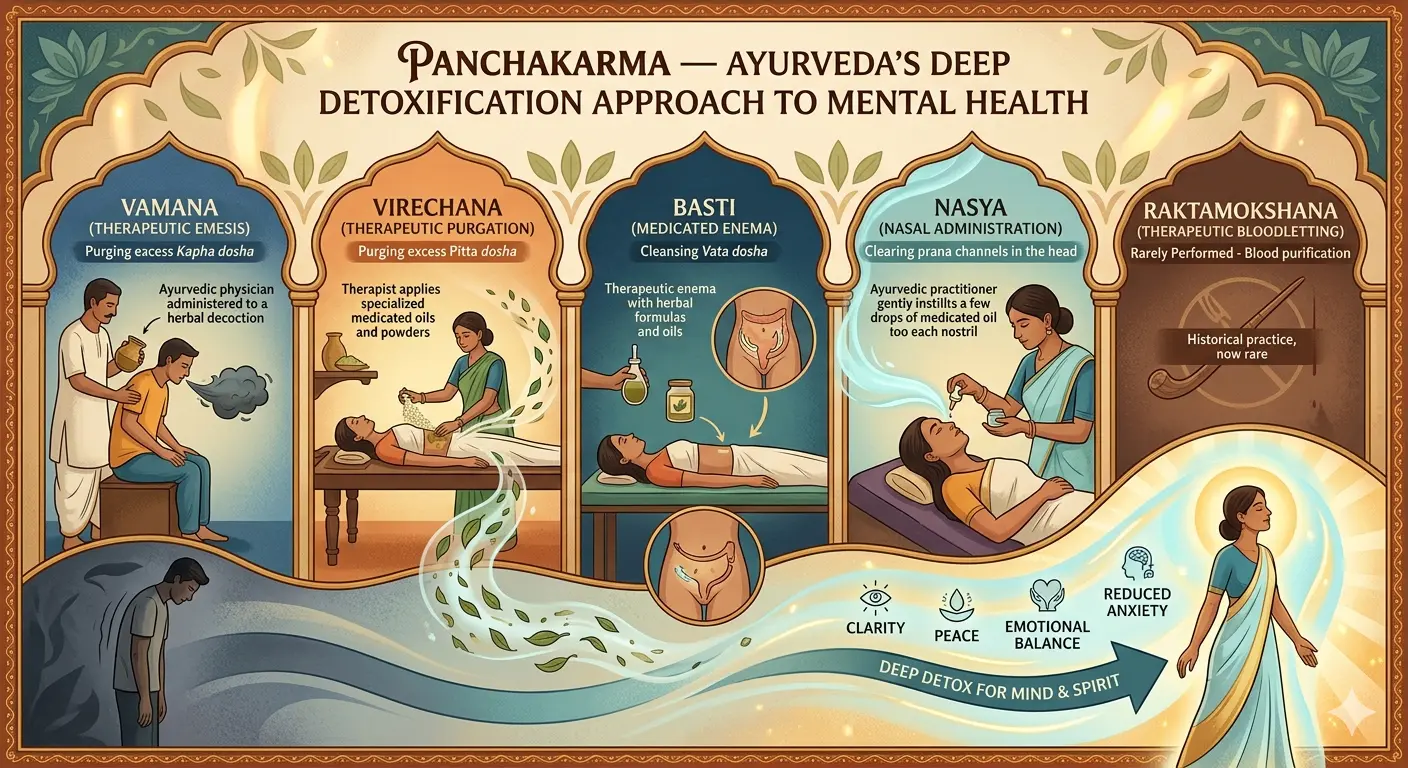
Panchakarma — Ayurveda's classical five-action therapeutic purification programme — is traditionally used for serious chronic conditions including severe mental health disorders. Its application to mental health is one of the areas attracting most serious research attention in integrative medicine.
The five classical Panchakarma procedures include Vamana (therapeutic emesis), Virechana (therapeutic purgation), Basti (medicated enema), Nasya (nasal administration of medicated oils) and Raktamokshana (therapeutic bloodletting — now rarely performed). Of these, Basti and Nasya are most relevant to mental health.
Basti — medicated enema using sesame oil or herbal decoctions — directly treats the colon, which Ayurveda identifies as the primary seat of Vata and therefore the primary site for treating anxiety, fear and the nervous system. The modern rationale: the colon contains the highest concentration of enteric neurons and produces significant quantities of neurotransmitters including serotonin. Direct application of medicated substances to the colonic mucosa — bypassing hepatic first-pass metabolism — may produce effects on the enteric nervous system and gut-brain axis that systemic oral administration cannot achieve.
Clinical studies of Ayurvedic Basti for anxiety and depression have shown promising results — but the research is limited, methodologically variable and requires significant expansion before confident clinical recommendations can be made.
Integrating Ayurveda and Modern Psychiatry — The Responsible Path
As a pharma professional, I must be unambiguous about a critical point: Ayurveda's mental health approaches are complements to modern psychiatric care — not replacements.
For severe mental health conditions — major depressive disorder, bipolar disorder, schizophrenia, severe anxiety disorders, post-traumatic stress disorder — modern psychiatric treatment including medication and structured psychotherapy is the evidence-based standard of care. Delaying or refusing this treatment in favour of Ayurvedic intervention alone can cause serious harm.
What Ayurveda offers — at its best and most evidence-based — is:
- A preventive framework that builds mental resilience before crisis develops — through daily routine, diet, herbs and practice that support nervous system regulation.
- An adjunctive approach that complements pharmaceutical treatment — reducing medication side effects, supporting treatment response, addressing the lifestyle factors that drive illness and building the biological terrain for recovery.
- A recovery and maintenance framework that addresses the ongoing lifestyle factors that prevent relapse — diet, sleep, stress management, social connection — with a depth and practical specificity that pharmaceutical treatment alone cannot match.
- A culturally resonant approach that reduces the stigma barrier to mental health engagement — many Indians who would not seek psychiatric help will engage with Ayurvedic care, which provides an accessible entry point.
The future of mental healthcare in India — the only realistic path to addressing the treatment gap for 197 million people with mental disorders — is integrative. Not Ayurveda replacing psychiatry. Not psychiatry dismissing Ayurveda. Both systems, operating in their areas of genuine strength, serving the Indian patient together.
India's traditional knowledge systems are now playing a key role in global health discussions, offering holistic and evidence-based solutions focused on harmony between body, mind and the environment.
This is the moment. India's mental health crisis is real and urgent. India's traditional medicine has genuine, evidence-based tools to contribute. The integration of these systems — with intellectual honesty about both their strengths and their limitations — is one of the most important healthcare challenges India faces in 2026.
References
- Sarris J, et al. Herbal medicine for depression, anxiety and insomnia: a systematic review. Eur Neuropsychopharmacol. 2011;21(12):841-860.
- Gururaj G, et al. National Mental Health Survey India 2015-16. Bengaluru: NIMHANS; 2016.
- Chandrasekhar K, et al. A prospective study of ashwagandha root extract. Indian J Psychol Med. 2012;34(3):255-262.
Written by — Dharmil Pandya
Medical Writer | Founder, Healthier Tomorrow
#Ayurveda #MentalHealth #IntegrativePsychiatry #MindBodyMedicine #IndianWellness