
Ayurveda vs Allopathy: Which One Is Right for You?

India, a land of vibrant traditions and ancient wisdom, is known globally for its contribution to holistic wellness—Ayurveda being one of its proudest legacies. In contrast, the modern world leans heavily on allopathy, a science-based system of medicine. But when it comes to your health, which one should you choose?
Let’s break down the core differences, advantages, and potential side effects of both Ayurveda and Allopathy to help you make an informed decision.
🧠 What Is Ayurveda?
Ayurveda is one of the world’s oldest holistic healing systems, developed in India more than 3,000 years ago. It is based on the belief that health and wellness depend on a delicate balance between the mind, body, and spirit.
Rather than simply eliminating symptoms, Ayurvedic treatments focus on identifying and healing the root cause. Treatments include herbal medicines, dietary changes, massage therapies, yoga, and meditation, all tailored to your individual body constitution or dosha (Vata, Pitta, Kapha).
🌿 How Ayurvedic Treatments Work
Ayurvedic therapy follows a step-by-step natural process:
- Internal cleansing (detox)
- Special diet plans
- Herbal supplements and oils
- Massage therapies and yoga
- Balancing the five elements – Prithvi (Earth), Jal (Water), Agni (Fire), Vayu (Air), and Akash (Space)
Each treatment is personalized based on the patient's physical and mental constitution, symptoms, and imbalances.
🛒 Recommended Product
Ashwagandha is the ideal example of evidence-based Ayurveda — a herb with centuries of traditional use and a substantial body of modern RCTs validating its effects on stress, energy and cognitive function. Standardised KSM-66 extract is the form used in the best clinical trials.
View Ashwagandha KSM-66 on Amazon →💊 What Is Allopathy?
Allopathy, also known as modern or Western medicine, is the most widely practiced healthcare system globally. It focuses on diagnosing diseases and treating them using drugs, radiation, or surgery. It emphasizes quick relief and is especially effective in acute conditions, infections, trauma, and surgeries.
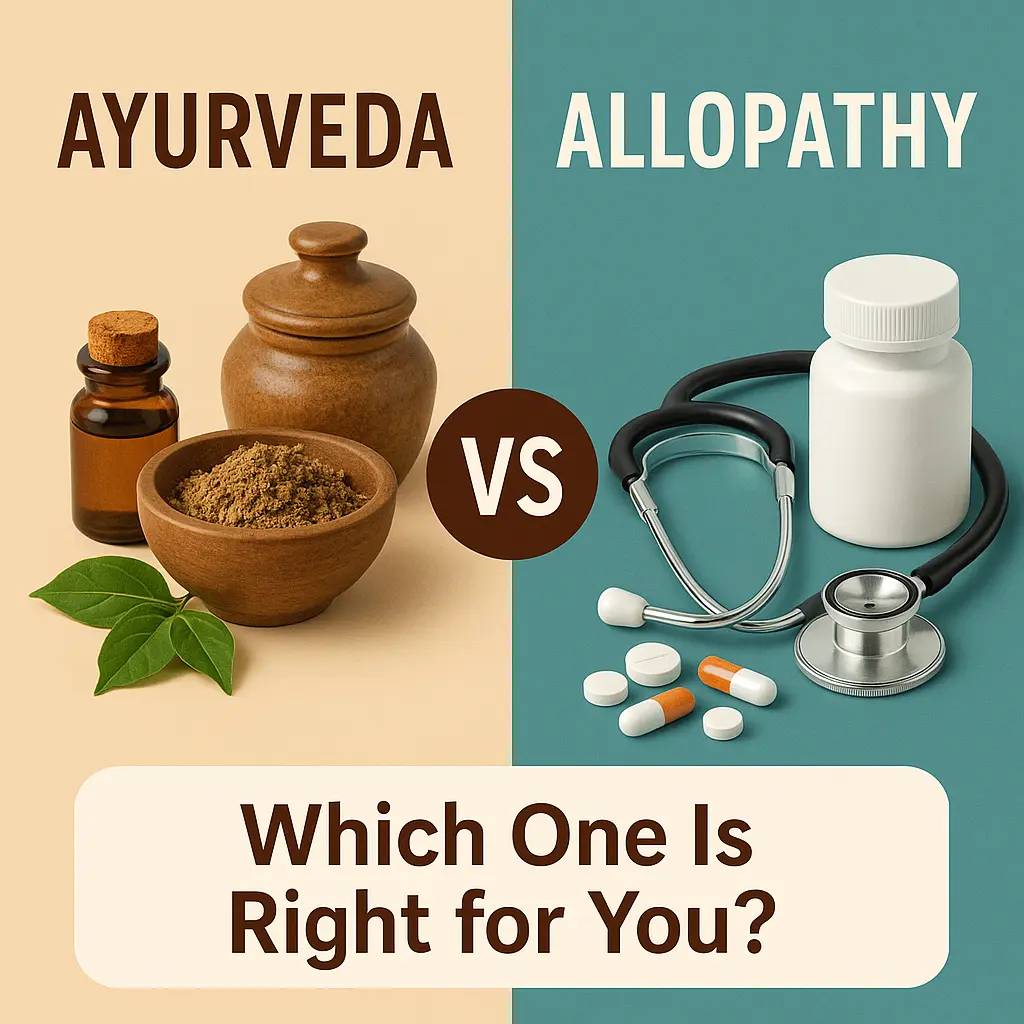
⚙️ How Allopathic Medicine Works
Allopathy operates through a scientific, evidence-based approach. It uses:
- Specialized tools and technologies for diagnosis
- Clinically-tested drugs and procedures
- Surgical and non-surgical treatment protocols
- A network of trained medical professionals and institutions
It aims for symptom relief and disease control, often providing fast-acting solutions, especially in emergencies.
🆚 Ayurveda vs Allopathy: A Comparison
| Feature | Ayurveda | Allopathy |
|---|---|---|
| Philosophy | Treats root cause | Focuses on symptoms |
| Approach | Natural and holistic | Technological and evidence-based |
| Recovery Speed | Slower, long-term | Faster, short-term |
| Personalization | High (based on doshas) | Moderate (standardized protocols) |
| Side Effects | Minimal if supervised | Possible with prolonged use |
| Availability | Growing in popularity | Widely available globally |
✅ Benefits of Allopathic Medicine
- Fast Action – Quick relief in emergencies and infections.
- Scientific Validation – Backed by research and clinical trials.
- Advanced Diagnostics – Accurate tools for disease identification.
- Wide Accessibility – Available in hospitals and clinics worldwide.
- Specialized Care – From cardiology to neurology, all branches are covered.
✅ Benefits of Ayurvedic Treatment
- Natural and Safe – Uses herbs, oils, and minerals.
- Addresses the Root – Focuses on eliminating the actual cause.
- Personalized Healing – Based on body constitution and imbalances.
- Lifestyle-Oriented – Integrates diet, yoga, and meditation.
- Holistic Wellbeing – Improves mental and physical harmony.
⚠️ Side Effects of Allopathy
- Drug Allergies – Skin rashes, swelling, or breathing issues.
- Organ Stress – Prolonged use may affect liver, kidney, or heart.
- Dependency Risk – Painkillers and antibiotics can be addictive.
- Symptom Suppression – Doesn’t always cure root causes.
- Drug Interactions – May cause complications with other medicines.
⚠️ Side Effects of Ayurveda
- Slow Relief – Not suitable for urgent or emergency care.
- Toxic Ingredients – Risk if heavy metals are present in low-quality products.
- Self-Medication Dangers – Misuse without expert advice can be harmful.
- Lack of Research – Some treatments lack scientific studies.
- Herb-Drug Interactions – May clash with allopathic medications.
🧾 Final Thoughts: Which Is Better?
The answer lies in your health needs and condition.
- For emergencies, surgeries, or rapid infections, Allopathy is unmatched in speed and effectiveness.
- For long-term wellness, chronic conditions, lifestyle balance, and preventive care, Ayurveda offers a more sustainable and natural approach.
👉 Ideal Scenario: Many health experts now recommend a combined approach. Start with allopathy for immediate relief, and gradually shift to Ayurvedic treatments to cure the root cause and maintain long-term health.
References
- Patwardhan B. Bridging Ayurveda with evidence-based scientific approaches. EPMA J. 2014;5(1):19.
- Valiathan MS. Towards Ayurvedic biology. Curr Sci. 2006;90(7):915-919.
- Shankar D, Unnikrishnan PM. Challenging the Indian medical heritage. Economic & Political Weekly. 2004;39(16).
Written by — Dharmil Pandya
Medical Writer | Founder, Healthier Tomorrow
#AyurvedaVsAllopathy #NaturalHealing #ModernMedicine #AyurvedicBenefits #AllopathicTreatment #HolisticHealth #ChronicDiseaseCure #IndianMedicine #HealthComparison #MindBodyBalance