
🔥 What Exactly Is a Burn?
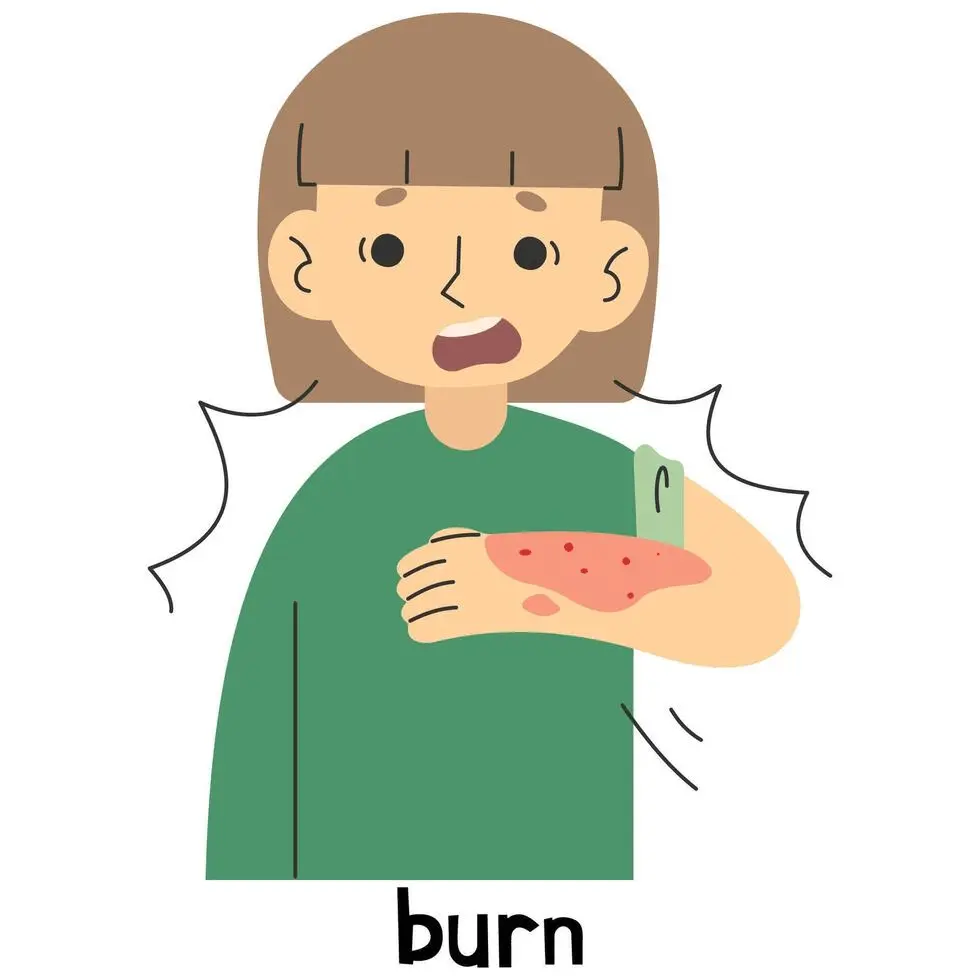
A burn is an injury to the skin or underlying tissue caused by heat, electricity, chemicals, light, radiation, or friction. While many burns affect only the outer layer of the skin, others can penetrate deeper, damaging muscles, nerves, and even bones.
The first step in treating a burn is identifying how deep and severe it is — and that’s where burn classifications come in.
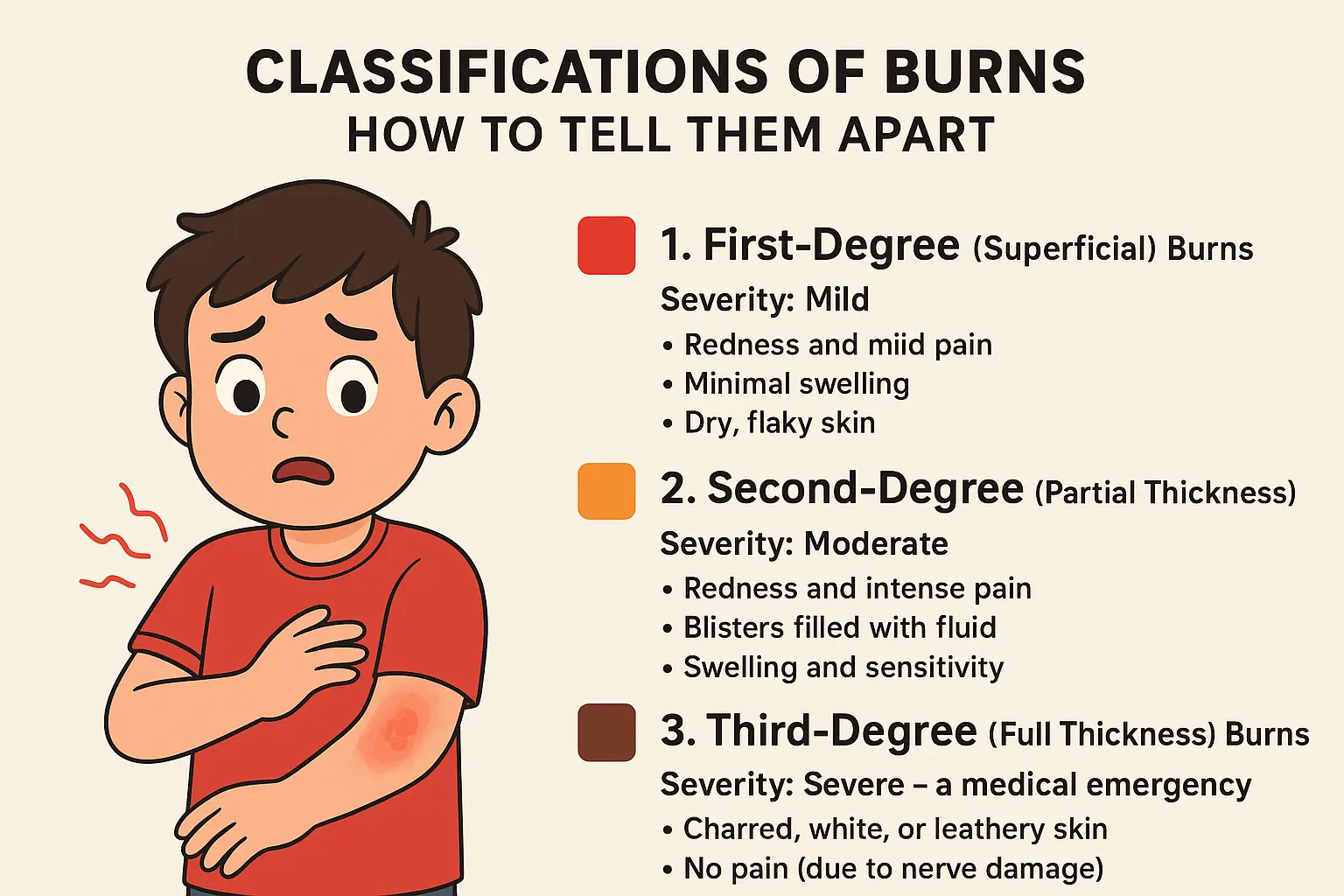
🩹 Classifications of Burns: How to Tell Them Apart
1. First-Degree (Superficial) Burns
Severity: Mild
These are the lightest burns, affecting only the outer layer of the skin (epidermis).
You’ll notice:
- Redness and mild pain
- Minimal swelling
- Dry, flaky skin
Common Causes:
- Sunburn
- Brief contact with hot objects or water
Treatment Tips:
- Run cool (not cold) water over the burn for 10–15 minutes.
- Apply aloe vera gel or a soothing moisturizer.
- Take mild pain relievers if needed.
- Avoid sun exposure until it heals.
✅ Healing time: 3–5 days
2. Second-Degree (Partial Thickness) Burns
Severity: Moderate
These burns damage both the epidermis and dermis (the upper and underlying skin layers).
You’ll notice:
- Redness and intense pain
- Blisters filled with fluid
- Swelling and sensitivity
Common Causes:
- Scalds from hot liquids
- Chemical exposure
- Flames or steam
Treatment Tips:
- Cool under running water for 15 minutes (avoid ice).
- Don’t pop blisters — they protect against infection.
- Apply an antibiotic ointment.
- Cover with a non-stick sterile bandage.
- Watch for signs of infection (pus, swelling, or fever).
✅ Healing time: 2–3 weeks
3. Third-Degree (Full Thickness) Burns
Severity: Severe — a medical emergency
These burns destroy all skin layers and may extend to fat, muscle, or bone.
You’ll notice:
- Charred, white, or leathery skin
- No pain (due to nerve damage)
- Deep tissue damage
Common Causes:
- Electrical injuries
- Fires and explosions
- Prolonged exposure to scalding liquids
Emergency Steps:
- 🚑 Call for medical help immediately.
- Don’t remove burnt clothing stuck to the skin.
- Cover the burn with a cool, moist, sterile cloth.
- Don’t apply ice or ointments.
- Elevate the burned area if possible.
- Check for breathing — perform CPR if necessary.
⚠️ Never try to treat third-degree burns at home.
⚡ Other Types of Burns You Should Know
🔌 Electrical Burns
Caused by contact with electrical current — may damage internal organs even if the skin looks fine. ➡️ Always seek emergency care.
☣️ Chemical Burns
Caused by acids, alkalis, or corrosive substances. ➡️ Rinse with running water for at least 20 minutes and get medical help.
🌞 Sunburn
Caused by prolonged exposure to UV rays. ➡️ Use aloe vera gel, stay hydrated, and apply sunscreen regularly.
🏠 First Aid for Minor Burns
For minor burns (first-degree or small second-degree burns):
- Cool the area under running water.
- Cover with a sterile, non-stick bandage.
- Avoid home remedies like butter or toothpaste.
- Hydrate and eat nutrient-rich foods to aid healing.
- Use sunscreen on healed skin for up to a year to prevent discoloration.
🛒 Recommended Product
A home first aid kit with burn gel, sterile dressings and antiseptic solution is the most important preparation for burn first aid. Having supplies immediately available means the critical first 20 minutes of cool water followed by clean dressing can be done properly rather than improvised.
View First Aid Kit on Amazon →🚨 When to Visit a Burn Unit or Trauma Center
Seek immediate medical care if:
- The burn covers more than 10% of your body.
- It affects the face, hands, feet, joints, or genitals.
- It’s caused by electricity or chemicals.
- You have trouble breathing after smoke exposure.
- You notice infection signs — swelling, pus, or fever.
💡 How to Prevent Burn Injuries
At Home:
- Keep hot liquids and matches away from children.
- Check your water heater temperature (<120°F / 49°C).
- Use oven mitts and turn pot handles inward.
At Work:
- Wear protective gear if you handle chemicals or heat.
- Follow proper safety protocols.
In the Kitchen:
- Never leave cooking unattended.
- Keep a fire extinguisher nearby.
- Avoid overcrowding electrical outlets.
💪 Long-Term Burn Recovery & Scar Care
Recovering from severe burns takes time, patience, and care. Here’s how to support healing:
- Keep skin moisturized – Use aloe vera, vitamin E, or silicone-based gels.
- Massage scars gently – Helps soften tissue and improve flexibility.
- Protect from the sun – Apply SPF 30+ daily.
- Use compression garments – Reduces thick scarring.
- Explore treatments – Laser therapy or silicone sheets under medical supervision.
🧴 Precautions for Burnt Skin
- Avoid heat and sunlight on the affected area.
- Keep skin clean and dry.
- Don’t scratch or peel healing skin.
- Stay hydrated and avoid smoking — it slows healing.
✅ Final Takeaway
Burns can range from mild redness to life-threatening injuries, but the right first aid and timely medical care can make all the difference.
Remember:
- First-degree burns → treat at home.
- Second-degree burns → careful monitoring and protection.
- Third-degree burns → call emergency services immediately.
Taking a few safety steps at home and work can prevent most burns altogether — and knowing the right response could save a life.
✨ Stay informed. Stay safe. Because when it comes to burns — quick, calm action heals best. ✨
References
- American Burn Association. Burn incidence and treatment in the United States. ABA; 2022.
- Herndon DN. Total burn care. 4th ed. Edinburgh: Saunders Elsevier; 2012.
- WHO. Burns fact sheet. Geneva: WHO; 2022.
Written by — Dharmil Pandya
Medical Writer | Founder, Healthier Tomorrow
#Classifications of burns, #first-degree burn, #second-degree burn, #third-degree burn, #burn treatment, #first aid for burns, #types of burns, #electrical burns, #chemical burns, #sunburn care, #burn prevention, #burn recovery, #home care for burns, #how to treat burns, #emergency care for burns.