
What To Do If You Burn Yourself While Cooking – Quick First Aid & Care Tips
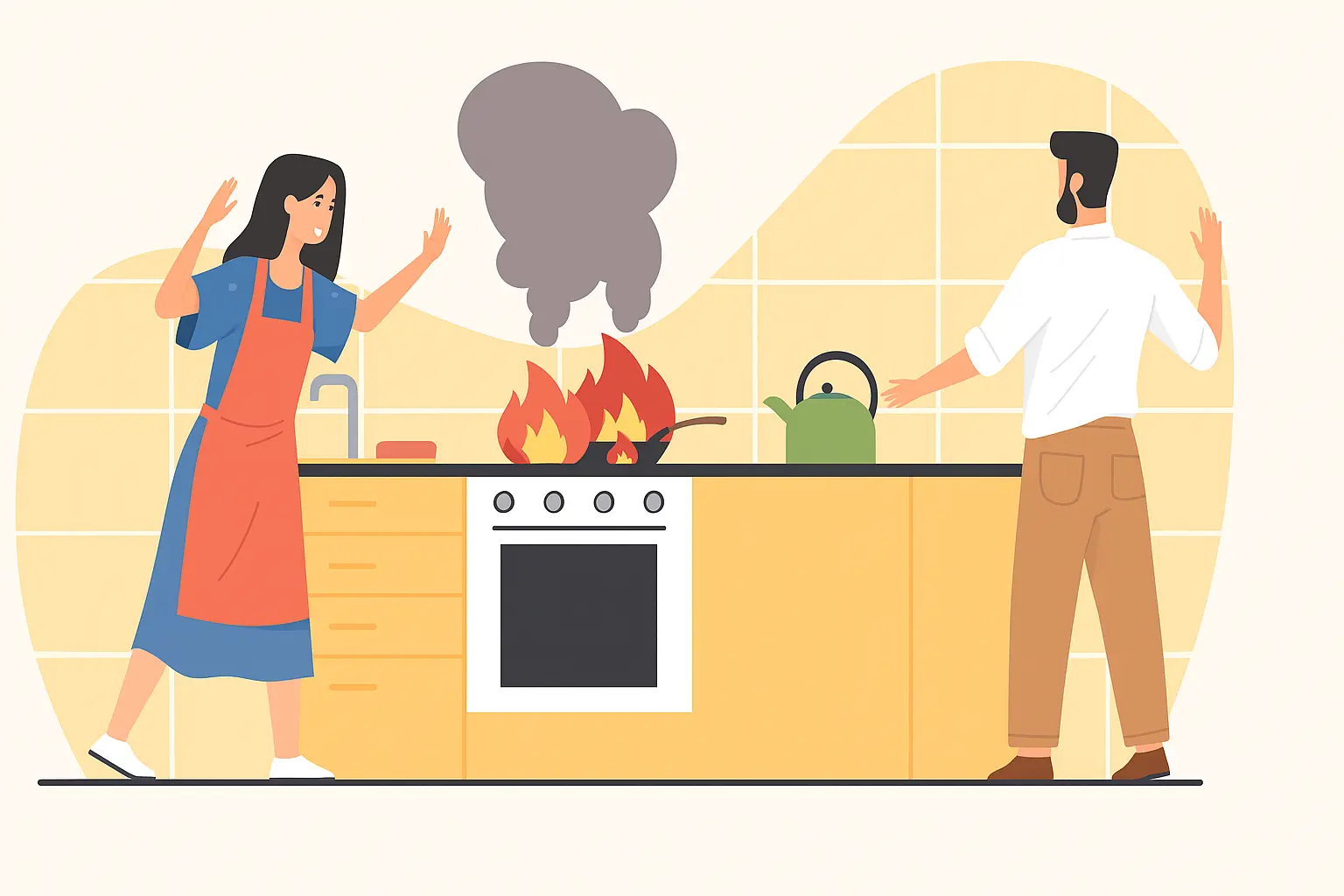
Burns While Cooking: What You Need to Know
Accidentally touching a hot pan or getting splashed by boiling water is a common kitchen mishap. While most cooking burns are minor, some can be severe and require immediate attention. Acting quickly and correctly can make a big difference in recovery and pain relief.
🔥 Types of Burns and Their Symptoms
1. First-Degree Burns (Superficial Burns)
These are the most common and least severe, damaging only the outer skin layer (epidermis).
Common causes:
A quick splash of hot water or brief contact with a hot surface.
Symptoms:
- Red or pink skin (reddish-brown or purple in darker skin tones)
- Pain and tenderness
- Mild swelling
- Peeling as it heals
Healing time:
About 1 week, usually without scarring.
2. Second-Degree Burns (Partial-Thickness Burns)
These burns affect both the epidermis and the top layer of the dermis.
Common causes:
Prolonged exposure to hot liquids or steam.
Symptoms:
- Intense pain
- Wet or glossy-looking skin
- Formation of blisters
Healing time:
Several weeks; may leave scars that fade over time.
3. Third-Degree Burns (Full-Thickness Burns)
The most severe type, affecting all skin layers and possibly underlying tissue.
Common causes:
Immersion in boiling water or flames.
Symptoms:
- White, brown, or black charred skin
- No pain initially (nerves may be damaged)
- Dry and leathery texture
Treatment required:
Hospitalization, skin grafts, surgery, or long-term care.
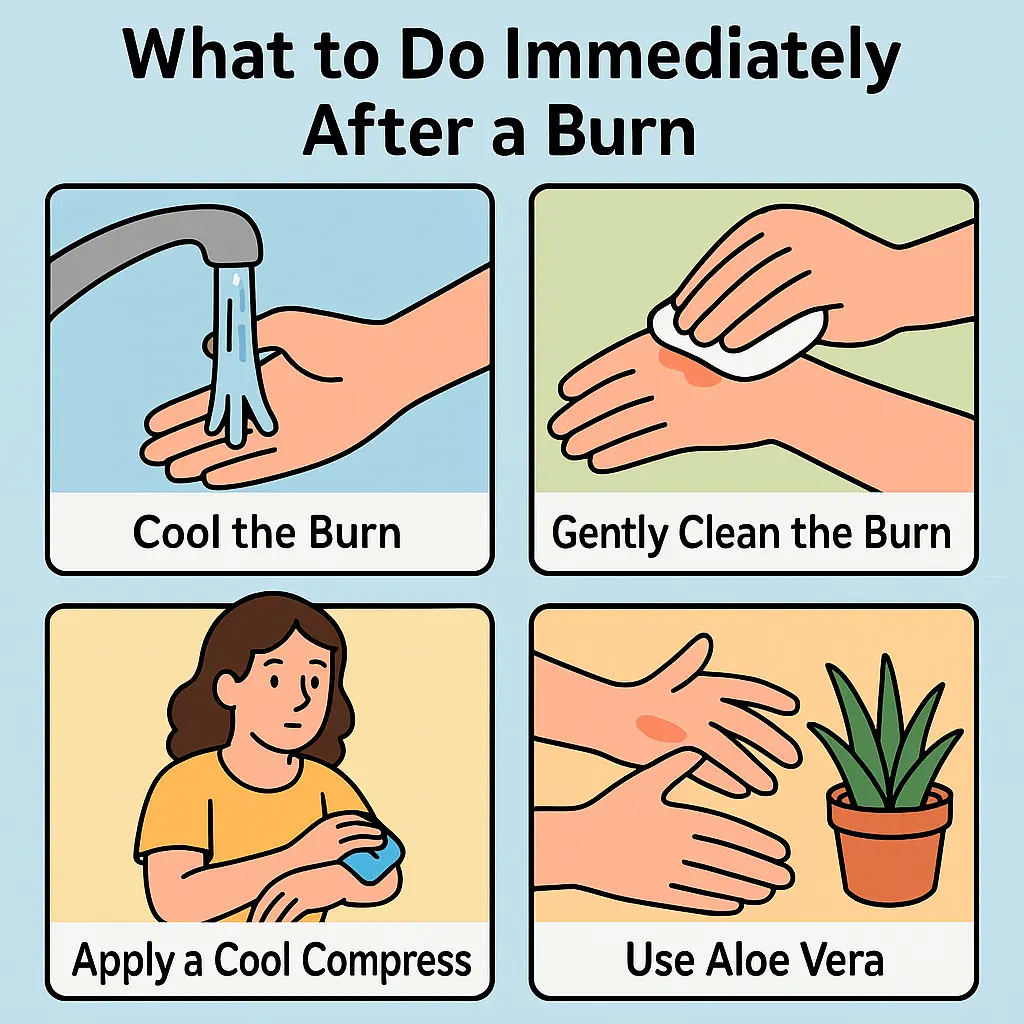
✅ What to Do Immediately After a Burn
1. Cool the Burn
Run cool (not cold) water over the burn area for 15–20 minutes. This helps reduce temperature and pain. Avoid using ice or ice water, as it can worsen the tissue damage.
2. Gently Clean the Burn
Wash the area with mild soap and cool water. Avoid scrubbing. Pat dry with a clean cloth or sterile gauze.
3. Apply a Cool Compress
Use a clean, damp cloth to reduce swelling. Apply for 10-minute intervals. Avoid extremely cold compresses.
4. Use Aloe Vera
Aloe vera is known for its soothing and healing properties.
- Use fresh aloe gel from the plant if possible
- If buying from a store, choose products with high aloe content and no added fragrances or dyes
5. Consider Medical-Grade Honey
This special honey has antibacterial and healing benefits.
- Ask a pharmacist for medical-grade honey
- Avoid regular kitchen honey, which may not be sterile
6. Protect from Sunlight
Burned skin is extremely sensitive to UV rays.
- Keep the area covered with loose clothing
- Use sunscreen with at least SPF 30 if exposed
7. Do Not Pop Blisters
If blisters form, don’t pop them. This increases infection risk.
- Cover with a sterile, non-stick bandage
- Change bandages regularly
8. Use Pain Relievers If Needed
For discomfort, take OTC pain relievers like:
- Ibuprofen (Advil, Motrin) – Reduces pain and swelling
- Acetaminophen (Tylenol) – Helps relieve mild pain
Always follow the recommended dosage on the label.
🛒 Recommended Product
Burn gel — a water-based cooling gel with lidocaine — is the evidence-based topical first aid for minor burns after the initial 20-minute cool water treatment. Keep one in your home first aid kit — particularly important in Indian kitchens where minor burns from cooking are common.
View Burn Relief Gel on Amazon →🚫 Things to Avoid When Treating a Burn
Avoid these common but harmful home remedies:
- Ice or ice water – can further damage tissue
- Butter or oil – traps heat and can cause infection
- Toothpaste – not sterile and can irritate the skin
- Scented lotions or creams – may cause allergic reactions
- Adhesive bandages – can stick to the burn and worsen damage
🆘 When to Seek Emergency Care
Contact a doctor or visit the ER if:
- The burn covers a large area (more than 3 inches)
- The burn is on the face, hands, feet, groin, or joints
- You notice signs of infection (pus, increasing redness, fever)
- It's a third-degree burn
- The person burned is an infant or elderly
Final Thoughts
Burns while cooking are common, but knowing the right first aid steps can prevent complications and speed up recovery. Treat minor burns at home with care, and don’t hesitate to seek medical help when needed. Keep calm, act quickly, and avoid harmful home remedies.
References
- Cuttle L, et al. The efficacy of aloe vera, tea tree oil and saliva as first aid treatment for partial thickness burn injuries. Burns. 2008;34(8):1176-1182.
- Forjuoh SN. Burns in low and middle income countries: a review of available literature. Burns. 2006;32(5):529-537.
- Enoch S, Roshan A, Shah M. Emergency and early management of burns and scalds. BMJ. 2009;338:b1037.
Written by — Dharmil Pandya
Medical Writer | Founder, Healthier Tomorrow
#Cooking safety, #Burn treatment, #First aid for burns, #Aloe vera for burns, #Kitchen burn remedies, #Types of burns, #Home burn care