
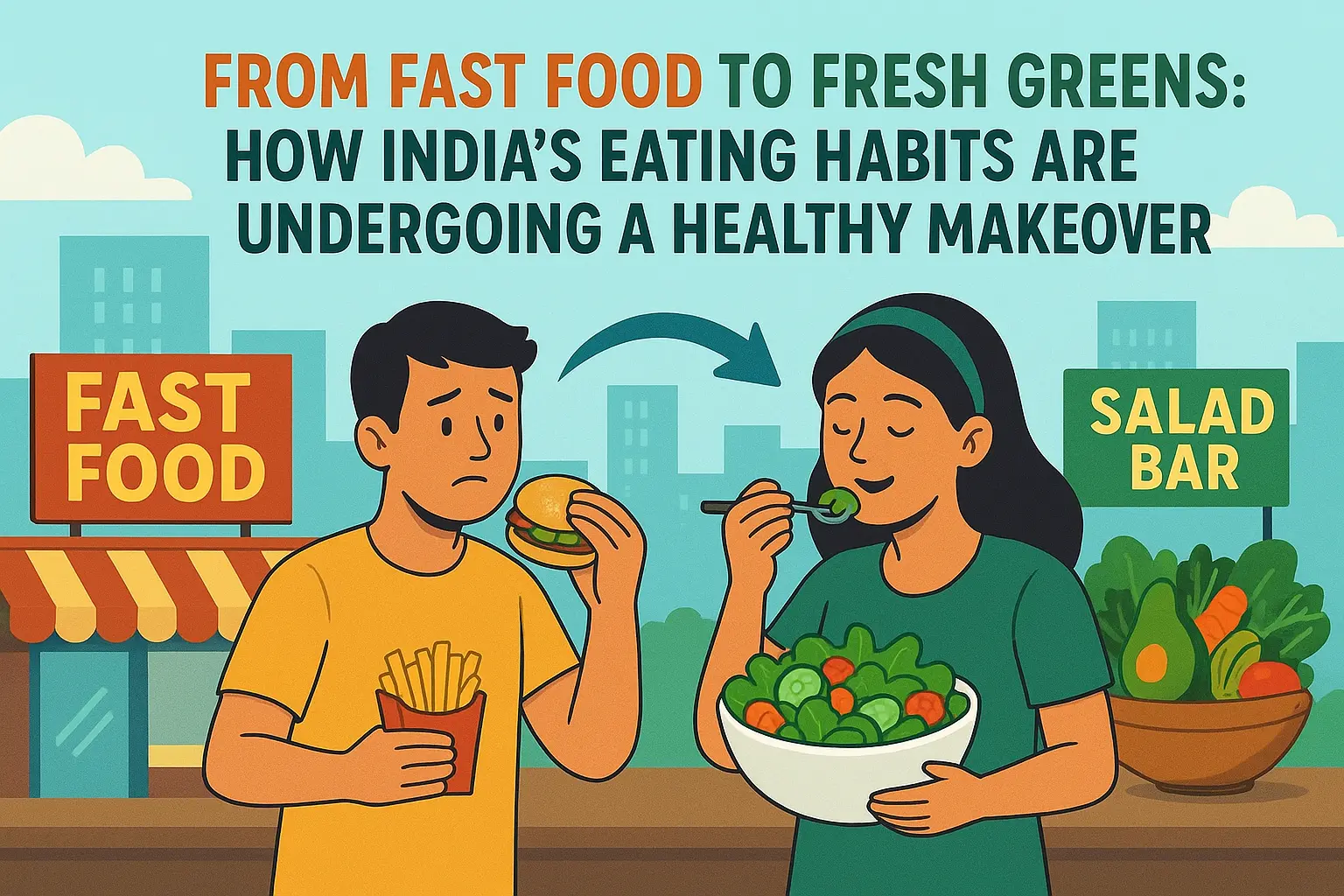
🥗 From Fast Food to Fresh Greens: How India’s Eating Habits Are Undergoing a Healthy Makeover
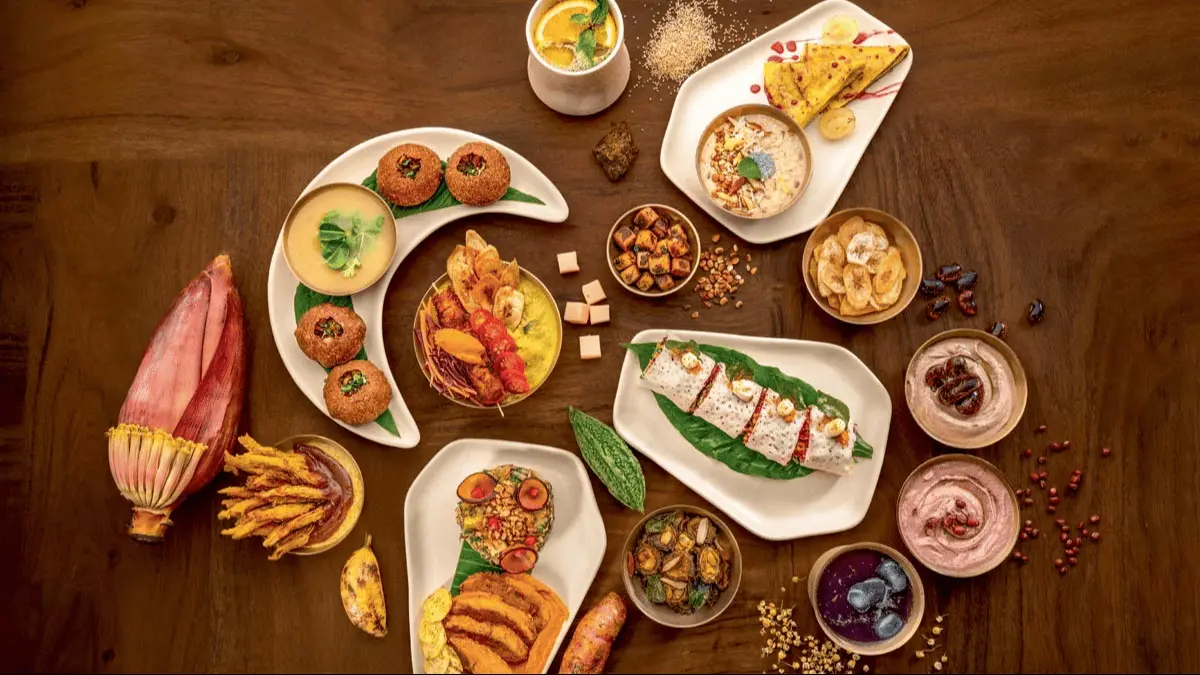
Have you noticed how “salad bowls” and “smoothie bars” are replacing burgers and fries in city cafés? Urban India is experiencing a food revolution — and this time, it’s all about health, balance, and conscious choices.
Once dominated by fast-food chains and greasy takeaways, cities like Delhi, Mumbai, and Bengaluru are now witnessing a growing movement towards fresh, green, and clean eating. This isn’t just a fleeting trend — it’s a collective awakening about how what we eat today shapes our health tomorrow.
🌿 The Rise of the “Healthy Plate” in Urban India
In just a few years, India’s culinary landscape has taken a vibrant turn. Brands like Salad Days, which has already served over 850,000 customers in Delhi NCR and Bengaluru, are proof that people aren’t just trying to eat less junk — they’re actively choosing food that fuels them better.
So, what’s driving this big switch from fast to fresh? Let’s dig in.
🧠 1. Information at Our Fingertips
Social media has turned the world into a global kitchen. With a few taps, we’re watching nutritionists explain gut health, chefs whip up low-carb recipes, and fitness influencers preach the power of mindful eating.
This constant exposure to food knowledge and wellness content is inspiring people to make smarter food decisions. The “eat whatever is convenient” mindset is being replaced by “eat what makes me feel good.”
🛒 2. Better Access, Greater Availability
Healthy eating is no longer a luxury. Urban farming, organic food delivery, and farm-to-fork models have made fresh produce accessible year-round. You can now order avocados, spinach, and quinoa online and have them at your doorstep in hours.
What used to be “exotic” is slowly becoming everyday grocery.
💸 3. Affordability & Acceptance
Once upon a time, salads and superfoods were tagged as “elite meals.” But today, thanks to growing demand and local sourcing, prices are stabilizing — and more people are willing to invest in their health.
Healthy food is no longer about status; it’s about self-care.
❤️ 4. The Health & Lifestyle Shift
Remember when the only “healthy” thing people avoided was ghee? Now, we’re counting steps, reading nutrition labels, and swapping sugary drinks for detox water.
India’s working youth, in particular, are paying close attention to what’s on their plates. This marks a powerful shift — from passive eating to mindful nourishment.
🥑 The New Food Trends Shaping India’s Healthy Future
Let’s look at what’s actually changing on the Indian plate:
1. Healthy Is Now Tasty
The biggest myth — that healthy food is boring — has officially been busted. Salads are now hearty, flavorful meals, not just side dishes. Restaurants across India are adding creative, full-meal salads with seeds, nuts, lentils, and homemade dressings to their menus.
2. Clean Eating Becomes a Lifestyle
People are consciously avoiding processed, canned, and frozen food. They’re reading ingredient lists, looking for high-protein, low-carb, and fiber-rich meals — and asking for nutritional transparency. Superfoods like quinoa, chia seeds, avocado, and millets are no longer rare — they’re regulars in Indian kitchens.
3. Local and Organic Love
Urban consumers are rediscovering the magic of local, seasonal, and organic produce. Locally grown food is fresher, more sustainable, and better for the environment. Plus, community farming and “farm visits” are helping people reconnect with where their food comes from.
🍔 The Flip Side: India’s Fast Food Problem
But let’s not forget — the rise of healthy eating comes in response to a growing crisis. Over the last two decades, fast food has become a health hazard in India. The ICMR reports shocking statistics:
- 100+ million Indians have diabetes
- 28.6% are obese
- 35.5% live with hypertension
And these aren’t just numbers — they reflect a culture overwhelmed by ultra-processed, high-calorie, low-nutrient food.
⚠️ The Hidden Costs of Fast Food
Fast food is convenient, yes — but it’s loaded with trans fats, sodium, and preservatives. It’s linked to heart disease, obesity, and metabolic disorders that are now showing up in younger populations.
Children in India consume three times more junk food than adults, setting the stage for early diabetes and cardiovascular issues. The booming fast food industry — growing at 35–40% annually — feeds into this problem, often using marketing tactics that make fast food seem “cool” and traditional diets “old-fashioned.”
💔 The Health Impact You Can’t Ignore
Non-communicable diseases (NCDs) like diabetes, heart disease, and obesity now account for over 60% of deaths in India. Urban and semi-urban populations are hit hardest, thanks to sedentary lifestyles and easy access to processed foods.
The irony? We’re eating more calories than ever — yet facing nutritional deficiencies due to poor dietary diversity.
🌱 The Hope Ahead: India’s Return to Wholesome Eating
Despite the challenges, the tide is turning. India is waking up to the power of food as medicine. From farmers’ markets to vegan cafés, from office salad subscriptions to home hydroponic setups — we’re witnessing a beautiful shift back to balance. People are realizing that healthy food isn’t about restriction; it’s about reconnection — with our roots, our health, and our planet.
💬 Final Bite
The future of food in India isn’t fast — it’s fresh. We’re moving from eating out of convenience to eating with consciousness. As more people embrace this change, India’s journey toward wellness will not just be a trend — it’ll be a transformation.
So, the next time you pick between fries and fruit, ask yourself: “What does my body really need today?” 🍎
🛒 Recommended Product
Transitioning from fast food starts with having healthy snack alternatives readily available. Roasted makhana — fox nuts — are one of the best Indian snack substitutes: high protein, high fiber, low calorie and genuinely satisfying as a between-meal option.
View Roasted Makhana on Amazon →References
- Monteiro CA, et al. Ultra-processed foods: what they are and how to identify them. Public Health Nutr. 2019;22(5):936-941.
- Asghari G, et al. Dietary quality among Iranian adults. Public Health Nutr. 2012;15(11):2083-2091.
- Popkin BM, et al. Individuals with obesity and COVID-19. Obes Rev. 2020;21(11):e13105.
Written by — Dharmil Pandya
Medical Writer | Founder, Healthier Tomorrow
#Healthy eating in India #Fast food culture in India #Urban India food trends #Rise of salads in India #Healthy lifestyle India #Organic food India #Salad Days India #Non-communicable diseases in India #Clean eating habits #Mindful eating India