
Hidden Inflammation: The Silent Driver of Modern Diseases

You can be young, fit, and seemingly healthy—yet still carry a slow-burning fire inside your body.
Imagine a glowing, energetic couple in their 20s. They work hard, party harder, sleep less, and feel invincible. Fast forward 20–30 years, and the picture often changes: Type 2 diabetes, heart disease, joint pain, brain fog, or autoimmune issues quietly take over.
This delayed damage is often driven by chronic inflammation—a silent process that starts early, builds slowly, and shows its consequences decades later.
What Is Chronic Inflammation?
Inflammation itself isn’t the enemy.
When you twist an ankle or catch a cold, your immune system sends inflammatory cells to heal the injury or fight infection. This acute inflammation is protective and temporary.
Chronic inflammation, however, is different.
Instead of switching off once healing is complete, the immune system remains in a constant low-grade “alert mode.” Over months or years, this persistent inflammation begins to damage healthy tissues, disrupt hormones, impair immunity, and even alter cellular DNA.
It’s like a slow-burning fire that never goes out.
What makes it dangerous is that it often causes no obvious symptoms at first. You may look healthy on the outside while inflammation quietly damages your organs on the inside.
The Hidden Damage Chronic Inflammation Causes
Chronic inflammation affects nearly every system in the body:
Heart & Blood Vessels
Inflammation damages blood vessels and promotes plaque buildup in arteries, increasing the risk of:
- Heart disease
- Stroke
- High blood pressure
Joints & Muscles
Persistent inflammation breaks down cartilage and connective tissue, leading to:
- Chronic arthritis
- Joint stiffness and pain
- Reduced mobility over time
Gut & Digestion
Inflammation can weaken the gut lining (often called leaky gut), causing:
- Poor nutrient absorption
- Digestive issues
- Immune dysfunction
Since most of your immune system lives in the gut, this creates a vicious inflammation cycle.
Brain & Mental Health
Chronic inflammation has been linked to:
- Anxiety and depression
- Brain fog and poor focus
- Accelerated cognitive decline
- Neurodegenerative diseases like Alzheimer’s
Research shows inflammation accelerates brain aging by shrinking both gray and white matter and impairing emotional regulation.
Cancer & Autoimmune Diseases
Long-term inflammation increases the risk of:
- Cancer development
- Autoimmune disorders
- Metabolic diseases like Type 2 diabetes
In fact, three out of five deaths globally are linked to inflammation-related diseases.
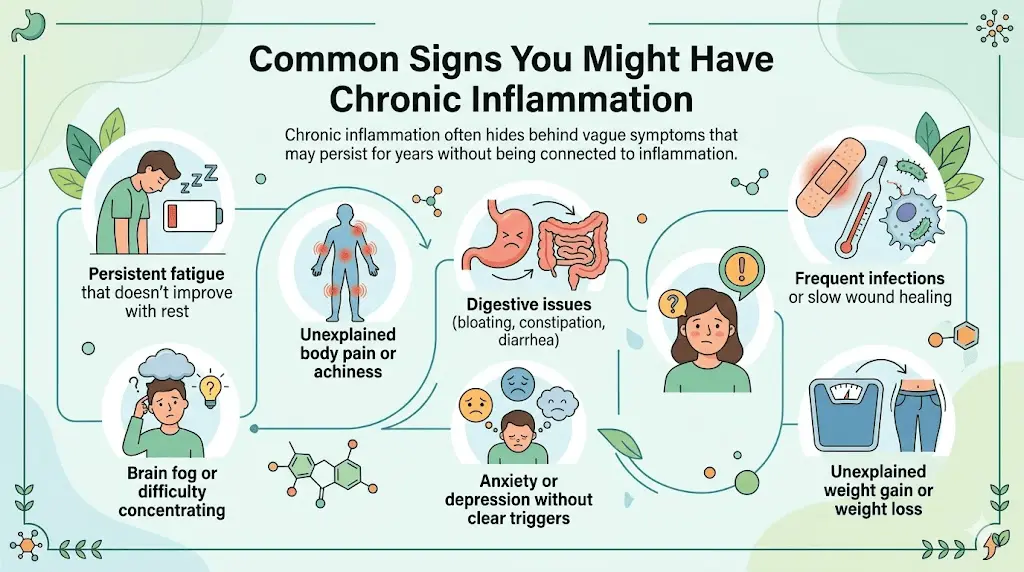
Common Signs You Might Have Chronic Inflammation
Chronic inflammation often hides behind vague symptoms, such as:
- Persistent fatigue that doesn’t improve with rest
- Unexplained body pain or achiness
- Digestive issues (bloating, constipation, diarrhea)
- Frequent infections or slow wound healing
- Brain fog or difficulty concentrating
- Anxiety or depression without clear triggers
- Unexplained weight gain or weight loss
These symptoms may persist for years without being connected to inflammation.
What Causes Chronic Inflammation?
Modern lifestyles are a perfect breeding ground for chronic inflammation.
1. Diet Choices
Ultra-processed foods, refined sugars, unhealthy fats, and excess alcohol fuel inflammation while depriving the body of protective nutrients.
Certain foods worsen gut imbalance, trigger insulin resistance, and promote systemic inflammation.
2. High Sugar Intake
Excess sugar disrupts gut bacteria, leading to dysbiosis and gut inflammation. It also increases blood sugar spikes and inflammatory markers.
3. Processed & Fried Foods
Processed meats, fried foods, and ultra-processed meals contain harmful compounds like AGEs (advanced glycation end products) that drive oxidative stress and inflammation.
4. Artificial Sweeteners
Some artificial sweeteners disrupt gut microbiota and may increase insulin resistance and low-grade inflammation.
5. Physical Inactivity
Lack of movement reduces circulation, weakens metabolism, and allows inflammatory toxins to build up in the body.
6. Excess Body Fat
Visceral fat is metabolically active and releases inflammatory chemicals, worsening insulin resistance and hormonal imbalance.
7. Chronic Stress
Long-term stress keeps the body in “fight or flight” mode, elevating cortisol and inflammatory responses while weakening gut integrity and immunity.
8. Poor Sleep
Sleeping less than 6–7 hours raises inflammatory markers like CRP, weakens immunity, and increases the risk of obesity and metabolic disorders.
9. Pollution & Environmental Toxins
Air pollution introduces toxins into the bloodstream, triggering respiratory and systemic inflammation.
Signs include: fatigue, headaches, brain fog, skin issues, and increased allergies.
10. Mold Exposure
Hidden mold in damp homes releases spores that trigger chronic respiratory inflammation, allergies, fatigue, and neurological symptoms.
11. Smoking
Tobacco toxins damage blood vessels, increase oxidative stress, and promote inflammatory diseases like heart disease and arthritis.
12. Excessive Alcohol
Alcohol damages the liver and gut, increases intestinal permeability, and weakens immune regulation—fueling chronic inflammation.
Why Chronic Inflammation Is So Dangerous
Chronic inflammation doesn’t just cause discomfort—it reshapes your long-term health trajectory.
Studies show that people with elevated inflammatory markers early in life are more likely to develop:
- Cognitive decline
- Mental health disorders
- Cardiovascular disease
- Autoimmune conditions
- Cancer
Inflammation accelerates aging at a cellular level, affecting how your brain, heart, and immune system function over time.
Key Strategies to Lower Chronic Inflammation
The good news? Chronic inflammation can be reversed or reduced with the right lifestyle approach.
1. Adopt an Anti-Inflammatory Diet
Limit or avoid:
- Ultra-processed foods
- Refined sugars and sugary drinks
- Processed meats
- Excess alcohol
- Artificial sweeteners
Include more:
- Colorful fruits and vegetables (antioxidants)
- Healthy fats (olive oil, flaxseeds, walnuts)
- Lean proteins and plant-based sources
- Gut-healing fiber (leafy greens, seeds)
- Anti-inflammatory herbs and spices (turmeric, ginger)
🛒 Recommended Product
Omega-3 fatty acids are one of the most evidence-based anti-inflammatory nutritional interventions available. MuscleBlaze Omega-3 provides EPA and DHA at clinically relevant doses — take with food for best absorption and to minimise any aftertaste.
View MuscleBlaze Omega-3 on Amazon →2. Optimize Gut Health
A healthy gut is essential for immune balance.
- Repair the gut lining with supportive nutrients
- Restore gut bacteria using probiotics and prebiotics
- Address bacterial imbalances (dysbiosis)
- Improve digestion and nutrient absorption
3. Reduce Stress Intentionally
Stress is a major but overlooked inflammation trigger.
Helpful strategies include:
- Mindfulness, meditation, deep breathing
- Yoga and gentle movement
- Spending time in nature
- Engaging in hobbies and joyful activities
- Supporting the nervous system with key nutrients
Even 5–10 minutes a day of stress reduction can lower inflammatory markers.
4. Move Your Body Regularly
Balanced movement reduces inflammation by improving circulation and immune regulation.
- Daily walking or light cardio
- Strength training to build muscle
- Yoga, stretching, or mobility work
Avoid extremes—both inactivity and overtraining can increase inflammation.
5. Prioritize Quality Sleep
Sleep is when your body repairs itself.
- Aim for 7–9 hours nightly
- Keep a consistent sleep schedule
- Reduce blue light exposure at night
- Create a dark, cool, tech-free sleep environment
Quality sleep lowers stress hormones and inflammatory markers.
Final Thoughts
Chronic inflammation doesn’t appear overnight—and it doesn’t disappear overnight either.
But the same daily choices that silently fuel inflammation can also calm it down.
By addressing diet, gut health, stress, movement, sleep, and environmental exposures, you don’t just reduce inflammation—you protect your future health.
Inflammation may be silent, but your actions don’t have to be.
Your body is always listening.
References
- Libby P. Inflammatory mechanisms: the molecular basis of inflammation and disease. Nutr Rev. 2007;65(12 Pt 2):S140-6.
- Furman D, et al. Chronic inflammation in the etiology of disease across the life span. Nat Med. 2019;25(12):1822-1832.
- Calder PC, et al. Dietary factors and low-grade inflammation. Br J Nutr. 2011;106 Suppl 3:S5-78.
Written by — Dharmil Pandya
Medical Writer | Founder, Healthier Tomorrow