
High-Functioning Anxiety: Signs, Symptoms, Causes & Proven Ways to Manage It

High-functioning anxiety is one of the most misunderstood mental health experiences today. On the outside, a person may appear successful, organized, calm, and driven. On the inside, they may feel overwhelmed, panicked, restless, and constantly on edge.
Although high-functioning anxiety is not an official clinical diagnosis, it describes a very real experience. Many people silently struggle while continuing to perform well at work, maintain relationships, and meet responsibilities — often at the cost of their mental and physical health.
If you’ve ever thought, “I look fine, but I don’t feel fine,” this guide is for you.
What Is High-Functioning Anxiety?
High-functioning anxiety refers to individuals who live with chronic anxiety symptoms while maintaining high levels of productivity and outward success.
Unlike more visible anxiety disorders, this form often hides behind:
- Achievement
- People-pleasing
- Perfectionism
- Overpreparing
- Overthinking
These individuals are not “falling apart” externally — but internally, they may feel deeply exhausted and emotionally overwhelmed.
Signs and Symptoms of High-Functioning Anxiety
Here are the most common emotional, behavioral, and physical signs:
1. Constant Worry or Overthinking
Your mind never truly switches off. You:
- Replay conversations repeatedly
- Worry about unlikely scenarios
- Overanalyze simple decisions
- Second-guess yourself constantly
Even small tasks feel mentally exhausting because of the endless internal dialogue.
2. Perfectionism and Harsh Self-Criticism
This goes beyond simply “wanting to do well.”
- You set unrealistically high standards
- Success never feels satisfying
- You struggle with impostor syndrome
- You obsess over minor details
- You procrastinate out of fear of failure
Instead of celebrating wins, you focus on what could have been better.
3. Procrastination and Avoidance
Anxiety can paradoxically lead to delay. You may:
- Put off important tasks
- Avoid difficult conversations
- Skip social events
- Hesitate to try new opportunities
The delay temporarily reduces stress — but later increases guilt and panic, creating a cycle.
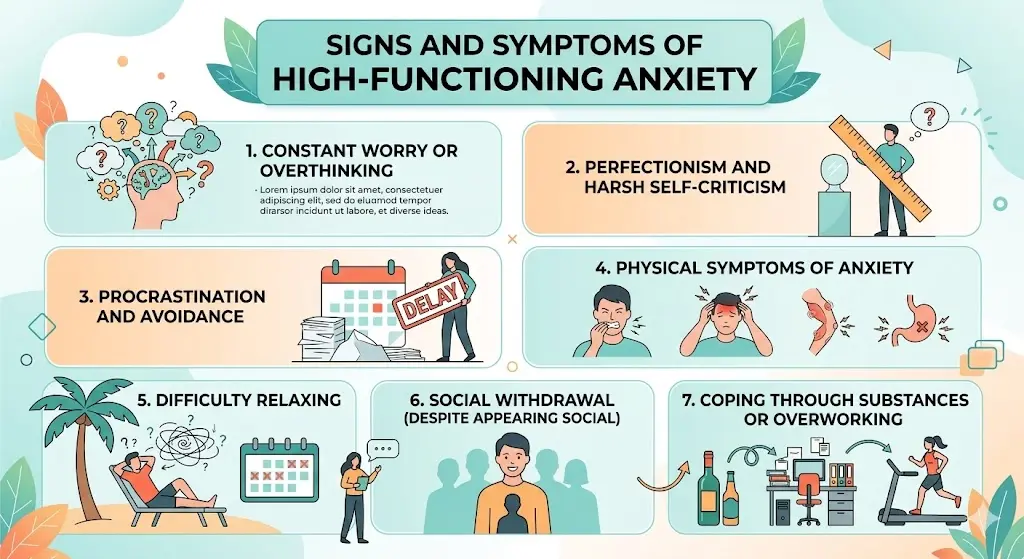
4. Physical Symptoms of Anxiety
High-functioning anxiety is not “just in your head.” It often shows up physically:
- Muscle tension
- Frequent headaches
- Jaw clenching
- Digestive issues
- Fatigue
- Heart palpitations
- Increased heart rate
- Dizziness
Many people push through these symptoms, ignoring the long-term impact on their body.
5. Difficulty Relaxing
Even during downtime:
- You feel guilty for not being productive
- Your brain continues racing
- You struggle to truly unwind
- You feel restless during vacations
This constant state of hyper-alertness is emotionally draining.
6. Social Withdrawal (Despite Appearing Social)
You may appear outgoing, yet internally:
- Fear judgment
- Overthink what you said
- Replay interactions afterward
- Feel exhausted by small talk
You might avoid gatherings to escape the mental aftermath.
7. Coping Through Substances or Overworking
To quiet internal anxiety, some people turn to:
- Alcohol
- Overworking
- Excessive exercise
- Social media scrolling
- Digital distractions
These habits offer short-term relief but may worsen anxiety over time.
What Causes High-Functioning Anxiety?
While there is no single cause, several factors may contribute:
- Personality traits (high conscientiousness, perfectionism)
- Early life experiences
- High-pressure environments
- Cultural expectations of success
- Fear of failure or rejection
In competitive societies, high achievement is praised — even when driven by anxiety.
Evidence-Based Ways to Manage High-Functioning Anxiety
You can’t “switch off” anxiety overnight. However, psychology-backed strategies can help regulate it effectively.
1️⃣ Practice Self-Compassion
Instead of asking “What’s wrong with me?”, try asking “What do I need right now?”
Research by psychologist Dr. Kristin Neff (2011) shows that self-compassion significantly reduces anxiety and burnout — often more effectively than harsh self-criticism.
Self-compassion involves:
- Treating yourself as you would treat a friend
- Accepting imperfections
- Recognizing that struggle is part of being human
2️⃣ Mindfulness and Grounding Techniques
Mindfulness-based practices help regulate the nervous system and reduce racing thoughts. Research (Hofmann et al., 2010) shows mindfulness interventions improve emotional regulation and reduce anxiety symptoms.
Try:
- 4-7-8 breathing
- Body scan meditation
- Mindful walking
- 5-4-3-2-1 grounding exercise
Even 5–10 minutes daily can make a difference.
3️⃣ Challenge Perfectionism (CBT Approach)
Cognitive Behavioral Therapy (CBT) techniques are highly effective for anxiety (Egan et al., 2014). Ask yourself:
- Is this standard realistic?
- What would I tell a friend in this situation?
- What’s the worst realistic outcome?
Reframing distorted thoughts reduces performance-related stress.
4️⃣ Prioritize Rest — It’s Productive
Rest is not laziness. Research (Alkozei et al., 2018) shows consistent rest improves focus, creativity, emotional resilience, and stress tolerance.
Schedule rest like an appointment — essential, not optional.
When to Seek Professional Help
If anxiety interferes with sleep, impacts relationships, causes frequent physical symptoms, leads to panic attacks, or feels unmanageable, consider speaking to a licensed therapist or mental health professional. Therapy, especially CBT, is highly effective for anxiety disorders.
Final Thoughts: You Can Be Successful and Still Struggle
High-functioning anxiety often hides behind achievements. Because things “look fine,” the struggle goes unnoticed — even by the person experiencing it.
You are not weak. You are not dramatic. And you are not alone. Productivity does not equal peace. Achievement does not equal emotional well-being. Healing begins when we acknowledge both our strengths and our struggles.
🛒 Recommended Product
Ashwagandha is the most evidence-based herbal supplement for anxiety — with multiple randomised controlled trials showing significant reduction in cortisol and perceived stress scores. This KSM-66 standardised extract uses the form with the strongest clinical evidence.
View Ashwagandha Supplement on Amazon →References
- American Psychiatric Association. Diagnostic and Statistical Manual of Mental Disorders. 5th ed. DSM-5. 2013.
- Anxiety and Depression Association of America. Facts and statistics. adaa.org. 2022.
- Kessler RC, et al. The global burden of mental disorders: an update from the WHO World Mental Health Surveys. Epidemiol Psychiatr Sci. 2009;18(1):23-33.
Written by — Dharmil Pandya
Medical Writer | Founder, Healthier Tomorrow
#HighFunctioningAnxiety #MentalHealthAwareness #AnxietyRelief #SelfCompassion #Mindfulness #CBT #MentalWellness #AnxietySymptoms #WorkStress #OvercomingAnxiety