
How to Deal with Anxiety Naturally: 7 Science-Backed Strategies That Work
In today’s fast-paced world, many people claim to feel anxious or even depressed—but are you really dealing with anxiety, or could it be something else, like gastric discomfort or mental fatigue?
Understanding the difference is key. Anxiety is your body’s natural response to stress. It often manifests as fear or worry and can be triggered by a mix of factors including genetics, environmental conditions, and brain chemistry. While occasional anxiety is a normal part of life, persistent symptoms may signal a deeper issue that requires attention.
What Does Anxiety Feel Like?
Common anxiety symptoms include:
- Rapid heartbeat
- Fast breathing
- Restlessness
- Trouble concentrating
However, anxiety doesn’t feel the same for everyone. Some may experience:
- A churning or butterfly feeling in the stomach
- An urge to use the bathroom
- Skin itching
- Panic attacks
- Excessive sweating
- Nightmares
- Unwanted, repetitive thoughts
If these symptoms are frequent or interfere with daily life, you may be dealing with an anxiety disorder, such as:
- Generalized anxiety disorder (GAD)
- Panic disorder
- Social anxiety disorder
- Phobias
- Illness anxiety
- Separation anxiety
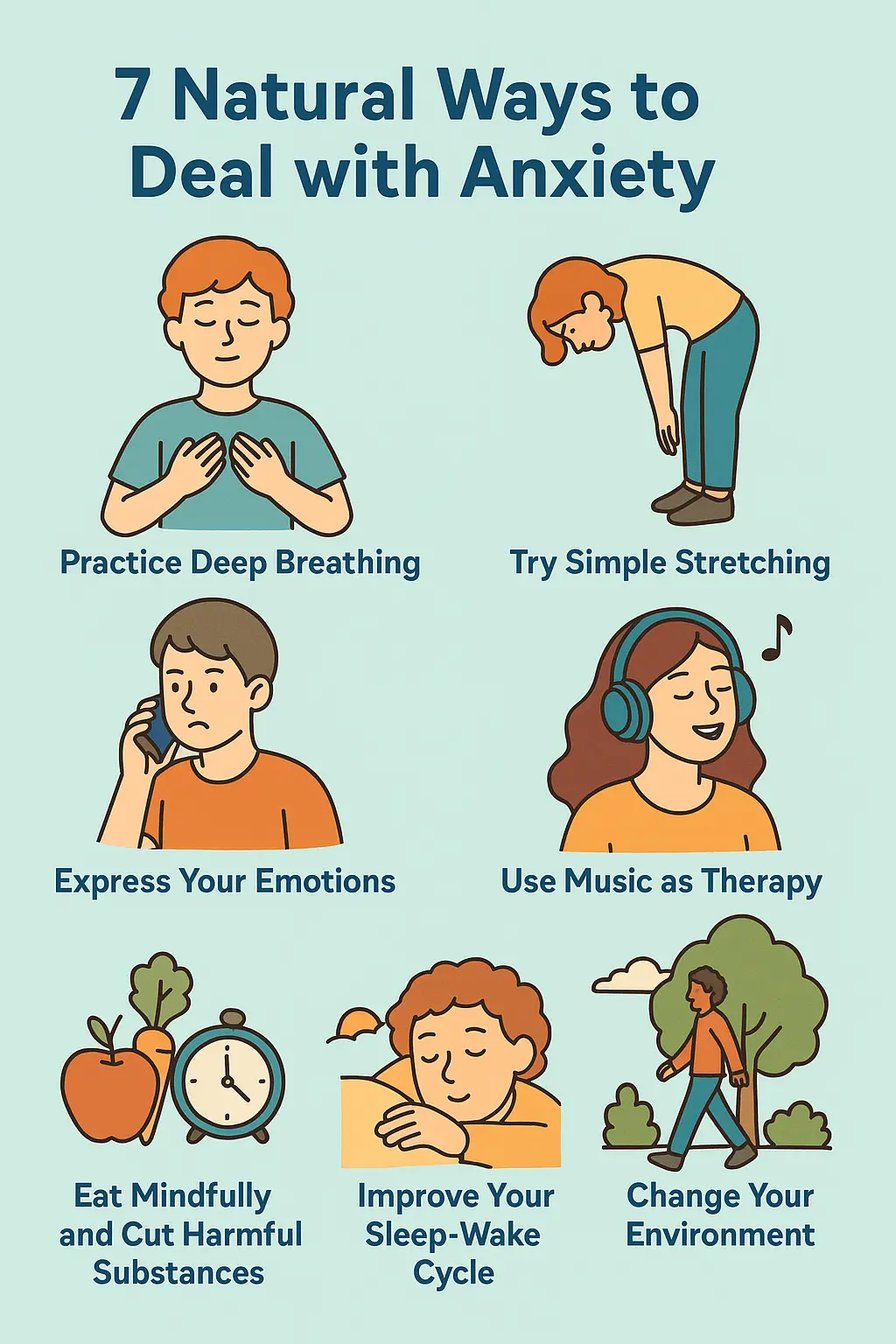
7 Natural Ways to Deal with Anxiety (Backed by Science)
While professional support is important for long-term recovery, there are natural, science-backed methods that can significantly ease symptoms of anxiety. Here are 7 effective strategies:
1. Practice Deep Breathing
How to do it: Close your eyes, inhale deeply into your lungs, hold for a few seconds, then exhale slowly while tightening your abdominal muscles.
Why it works: Slow exhalation activates the parasympathetic nervous system, calming your body and reducing the fight-or-flight response.
2. Try Simple Stretching and Movement
How to do it: Gently roll your head in circular motions, stretch your arms, legs, and back, or simply walk around your room or garden.
Why it works: Physical movement releases endorphins and diverts your mind from anxiety-producing thoughts.
3. Express Your Emotions
How to do it: Talk to a trusted friend or family member. If no one is available, speak to yourself in the mirror or journal your thoughts.
Why it works: Emotional expression helps release mental tension and improves self-awareness, making it easier to manage emotions.
4. Use Music as Therapy
How to do it: Play your favorite songs or sing along with them. Create a calming playlist for moments of anxiety.
Why it works: Music has been scientifically proven to lower cortisol levels and elevate mood, making it a simple yet powerful anxiety-reducer.
5. Eat Mindfully and Cut Harmful Substances
What to do:
- Avoid alcohol, tobacco, and smoking
- Limit your caffeine intake
- Eat a balanced, plant-based or protein-rich diet
Why it works: Your diet affects brain chemistry. Nutrient-rich foods promote the production of serotonin and dopamine—feel-good neurotransmitters.
6. Improve Your Sleep-Wake Cycle
Tips to follow:
- Sleep at a fixed time each night
- Wake up early and get some sunlight exposure
- Avoid screens before bed
- Practice light stretching or meditation before sleep
Why it works: A healthy sleep schedule helps regulate cortisol (the stress hormone) and improves mental clarity throughout the day.
7. Change Your Environment
What to do: Spend time in nature, go for a morning walk, or simply sit in a garden or near a window with fresh air.
Why it works: Natural surroundings have a calming effect on the brain. Green spaces reduce stress hormones and improve mood significantly.
When to See a Doctor
If your anxiety symptoms last more than two weeks or begin to interfere with daily life, it’s important to consult a medical professional or mental health expert. Natural remedies can support healing, but they are not a substitute for clinical care when it’s needed.
Final Thoughts
Managing anxiety naturally is not only possible but also highly effective when done consistently. These small changes—rooted in science—can make a big difference in your mental well-being.
Take a deep breath, step outside, and give your body and mind the care they deserve.
🛒 Recommended Product
Himalaya Ashwagandha is one of the most trusted GMP-certified options for anxiety support in India — using standardised root extract, the form with the strongest clinical evidence for stress reduction. Consistent daily use for 60 days is what clinical trials show produces measurable cortisol reduction.
View Himalaya Ashwagandha on Amazon →References
- Hofmann SG, et al. The efficacy of cognitive behavioral therapy: a review of meta-analyses. Cognit Ther Res. 2012;36(5):427-440.
- Pascoe MC, et al. Mindfulness mediates the physiological markers of stress. J Psychiatr Res. 2017;95:156-178.
- Stubbs B, et al. An examination of the anxiolytic effects of exercise for people with anxiety. Psychiatry Res. 2017;249:102-108.
Written by — Dharmil Pandya
Medical Writer | Founder, Healthier Tomorrow
#NaturalAnxietyRelief #AnxietyTips #MentalHealthMatters #DealWithAnxiety #StressReliefNaturally #SelfCareRoutine #HolisticWellness #MindBodyBalance #AnxietySupport #MentalWellbeing #BreatheRelaxRepeat #HealthyLifestyleTips #ScienceBackedWellness #OvercomeAnxiety #DailyWellness