
Hypertension in Urban India: The Silent Killer Thriving in City Life
🌆 Is Your Urban Lifestyle Raising Your Blood Pressure?
Hypertension—commonly called high blood pressure—isn’t just a health term your parents worry about. It’s a silent, creeping threat affecting over 30% of India's urban population, and it’s striking harder and younger than ever before. With South Asians, especially Indians, genetically more prone, the risk only multiplies under today’s fast-paced, high-stress lifestyle.
But here’s the truth: hypertension is manageable—and often preventable—once you understand what fuels it and how to fight back.
📈 India’s Hypertension Crisis: Why You Should Care
Globally, hypertension is one of the leading causes of heart attacks, strokes, and kidney diseases. But in India, the situation is especially alarming. Recent studies show that nearly 1 in 3 urban Indians suffer from high blood pressure. And the numbers are climbing.
Why is this dangerous? Because hypertension rarely shows early symptoms. It quietly damages your heart, arteries, brain, and kidneys—often before you realize anything is wrong.
🏙️ Why Urban Life Is Fueling the Blood Pressure Epidemic
Life in big cities may bring opportunity, but it also brings chaos—and your body pays the price. Let’s break down how a typical urban lifestyle raises your hypertension risk:
🔄 Chronic Stress
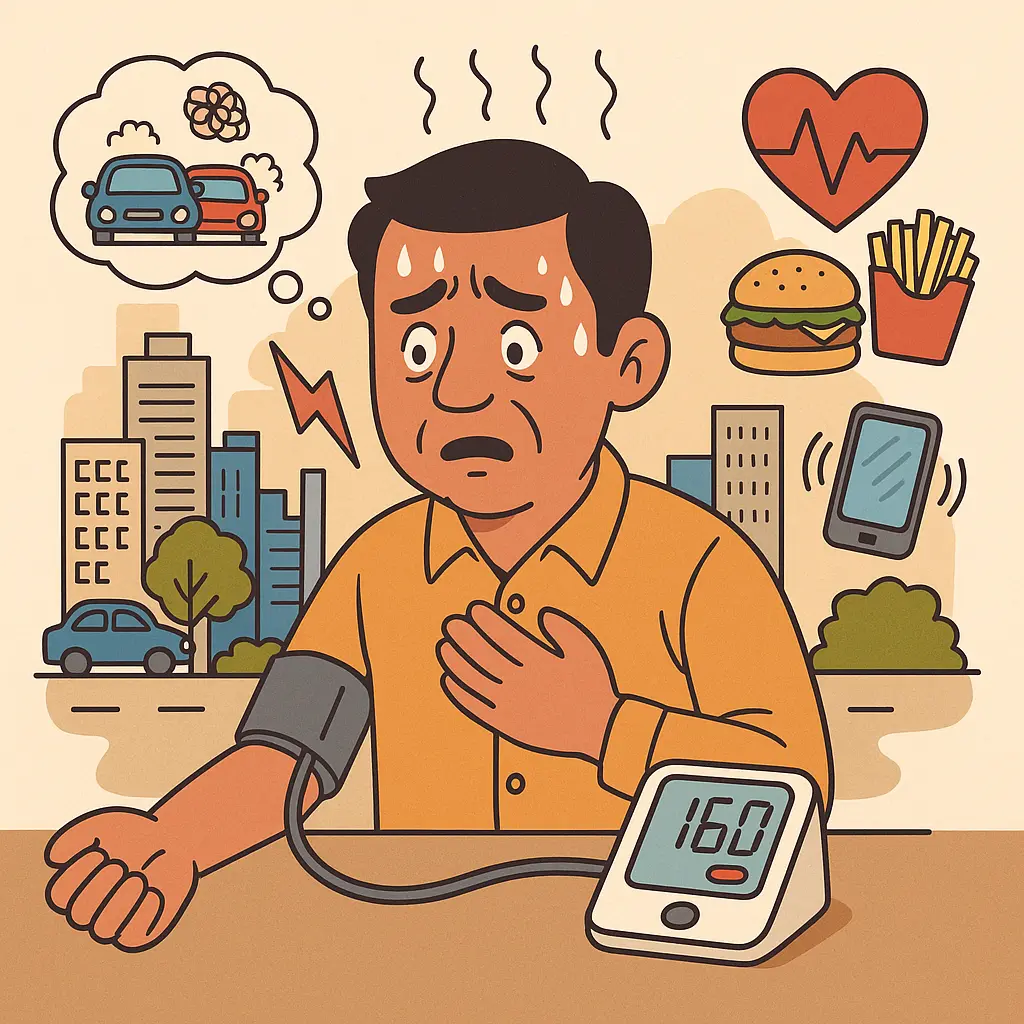
Tight deadlines, never-ending commutes, social pressure—your body releases more cortisol, the stress hormone that keeps your blood pressure constantly elevated.
🪑 Sedentary Habits
Long hours at desks, minimal physical activity, and reliance on transportation weaken your heart’s ability to pump efficiently.
🍔 Processed and Salty Foods
Fast food and packaged snacks are everywhere. But their high sodium content spikes your blood pressure quickly and silently.
🌙 Poor Sleep Quality
Late-night scrolling, noisy neighborhoods, or irregular shifts all reduce quality sleep—disrupting your body’s blood pressure regulation.
📱 Screen Time Overload
More screen time means more sitting, less sleep, more stress, and reduced physical movement—a recipe for rising BP.
⚠️ Common Symptoms of Hypertension (If Any Appear at All)
Hypertension is called the "silent killer” for a reason—it often has no visible symptoms. But when they do occur, they might include:
- Persistent headaches
- Dizziness or blurred vision
- Chest pain or shortness of breath
- Unexplained fatigue or confusion
Don’t wait for symptoms. Regular BP checks are your best defense.
💡 How to Manage Hypertension in a Busy City Life
You don’t need to overhaul your life overnight. Small, consistent lifestyle tweaks can make a massive difference. Here’s how to start:
🩺 1. Track Your Blood Pressure
- Check twice daily—once in the morning, once in the evening
- Keep a log to understand your triggers
🏃 2. Move More, Sit Less
- Target at least 150 minutes of moderate exercise per week
- Walk after meals, take the stairs, try dance, yoga, or cycling
🧂 3. Slash the Salt
- Read labels and cut down on packaged snacks
- Avoid adding salt at the table—even a little goes a long way
🧘 4. Master the Stress Game
- Try deep breathing, meditation, or just unplug for 10 minutes a day
- Spend time in nature—even a quick walk helps
- Say no to stress “relievers” like smoking or alcohol—they make it worse
💊 5. Stick to Medications (If Prescribed)
- Take meds on time
- Never stop them without your doctor’s green light
🛒 Recommended Product
Urban hypertension often goes undetected because people only check at clinics. Home monitoring gives far more useful data — tracking your BP across different times, stress situations and after lifestyle changes. This Omron monitor is clinically validated and recommended by Indian cardiologists.
View Omron BP Monitor on Amazon →🙌 Final Thoughts: You’re in Control
Urban living doesn’t have to mean living with high blood pressure. By becoming aware and taking daily micro-steps, you can protect your heart, your energy, and your future.
✨ Start today with one change—take the stairs, skip the salty snack, or breathe deeply for 5 minutes. Your heart will thank you.
🔍 Frequently Asked Questions (FAQs)
1. Is hypertension reversible?
It can often be controlled and sometimes reversed with lifestyle changes and medication.
2. Can young people get high blood pressure?
Yes. Sedentary lifestyle and chronic stress are making hypertension common even among those in their 20s and 30s.
3. How often should I check my blood pressure?
If you're at risk, check at least twice a day or as advised by your doctor.
References
- Anchala R, et al. Hypertension in India: a systematic review and meta-analysis. J Hypertens. 2014;32(6):1170-1177.
- Ramakrishnan S, et al. Hypertension in South Asia. Curr Atheroscler Rep. 2020;22(6):28.
- Gupta R, et al. Prevalence, awareness, treatment and control of hypertension in India. J Hum Hypertens. 2019;33(8):524-531.
Written by — Dharmil Pandya
Medical Writer | Founder, Healthier Tomorrow