
The Indian Gut Microbiome — Why Your Gut Bacteria Are Different and What to Feed Them
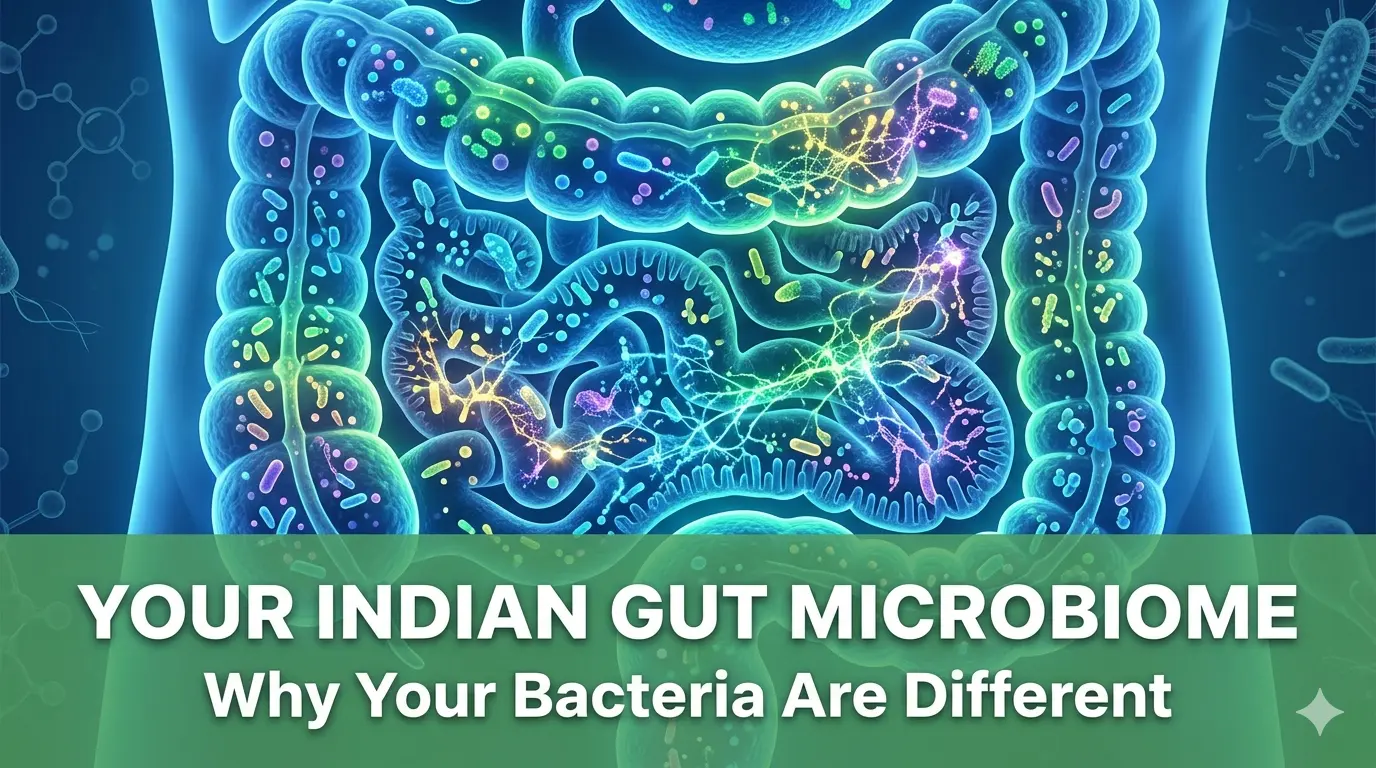
Inside your gut right now, approximately 38 trillion bacteria are going about their business — digesting your food, producing vitamins, training your immune system, communicating with your brain and protecting you against pathogens. This community of microorganisms — called the gut microbiome — is arguably the most complex and influential ecosystem in the human body.
What most Indians don't realise is that their gut microbiome is distinctly different from those studied in Western research — shaped by thousands of years of Indian dietary tradition, spice use, cooking methods and environmental exposure. This difference is significant, not well understood and currently under serious threat.
A major 2026 Indian health report found that 36% of Indians suffer from vitamin deficiencies — many of which are produced or regulated by gut bacteria. The epidemic of digestive problems, immune dysfunction, mental health disorders and metabolic disease in urban India is, in significant part, a story of gut microbiome disruption.
Understanding your gut microbiome — and specifically what makes the Indian gut distinctive — is one of the most important things you can do for your long-term health.
What Is the Gut Microbiome?
The gut microbiome refers to the collective community of microorganisms — bacteria, fungi, viruses and archaea — that inhabit your gastrointestinal tract, with the highest concentration in the large intestine (colon).
The numbers are staggering:
- Approximately 38 trillion microbial cells in the human gut — roughly equal to the number of human cells in your body
- Over 1,000 different bacterial species identified in the human gut globally — though each individual harbours approximately 150-200 species
- Approximately 3.3 million unique microbial genes — 150 times more genetic diversity than the human genome itself
- Total weight of the gut microbiome: approximately 200 grams — equivalent to a large apple
This is not a passive collection of hitchhikers. The gut microbiome is a metabolically active organ — performing functions so essential that human life as we know it is impossible without it.
What the gut microbiome does:
- Digestion and nutrient extraction: Human digestive enzymes cannot break down dietary fiber. Gut bacteria ferment fiber — producing short-chain fatty acids (SCFAs) including butyrate, propionate and acetate that are critical energy sources for colonocytes (intestinal lining cells), regulate blood sugar, reduce systemic inflammation and protect against colon cancer.
- Vitamin production: Your gut bacteria produce significant quantities of Vitamin K2 (essential for bone and cardiovascular health), several B vitamins including B12, B6, folate, riboflavin and biotin, and contribute to Vitamin D metabolism. The epidemic B12 deficiency in Indian vegetarians is partially explained by inadequate gut bacterial production.
- Immune system education and regulation: Approximately 70% of your immune system resides in the gut — specifically in the gut-associated lymphoid tissue (GALT). Your gut microbiome continuously trains your immune system — teaching it to tolerate harmless food antigens and your own tissues while remaining alert to genuine pathogens. Disruption of this training — through microbiome imbalance — contributes to autoimmune diseases, allergies and chronic inflammation.
- Neurotransmitter production: As discussed in our gut-brain axis blog — your gut bacteria produce approximately 90% of your serotonin, significant quantities of GABA (the primary inhibitory neurotransmitter), dopamine precursors and other neuroactive compounds that directly influence mood, anxiety, cognition and behaviour.
- Pathogen defence: A diverse, healthy gut microbiome physically occupies the intestinal surface — preventing pathogenic bacteria from finding attachment sites and establishing infection. This "colonisation resistance" is one of your most important defences against gastrointestinal infections. The widespread gut dysbiosis in India — driven by antibiotic overuse, processed food diets and stress — is a significant contributor to India's high burden of gastrointestinal infections.
- Metabolism regulation: Gut bacteria influence body weight, fat storage, insulin sensitivity and metabolic rate through multiple mechanisms — including SCFA production, bile acid metabolism and direct hormonal signalling. The gut microbiome of obese individuals differs measurably and consistently from that of lean individuals — and transplanting gut bacteria from obese to lean rodents causes weight gain.
What Makes the Indian Gut Microbiome Distinctive?
This is where the science becomes particularly interesting — and particularly relevant for Indians.
The composition of the gut microbiome is shaped by multiple factors — genetics, geography, birth mode, breastfeeding, antibiotic exposure and most powerfully of all — diet. The Indian diet, Indian spices and Indian food preparation methods have shaped the gut microbiome of Indians over millennia in ways that are now beginning to be scientifically characterised.
Higher fiber intake in traditional Indian diets
Traditional Indian diets — based on whole grains, legumes, vegetables and fruits — provide significantly more fiber than Western diets. This fiber-rich environment selects for a gut microbiome rich in fiber-fermenting bacteria — particularly Firmicutes species including Lactobacillus, Bifidobacterium and Faecalibacterium prausnitzii.
These fiber-fermenting bacteria produce higher quantities of butyrate — the primary fuel for intestinal lining cells and one of the most important anti-inflammatory compounds produced in the gut. Indian guts, on traditional diets, tend to produce more butyrate than Western guts — a significant protective advantage.
Fermented foods — India's probiotic tradition
The Indian diet has traditionally included a remarkable array of naturally fermented foods — each representing centuries of empirical wisdom about gut health that modern science is only now fully validating:
- Curd (dahi): Fresh, homemade curd is a living probiotic food containing active Lactobacillus and Streptococcus thermophilus cultures. These bacteria temporarily colonise the gut, reduce intestinal pH (making it inhospitable to pathogens), produce antimicrobial compounds and stimulate the immune system.
- Chaas (buttermilk): Diluted, spiced chaas — often flavoured with cumin (jeera), ginger and curry leaves — is both probiotic and prebiotic. The spices add compounds that specifically feed beneficial bacteria and inhibit pathogenic ones.
- Idli and dosa: The fermentation of rice and urad dal batter produces a food rich in lactobacilli and dramatically increases the bioavailability of nutrients — particularly iron, zinc and B vitamins — in the final food. Idli and dosa are simultaneously probiotic, highly digestible and nutritionally superior to their unfermented equivalents.
- Dhokla and kanji: Fermented gram flour and fermented rice water respectively — both traditional sources of beneficial bacteria and prebiotic compounds.
- Achar (pickles): Traditionally prepared Indian pickles — fermented in mustard oil with salt and spices — contain diverse bacterial cultures. Commercial pickles preserved in vinegar and chemicals are not equivalent — the fermentation process and live bacteria are the key.
- Kanji (fermented carrot drink): A traditional North Indian fermented drink made from black carrots and mustard seeds — a rich source of live lactobacilli and antioxidant anthocyanins.
The spice advantage
Indian cooking uses a diverse array of spices that have profound effects on the gut microbiome — effects that Indian cuisine discovered empirically centuries before microbiology existed to explain why:
- Turmeric (haldi): Curcumin modulates gut microbiome composition — increasing beneficial Bifidobacterium and Lactobacillus populations while reducing pro-inflammatory species. It also directly reduces intestinal inflammation and supports the integrity of the intestinal barrier (the "leaky gut" barrier).
- Ginger (adrak): Gingerols and shogaols in ginger have selective antimicrobial activity — inhibiting pathogenic bacteria while sparing or promoting beneficial ones. Ginger also significantly accelerates gastric emptying and reduces intestinal inflammation.
- Cumin (jeera): Contains thymol and carvacrol — compounds with selective antimicrobial activity and prebiotic effects that feed beneficial gut bacteria. The traditional Indian practice of adding jeera to chaas and other foods has measurable gut-protective effects.
- Fenugreek (methi): Rich in galactomannan — a soluble fiber that serves as an outstanding prebiotic, selectively feeding Bifidobacterium and Lactobacillus populations. Also directly improves insulin sensitivity through gut microbiome mechanisms.
- Asafoetida (hing): Traditionally added to legume dishes specifically because it reduces the flatulence-causing effects of legume oligosaccharides — evidence that Indian cooking understood gut fermentation physiology long before modern science did. Hing contains prebiotic fructooligosaccharides and has antimicrobial properties against intestinal pathogens.
- Ajwain (carom seeds): Thymol-rich ajwain is strongly antimicrobial against pathogenic bacteria while promoting beneficial bacterial growth. Used traditionally in India for digestive complaints with well-validated pharmacological mechanisms.
Research findings on the Indian gut microbiome
Studies examining the gut microbiome of Indians on traditional diets have found:
- Higher Prevotella abundance — associated with plant-based, high-fiber diets and linked to efficient carbohydrate fermentation
- Higher Lactobacillus and Bifidobacterium in regular curd consumers
- Lower levels of Bacteroides — the dominant genus in Western microbiomes associated with higher meat and fat intake
- Greater overall microbial diversity — a consistent marker of gut health
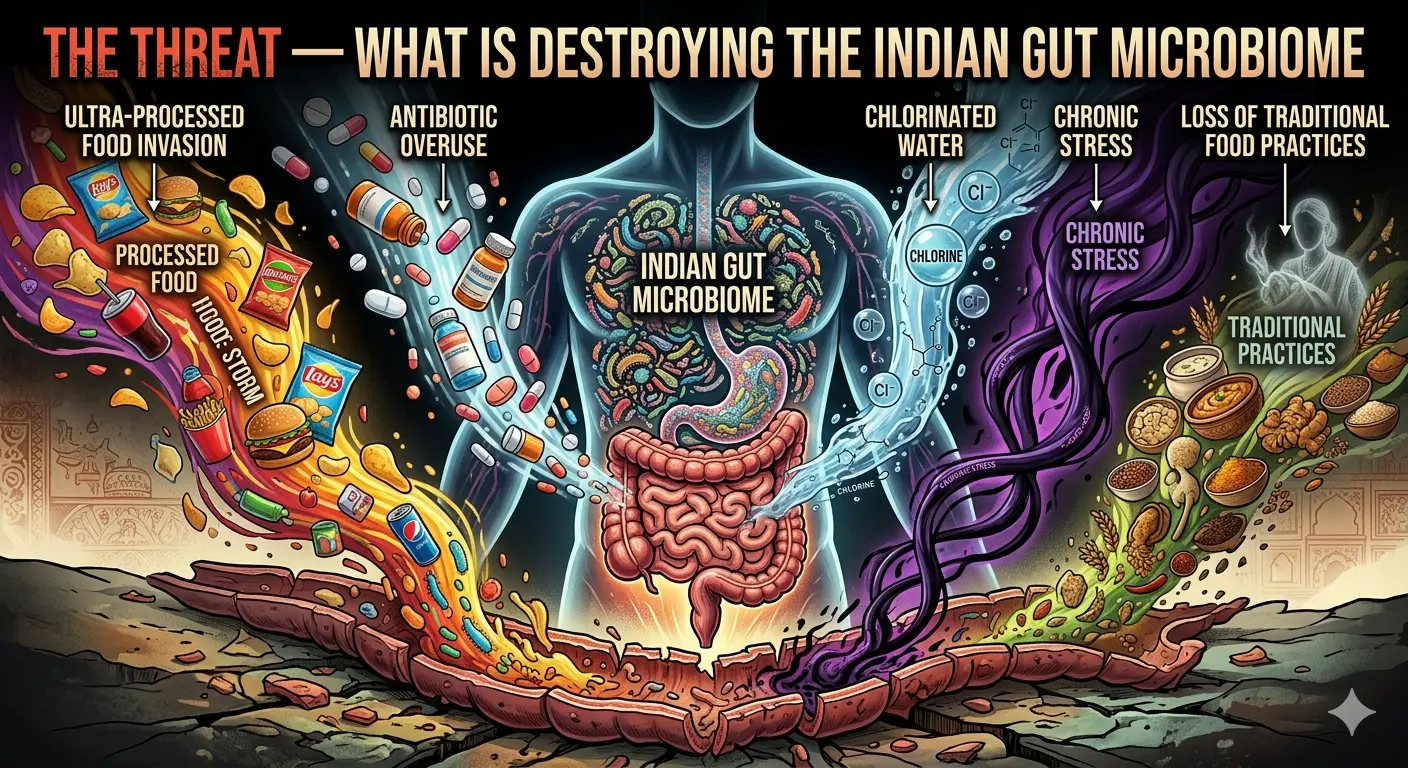
The Threat — What Is Destroying the Indian Gut Microbiome
Here is the uncomfortable truth: the distinctive, fiber-rich, fermented food, spice-diverse gut microbiome that India developed over millennia is being systematically destroyed — in a single generation.
Ultra-processed food invasion
India's diets have increasingly shifted towards refined carbohydrates and processed foods, with nutritional diversity often sacrificed in favour of higher calorie intake. Ultra-processed foods — instant noodles, packaged biscuits, flavoured chips, sweetened yogurts, cold drinks — are catastrophic for the gut microbiome:
- They provide no fiber — starving fiber-fermenting bacteria that then die off or reduce in population
- They contain emulsifiers (carrageenan, polysorbate 80, carboxymethylcellulose) that directly disrupt the mucus layer protecting the intestinal lining — increasing intestinal permeability ("leaky gut") and promoting systemic inflammation
- They contain artificial sweeteners that alter gut microbiome composition unfavourably — even non-caloric sweeteners like saccharin and sucralose measurably impair glucose tolerance through microbiome-mediated mechanisms
- They are low in the polyphenols and plant-derived prebiotic compounds that feed beneficial bacteria
Antibiotic overuse
India has one of the highest rates of antibiotic use and antibiotic resistance in the world. Antibiotics — while life-saving when genuinely needed — are profoundly disruptive to the gut microbiome. A single course of broad-spectrum antibiotics can reduce gut microbial diversity by 25-50%, with some species taking months to years to recover and others potentially never returning to pre-antibiotic levels.
The Indian practice of taking antibiotics without prescription, for viral infections, in inadequate doses and without completing courses — is simultaneously driving antibiotic resistance and causing massive cumulative gut microbiome damage at the population level.
Chlorinated water
Chlorine in municipal water — essential for killing waterborne pathogens — also kills gut bacteria when ingested regularly. This is a difficult trade-off that is unavoidable in urban India, but filtering drinking water and using unchlorinated water for curd preparation reduces this impact.
Chronic stress
The gut-brain axis operates bidirectionally. Just as the gut influences the brain — the brain influences the gut. Chronic psychological stress directly alters gut microbiome composition — reducing beneficial Lactobacillus populations, increasing intestinal permeability and promoting the growth of pro-inflammatory bacterial species. The chronic stress epidemic in urban India is having measurable effects on the gut microbiomes of millions.
Loss of traditional food practices
As joint families dissolve, urban lifestyles accelerate and commercial food options expand — traditional food preparation practices are being abandoned. Fresh homemade curd is replaced by commercial flavoured yogurt. Fermented idli batter is replaced by instant mix. Home-cooked dal is replaced by packaged instant meals. The cumulative effect is a diet that is dramatically less diverse, less fermented and less microbiome-supportive than what previous generations consumed.
How to Protect and Rebuild Your Indian Gut Microbiome
The good news is that the gut microbiome is remarkably responsive to dietary change — with measurable shifts in composition occurring within 24-48 hours of significant dietary change and meaningful improvement in diversity within 2-4 weeks of consistent dietary intervention.
Maximise fiber diversity — the single most important intervention
The research is clear: dietary fiber diversity drives gut microbial diversity — and microbial diversity is the primary marker of a healthy gut microbiome. Different types of fiber feed different bacterial species.
The 30-plant-per-week target: Research from the American Gut Project found that people eating 30 or more different plant foods per week had dramatically more diverse gut microbiomes than those eating fewer than 10 plant foods per week. This includes vegetables, fruits, whole grains, legumes, nuts, seeds, herbs and spices.
For Indians, this target is highly achievable through the extraordinary diversity of Indian vegetarian cuisine — dal, sabzi, whole grains, chutneys, pickles, curd, seasonal fruits. The challenge is actually eating this diversity rather than defaulting to the same narrow set of foods daily.
Specific high-impact prebiotic foods for Indian diets:
- Moong dal: Among the most gut-friendly legumes — high in prebiotic oligosaccharides, easily digestible, low in gas-producing compounds. An excellent daily staple.
- Banana (particularly slightly unripe): Rich in resistant starch — a prebiotic that specifically feeds Bifidobacterium. The less ripe the banana, the higher the resistant starch content.
- Cooked and cooled rice: Cooling cooked rice converts some digestible starch to resistant starch — a prebiotic. Yesterday's rice (properly refrigerated) has more resistant starch than freshly cooked rice. This explains the traditional Indian practice of eating leftover rice.
- Garlic and onion: Rich in inulin and fructooligosaccharides — among the most potent prebiotics available. Daily consumption of garlic and onion in Indian cooking is a significant gut microbiome advantage.
- Amla (Indian gooseberry): One of the richest sources of Vitamin C and polyphenols in nature — amla polyphenols specifically increase Lactobacillus and Bifidobacterium populations while inhibiting pro-inflammatory bacterial species.
- Isabgol (psyllium husk): The most potent prebiotic fiber available in Indian pharmacies — one teaspoon in water daily dramatically increases beneficial bacterial populations and SCFA production.
🛒 Recommended Product
Isabgol (psyllium husk) is one of the most effective and affordable prebiotic fiber supplements available in India. As discussed in this guide, soluble fiber is the most important thing you can add to your diet for gut microbiome diversity. One teaspoon in water daily makes a significant difference within 2-4 weeks.
View Sat Isabgol on Amazon →Prioritise fermented foods daily
Aim to include at least one traditional fermented food at every meal:
- Fresh homemade curd — make your own from live culture starter for maximum probiotic benefit
- Chaas — spiced buttermilk with jeera, ginger and curry leaves
- Idli or dosa — fermented rice and dal — at least several times per week
- Traditional pickle (achar) — a small amount with meals
- Kanji during winters — fermented carrot and mustard seed drink
Use your spice box as medicine
Every time you add turmeric, ginger, cumin, fenugreek, asafoetida, ajwain or garlic to your cooking — you are doing something evidence-based for your gut microbiome. Do not reduce spice use in the misguided belief that bland food is healthier. Your spice box is one of your most powerful health tools.
Reduce ultra-processed food dramatically
Every processed food meal that replaces a traditional Indian meal is a missed opportunity to feed your beneficial gut bacteria. The replacement of homemade curd and dal with flavoured yogurt and instant noodles is a direct downgrade for your gut microbiome.
Use antibiotics only when genuinely necessary
This cannot be overstated. Every unnecessary antibiotic course causes gut microbiome damage that may take months to years to partially recover from. When your doctor prescribes an antibiotic — take it if genuinely needed. When you feel you should take an antibiotic for a cold or mild viral illness — you should not. Antibiotics have no effect on viral infections and cause significant microbiome collateral damage.
When you must take antibiotics — take a probiotic (Lactobacillus rhamnosus GG or Saccharomyces boulardii) simultaneously (at a different time of day to the antibiotic) to reduce disruption, and resume fermented foods immediately after completing the course.
Manage stress — for your gut's sake
The chronic stress so prevalent in urban India directly impairs gut microbiome health. Breathwork, yoga, adequate sleep and social connection are not just mental health interventions — they are gut health interventions.
A Note on Probiotic Supplements
The probiotic supplement market in India is growing rapidly — and largely ahead of the evidence. A few important points:
- Most commercial probiotic supplements contain strains (typically Lactobacillus acidophilus, L. rhamnosus, Bifidobacterium species) that have reasonable evidence for specific conditions — antibiotic-associated diarrhoea, irritable bowel syndrome, vaginal infections, rotavirus diarrhoea in children.
- For general gut health maintenance in healthy individuals — the evidence for probiotic supplements is much weaker than the evidence for probiotic-rich foods. A daily serving of fresh homemade curd provides comparable or superior probiotic benefit to many commercial supplements — at a fraction of the cost.
- Where supplements are specifically useful: during and after antibiotic courses, during travel to areas with different water and food microbiomes, for specific diagnosed conditions under medical guidance.
- If choosing a probiotic supplement — look for: named strains with clinical evidence, guaranteed live organisms at time of use (not just at manufacture), storage requirements followed properly (many require refrigeration), and CFU counts of at least 10^9 (1 billion) per dose.
Conclusion
Your gut microbiome is not generic. It is shaped by thousands of years of Indian dietary tradition — fermented foods, fiber diversity, therapeutic spices and seasonally varied plant foods that created a gut environment uniquely suited to Indian physiology.
This inheritance is extraordinary. It is also fragile — being dismantled in a single generation by ultra-processed foods, antibiotic overuse, chronic stress and the abandonment of traditional food practices.
Protecting your gut microbiome is not complicated. It does not require expensive supplements or exotic superfoods. It requires returning — intelligently and consistently — to the dietary wisdom that Indian culture already possessed.
Make your curd fresh. Cook with your spices. Eat your dal every day. Eat 30 different plants every week. Take antibiotics only when genuinely necessary.
Your gut bacteria — and your immune system, your mood, your metabolism and your long-term health — will thank you.
References
- Gupta VK, et al. A predictive index for health status using species-level gut microbiome profiling. Nat Commun. 2020;11(1):4635.
- Jain T, et al. The gut microbiome of healthy Indians. J Biosci. 2018;43(5):1031-1043.
- Sonnenburg JL, Bäckhed F. Diet-microbiota interactions as moderators of human metabolism. Nature. 2016;535(7610):56-64.
Written by — Dharmil Pandya
Medical Writer | Founder, Healthier Tomorrow
#IndianGutHealth #Microbiome #Prebiotics #IndianSpices #HealthAwareness #NutritionIndia