
Lifestyle Diseases in Young Adults: Causes, Risk Factors & How to Prevent Them Early
What Are Lifestyle Diseases?
In simple terms, lifestyle diseases are chronic health conditions that develop primarily because of how we live. Unlike infectious diseases, they are non-communicable and progress silently over time due to unhealthy habits such as poor diet, physical inactivity, chronic stress, smoking, alcohol use, and inadequate sleep.
While these conditions may not show immediate symptoms, they can gradually become life-altering if not identified and managed early—especially among young adults.
Common Lifestyle Diseases
Some of the most common lifestyle-related diseases include:
- Type 2 diabetes
- Hypertension (high blood pressure)
- Cardiovascular diseases (heart disease & stroke)
- Obesity
- Certain types of cancer
- Chronic respiratory conditions such as asthma
- Fatty liver disease
These conditions were once associated mainly with older adults, but today they are increasingly diagnosed in people in their 20s and 30s.
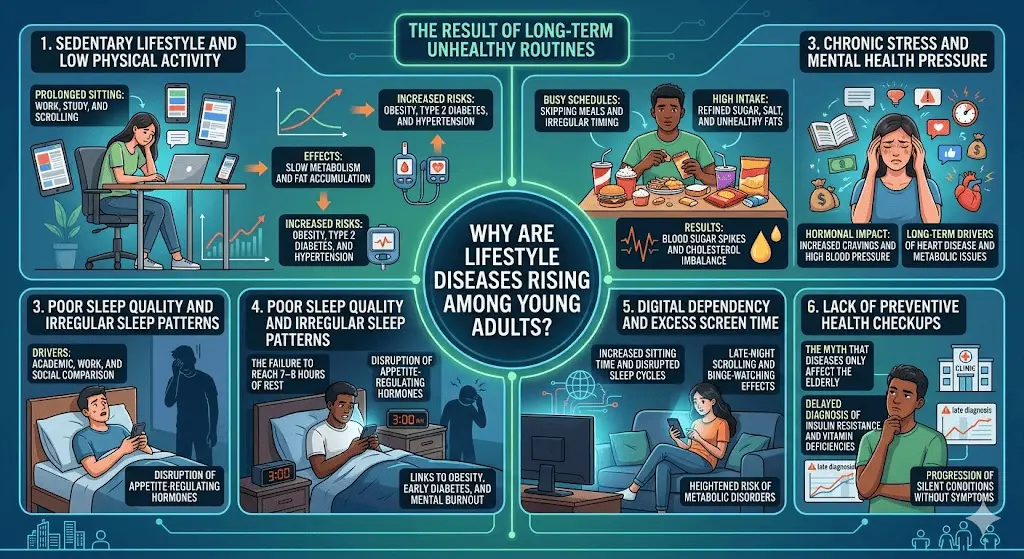
Why Are Lifestyle Diseases Rising Among Young Adults?
Lifestyle diseases do not develop overnight. They are the result of long-term exposure to unhealthy routines, many of which have become normal in modern life.
1. Sedentary Lifestyle and Low Physical Activity
Modern routines involve prolonged sitting—whether at work, studying, commuting, or scrolling on phones. A sedentary lifestyle slows metabolism, weakens muscles, reduces calorie burning, and increases fat accumulation.
Low physical activity significantly raises the risk of:
- Obesity in young adults
- Early-onset type 2 diabetes
- Hypertension and metabolic disorders
2. Poor Eating Patterns and Processed Foods
Busy schedules often lead to:
- Skipping meals
- Irregular eating times
- Frequent fast food consumption
- High intake of refined sugar, salt, and unhealthy fats
Diets low in fibre and high in processed foods cause blood sugar spikes, cholesterol imbalance, and weight gain—making poor nutrition one of the biggest contributors to lifestyle diseases in youth.
3. Chronic Stress and Mental Health Pressure
Academic competition, work deadlines, financial stress, and social comparison contribute to persistent mental strain. Chronic stress triggers hormonal imbalances that:
- Increase appetite and cravings
- Elevate blood pressure
- Disrupt sleep
- Suppress immunity
Over time, unmanaged stress becomes a silent driver of hypertension, heart disease, and metabolic issues.
4. Poor Sleep Quality and Irregular Sleep Patterns
Many young adults sleep less than the recommended 7–8 hours per night. Poor sleep directly affects:
- Metabolism
- Appetite-regulating hormones
- Blood sugar control
- Cognitive function
Chronic sleep deprivation increases the risk of obesity, early diabetes, high blood pressure, and mental burnout.
5. Digital Dependency and Excess Screen Time
Excessive screen exposure:
- Increases sitting time
- Disrupts natural sleep cycles
- Raises stress and eye strain
Late-night scrolling and binge-watching reduce physical activity and worsen sleep quality, increasing the risk of metabolic disorders.
6. Lack of Preventive Health Checkups
Many young adults avoid routine health screenings, assuming diseases only affect older people. This delay often leads to late diagnosis of conditions like:
- Insulin resistance
- Hypertension
- Thyroid disorders
- Vitamin deficiencies
By the time symptoms appear, the disease may already be progressing.
Prevention of Lifestyle Diseases: What You Can Do Today
Prevention doesn’t require drastic changes—small, consistent actions make a big difference.
- ✔ Start With Daily Movement
Aim for at least 30 minutes of physical activity daily—walking, cycling, swimming, or dancing all count. - ✔ Rethink Your Plate
Focus on whole foods, lean proteins, fruits, vegetables, and whole grains. Stay hydrated with at least 2 litres of water daily. - ✔ Prioritise Sleep
Sleep is when your body repairs itself. Aim for 7 hours of quality sleep every night. - ✔ Manage Stress Proactively
Include relaxation activities like journaling, reading, meditation, or social connection. - ✔ Schedule Regular Health Checks
Annual screenings for blood sugar, cholesterol, liver function, BMI, and blood pressure can detect issues early. - ✔ Break Harmful Habits
Reducing or quitting smoking and alcohol early can reverse damage and protect long-term health.
🛒 Recommended Product
Young adults developing lifestyle diseases often have no symptoms for years. A home BP monitor takes 2 minutes and gives you the single most useful cardiovascular number you can track. Check it monthly — the earlier a trend is caught, the easier it is to reverse.
View BP Monitor on Amazon →References
- Gupta R, et al. Cardiovascular risk factors in young Indians. Indian Heart J. 2019;71(3):184-192.
- Misra A, et al. Obesity and the metabolic syndrome in developing countries. J Clin Endocrinol Metab. 2008;93(11 Suppl 1):S9-30.
- Patel V, et al. Chronic diseases and injuries in India. Lancet. 2011;377(9763):413-428.
Written by — Dharmil Pandya
Medical Writer | Founder, Healthier Tomorrow
#LifestyleDiseases #YoungAdultHealth #PreventiveHealthcare #HealthyLifestyle #MetabolicHealth #ChronicDiseasePrevention #ModernLifestyleRisks #HealthAwareness #WellnessJourney #NonCommunicableDiseases