
Metabolic Health vs BMI: Why Your Weight Doesn’t Tell the Full Story
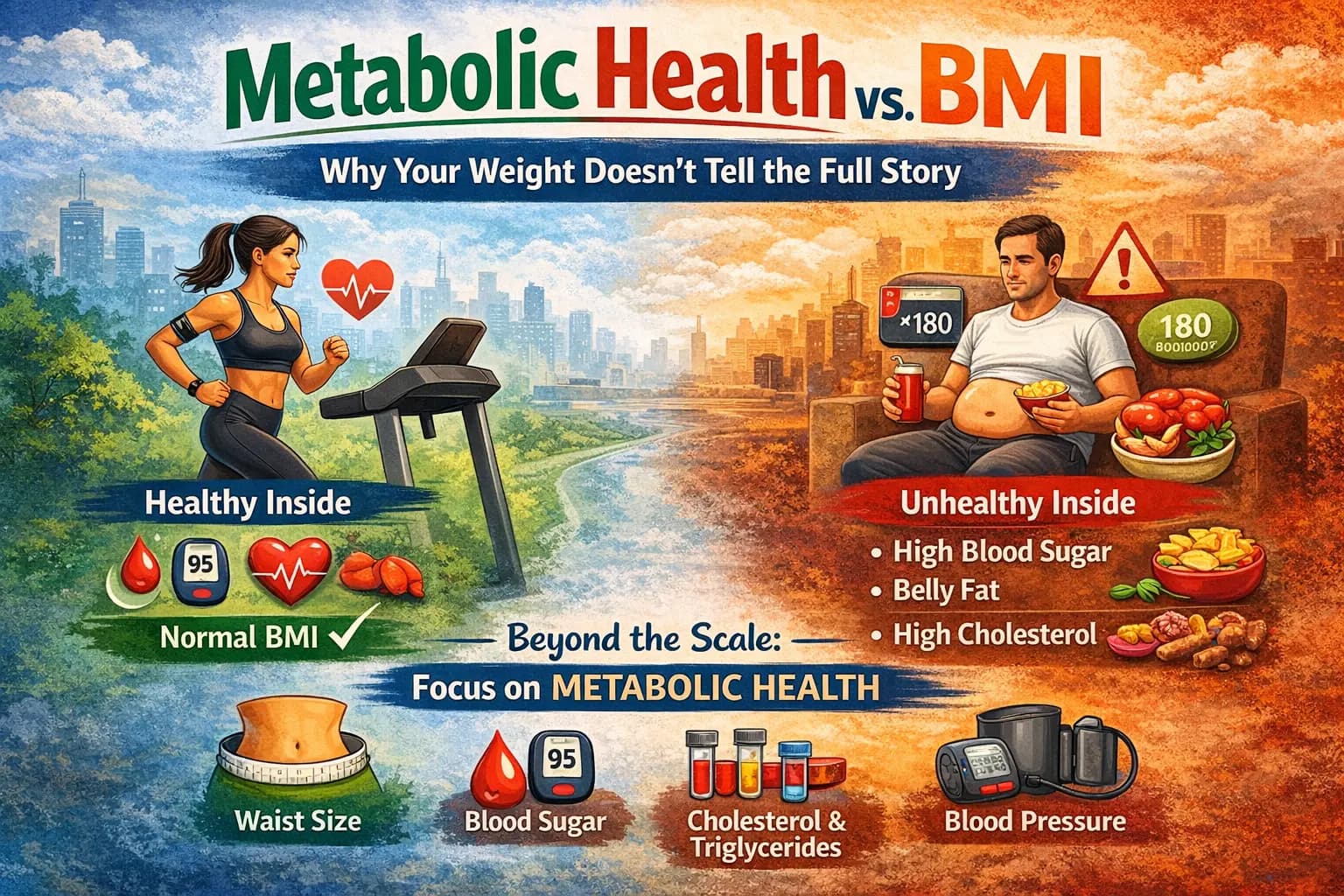
Is a “normal weight” always healthy? And does a high BMI automatically mean you’re unhealthy? Surprisingly, the answer to both is no.
For decades, Body Mass Index (BMI) has been used as the primary yardstick of health. But modern science now tells us a more complex—and more accurate—story. Metabolic health, not weight alone, determines how well your body truly functions.
Let’s break it down clearly.
What Is Metabolic Health?
Metabolic health refers to how efficiently your body performs essential life processes, including:
- Converting food into energy
- Regulating blood sugar and insulin
- Managing cholesterol and fats
- Controlling blood pressure
- Maintaining hormonal balance
- Storing and burning fat appropriately
In simple terms, metabolic health reflects how well your internal systems work together to keep you energized, resilient, and disease-free.
When your metabolism is healthy, you’re more likely to experience:
- Stable energy levels
- Better focus
- Improved physical performance
- Lower risk of chronic diseases like diabetes and heart disease
Why Metabolic Health Is Often Miscommunicated as BMI
Many people are told: “If your BMI is normal, you’re healthy.” This oversimplification is where the problem begins.
BMI was never designed to measure health. It was created as a population-level statistical tool, not an individual diagnostic marker. Yet it’s still widely used in clinics, gyms, and health apps.
What Is BMI?
BMI (Body Mass Index) is a simple ratio of weight to height.
BMI Formula
"BMI"="Weight (kg)" /〖"Height (m)" 〗^2
Based on the result, people are classified as:
- Underweight
- Normal weight
- Overweight
- Obese
Sounds straightforward—but the simplicity is also its biggest weakness.
Why BMI Is Not Sufficient
BMI does not measure:
- Body fat percentage
- Muscle mass
- Fat distribution
- Visceral (organ) fat
- Metabolic markers like glucose or cholesterol
A muscular athlete can be labeled “obese,” while a thin person with insulin resistance and high visceral fat can be labeled “healthy.” In fact, around 30% of people with a normal BMI are metabolically unhealthy.
How BMI Can Be Wrong (Real-World Impact)
Imagine two individuals:
- Person A: Muscular, active, strong — BMI says “overweight”
- Person B: Slim appearance, but high blood sugar and belly fat — BMI says “normal”
BMI misleads in both cases:
- It stigmatizes metabolically healthy people
- It delays intervention for high-risk individuals
This is why metabolic health is far more reliable than BMI.
What Makes Metabolic Health More Reliable Than BMI?
Metabolic health looks inside the body, not just at body size. It evaluates how your systems are functioning, not how you look.
Key Parameters of Metabolic Health (With Normal Ranges)
1. Waist Circumference (Visceral Fat Marker)
Visceral fat is hormonally active and dangerous.
Healthy range:
- Men: < 40 inches (102 cm)
- Women: < 35 inches (88 cm)
High waist circumference increases risk of:
- Diabetes
- High blood pressure
- Heart disease
- Fatty liver
- Joint pain
2. Blood Glucose Levels
Shows how well your body manages sugar.
Targets:
- Fasting: 70–100 mg/dL
- 2 hours after meals: < 180 mg/dL
Chronically high glucose damages blood vessels, nerves, eyes, and organs.
3. Triglycerides
A type of blood fat linked to insulin resistance.
Healthy level:
- Below 150 mg/dL
High levels increase risk of pancreatitis, stroke, and heart disease.
4. Cholesterol (LDL & HDL)
- LDL (“bad” cholesterol): As low as possible
- HDL (“good” cholesterol):
- Men: ≥ 40 mg/dL
- Women: ≥ 50 mg/dL
Doctors now assess cholesterol along with lifestyle, age, blood pressure, and family history, not in isolation.
5. Blood Pressure
Measures the force of blood against artery walls.
Optimal:
- Below 120/80 mmHg
High blood pressure often shows no symptoms but causes silent organ damage.
When Numbers Signal Risk
Metabolic health exists on a spectrum. When three or more markers are abnormal, it’s called metabolic syndrome—a major red flag for:
- Type 2 diabetes
- Cardiovascular disease
- Fatty liver disease
The good news? Early metabolic dysfunction is often reversible.
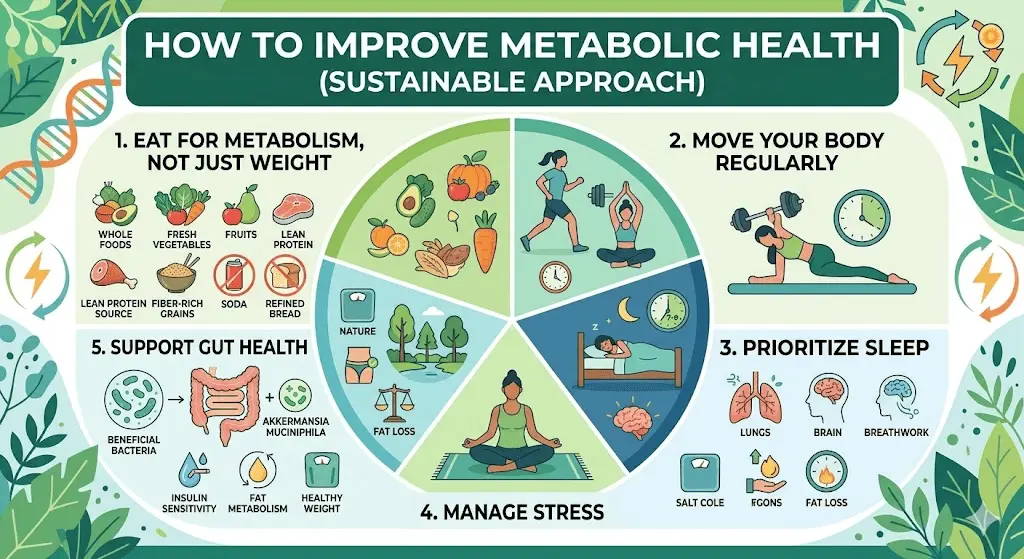
How to Improve Metabolic Health (Sustainable Approach)
1. Eat for Metabolism, Not Just Weight
- Focus on whole, unprocessed foods
- Increase vegetables, fruits, fiber, and protein
- Reduce refined carbs and sugary drinks
🛒 Recommended Product
BMI tells you nothing about body composition. A smart body fat scale measures visceral fat, muscle mass and body water percentage — the metabolic numbers that actually matter for Indians with the thin-fat phenotype. Far more useful than BMI alone for tracking real health progress.
View Smart Body Fat Scale on Amazon →2. Move Your Body Regularly
- Combine cardio + strength training
- Even 20–30 minutes daily improves insulin sensitivity
3. Prioritize Sleep
- Aim for 7–9 hours
- Poor sleep increases blood sugar and cravings
4. Manage Stress
Chronic stress raises cortisol → higher blood sugar → belly fat storage. Try:
- Meditation
- Yoga
- Nature walks
- Breathwork
5. Support Gut Health
Your gut microbiome strongly influences metabolism. Beneficial bacteria like Akkermansia muciniphila are linked to:
- Better insulin sensitivity
- Improved fat metabolism
- Healthier weight regulation
Why Fad Diets Fail (And Harm Metabolic Health)
Crash diets may reduce weight—but often:
- Slow metabolism
- Cause muscle loss
- Create nutrient deficiencies
- Disrupt hormones
- Lead to rebound weight gain
Balance and consistency always outperform extremes.
Common Myths About Metabolic Health
❌ “Skipping meals boosts fat loss”
✔️ It often worsens insulin resistance
❌ “All carbs are bad”
✔️ Whole carbs are essential for metabolic health
❌ “Sweat equals fat loss”
✔️ Sweat is fluid loss, not fat burning
❌ “Supplements can replace lifestyle changes”
✔️ They support—but don’t replace—movement and nutrition
Final Thoughts
Your health cannot be reduced to a single number on a scale. Metabolic health tells the real story—how your body handles energy, stress, food, and recovery. Instead of chasing weight loss alone, focus on building a metabolically resilient body.
Because when metabolism improves, weight, energy, and long-term health follow naturally.
References
- Misra A, Vikram NK. Insulin resistance syndrome in Asian Indians. J Clin Endocrinol Metab. 2004;89(6):2237-2245.
- Bhardwaj S, et al. Secular trends in obesity among urban Asian Indians. Indian Pediatr. 2008;45(2):99-104.
- WHO Expert Consultation. Appropriate body-mass index for Asian populations. Lancet. 2004;363(9403):157-163.
Written by — Dharmil Pandya
Medical Writer | Founder, Healthier Tomorrow