
☀️ The Science of Sunscreen: Mineral vs Chemical — Which One Truly Protects You Better?
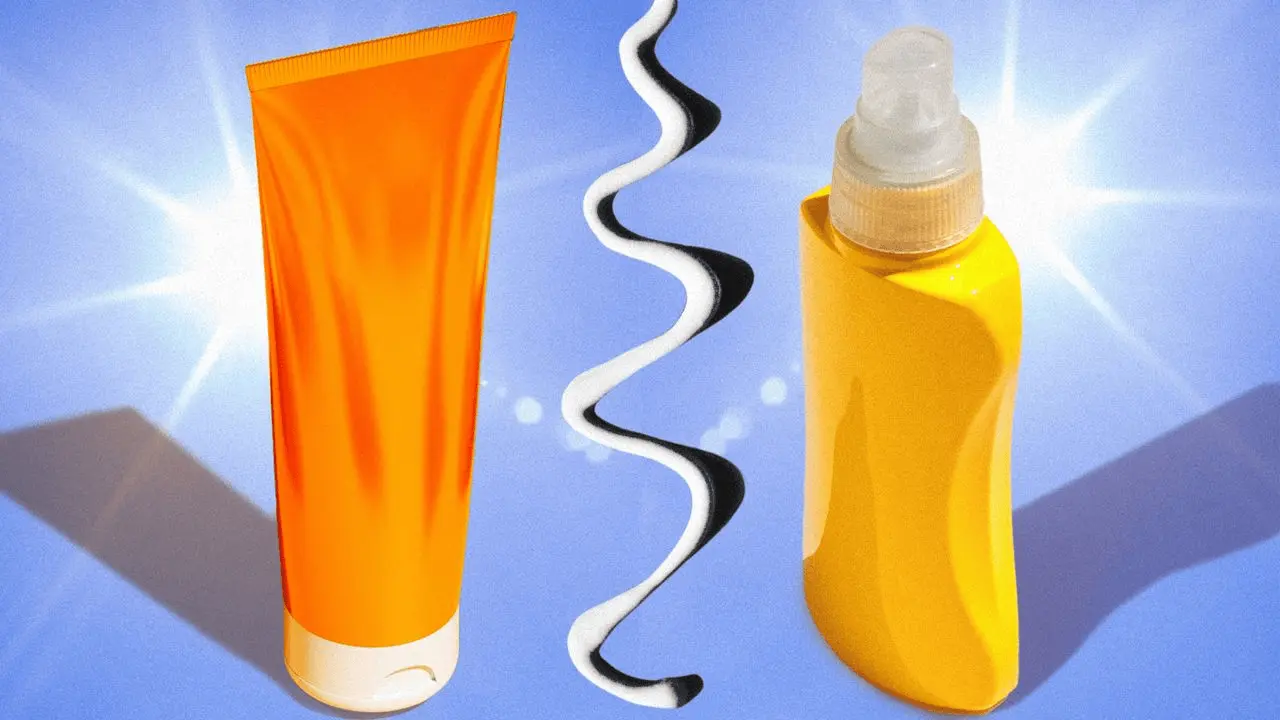
Ever wondered why some sunscreens feel thick and white, while others melt into your skin like lotion? Or why dermatologists argue over “mineral” versus “chemical” formulas? If you’ve ever stood in the skincare aisle confused between zinc oxide and avobenzone, you’re not alone. The truth is — both mineral and chemical sunscreens protect your skin, but they do it in totally different ways. Let’s decode the science, side effects, and secrets of choosing the one that actually suits your skin.
☀️ What Exactly Is Sunscreen?
Sunscreen is your invisible shield against ultraviolet (UV) rays — the invisible light responsible for tanning, aging, and skin damage.
There are two main types:
- Mineral (Physical) Sunscreens
- Chemical (Organic) Sunscreens
Both protect against sunburn and premature aging — but they work like two different defense systems.
🧴 Mineral Sunscreen: Your Reflective Shield
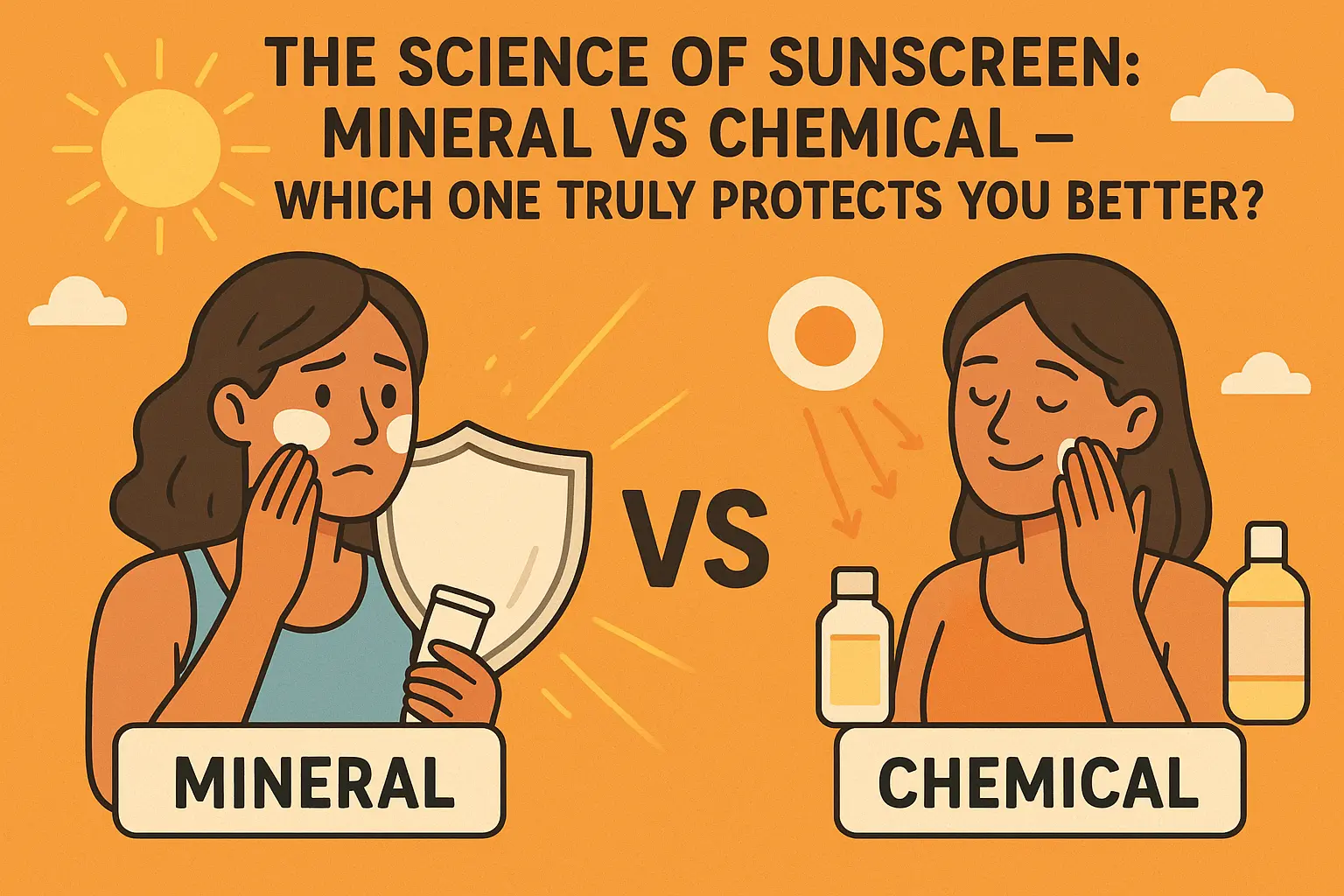
Imagine a mirror sitting on your skin — that’s what mineral sunscreen does. It’s made with natural minerals like:
- 🧪 Zinc oxide
- 🧪 Titanium dioxide
These minerals sit on the surface of your skin, reflecting and scattering UV rays away like tiny shields.
✅ Starts protecting instantly — no waiting time
✅ Gentle on sensitive or acne-prone skin
✅ Reef-safe and kid-friendly
But —
❌ It can feel heavier or leave a white cast, especially on deeper skin tones.
❌ Harder to blend evenly compared to chemical versions.
Think of mineral sunscreen as your “clean, home-cooked meal” — safe, reliable, and gentle.
💡 Pro tip: Look for tinted or “sheer zinc” versions to avoid the ghostly look.
☀️ Chemical Sunscreen: Your Invisible Absorber
Chemical sunscreens work like UV sponges — they absorb the sun’s rays and convert them into heat, which then escapes from your skin. They use ingredients such as:
- Avobenzone
- Oxybenzone
- Octocrylene
- Homosalate
✅ Lightweight and transparent — no white cast
✅ Water-resistant and easy to apply
✅ Great under makeup
But —
❌ Takes 15–20 minutes to activate
❌ Can irritate sensitive skin or sting eyes
❌ Some filters (like oxybenzone) may harm coral reefs
In short: Chemical sunscreen is like “fast food for your skin” — quick, convenient, but not always ideal for everyone.
⚖️ Mineral vs Chemical Sunscreen: Quick Comparison
| Feature | Mineral (Physical) | Chemical (Organic) |
|---|---|---|
| How It Works | Reflects UV rays | Absorbs UV rays & releases heat |
| Active Ingredients | Zinc oxide, Titanium dioxide | Avobenzone, Oxybenzone, Octocrylene |
| Protection Time | Instant | After 15–20 mins |
| Texture | Thicker, may leave white cast | Lightweight, invisible finish |
| Best For | Sensitive, acne-prone, or children | Normal to oily skin, daily wear |
| Eco Impact | Reef-safe | Some types harm marine life |
🌤 How to Choose the Best Sunscreen for Your Skin
Here’s how to find your perfect match 👇
- Know your skin type:
- Sensitive or acne-prone? → Go for mineral
- Normal or oily? → Try chemical
- Consider your activities:
- Outdoor or swimming? → Choose water-resistant chemical formulas
- Office or city use? → Lightweight mineral serum SPF is perfect
- Texture & tone preference:
- Want invisible? → Chemical
- Don’t mind thicker? → Mineral
💬 Expert Tip: “The best sunscreen is the one you’ll actually use every single day.”
💧 Inside the Formula: The Ordinary’s SPF 45 Serum
If you love lightweight, transparent protection, The Ordinary’s UV Filters SPF 45 Serum is worth trying. It combines broad-spectrum SPF 45 protection (PA++++) with:
- Ceramides for hydration 💦
- Non-comedogenic texture (won’t clog pores)
- Zero white cast — works for all skin tones
Why chemical filters? Because they deliver high SPF, transparency, and comfort without the heavy residue that mineral sunscreens often leave behind.
🧘♀️ How to Add Sunscreen Into Your Skincare Routine
Here’s a dermatologist-approved AM routine 👇
- Cleanse – Use a gentle cleanser (like Squalane Cleanser)
- Treat – Apply serums (like Multi-Peptide + HA Serum)
- Moisturize – Hydrate with Natural Moisturizing Factors + PhytoCeramides
- Protect – Finish with UV Filters SPF 45 Serum
Remember — sunscreen is your skin’s best anti-aging investment. Use it every day, even when it’s cloudy!
🌞 Final Takeaway: Which One Wins?
There’s no universal winner — only what fits your lifestyle.
- 🧴 Go mineral if you have sensitive, reactive, or acne-prone skin.
- 🌤 Go chemical if you want a seamless, invisible finish.
- 🌊 Or, use a hybrid sunscreen — the best of both worlds!
Because at the end of the day, the best sunscreen is the one you’ll wear — not the one sitting on your shelf. 💛
🛒 Recommended Product
After reading the science, if you're looking for a mineral sunscreen option for Indian skin — this zinc oxide-based SPF 50 provides broad-spectrum protection without chemical filters. Works well under makeup and is suitable for sensitive and acne-prone skin types.
View Mineral Sunscreen on Amazon →References
- Lim HW, et al. Photoprotection in the 21st century. J Am Acad Dermatol. 2017;76(1):100-109.e1.
- Mancebo SE, Wang SQ. Skin cancer: role of ultraviolet radiation in carcinogenesis. Rev Environ Health. 2014;29(3):265-273.
- Burnett ME, Wang SQ. Current sunscreen controversies: a critical review. Photodermatol Photoimmunol Photomed. 2011;27(2):58-67.
Written by — Dharmil Pandya
Medical Writer | Founder, Healthier Tomorrow
#sunscreen for sensitive skin, #mineral vs chemical sunscreen, #reef-safe sunscreen, #best sunscreen India, #The Ordinary SPF review, #zinc oxide sunscreen, #sunscreen without white cast, #chemical vs physical sunscreen, #daily sun protection, #broad spectrum SPF.