
Perimenopause: The Unspoken Transition Every Woman Deserves to Understand
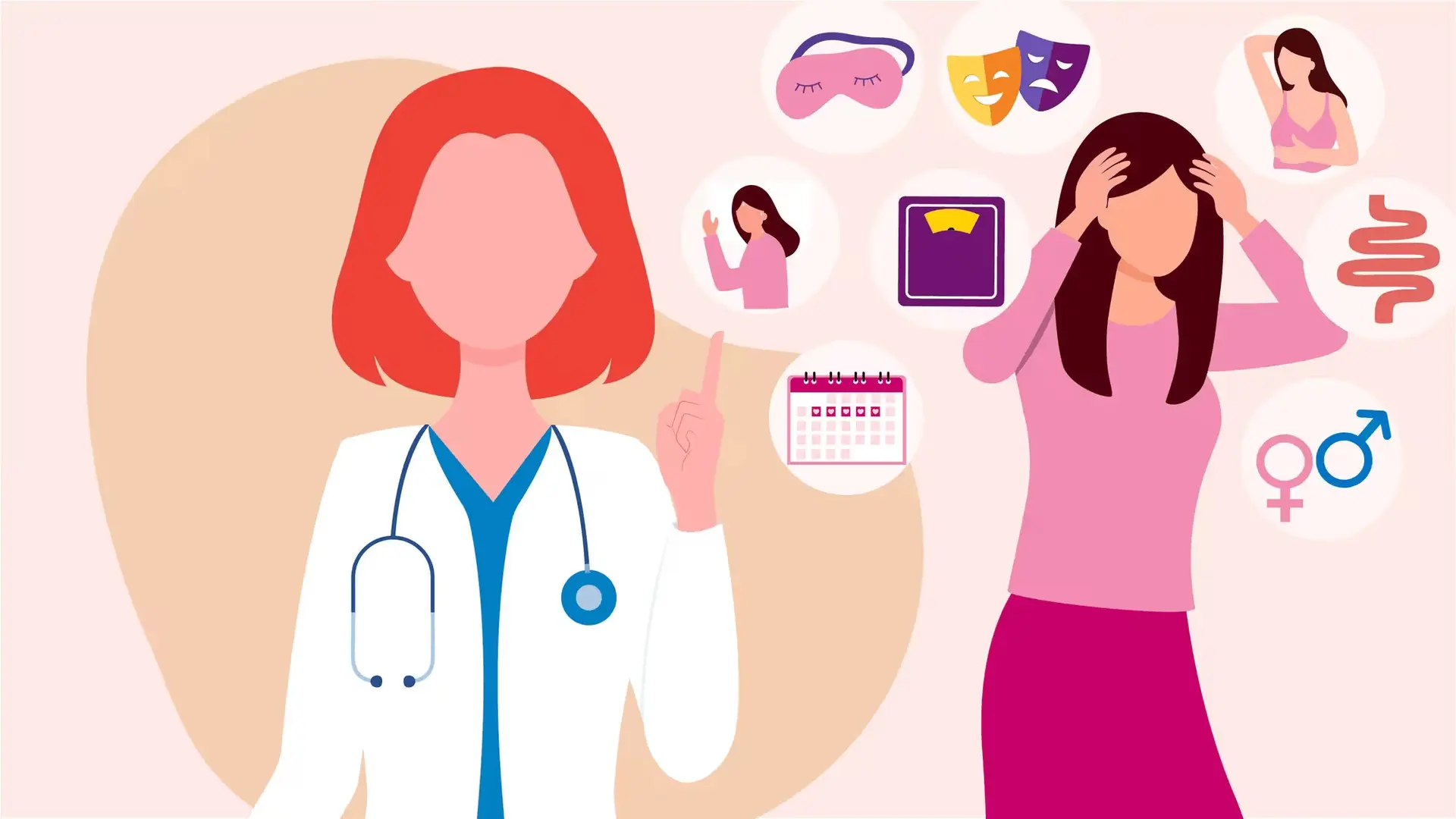
Let’s talk about something nearly half the population will experience—yet most people still whisper about it as if it’s a secret.
Let’s talk about the chapter of a woman’s life that’s often dismissed as “just hormones,” brushed off with jokes, or buried under silence and confusion.
Let’s talk about perimenopause.
She could be your mother, your partner, your sister, your colleague—or even you.
She’s in her mid-40s or early 50s. She manages deadlines and dinner, remembers birthdays, carries the invisible mental load, and keeps everything running. She’s the glue.
But lately, something has shifted.
She walks into a room and forgets why she’s there.
Her shirt clings to her skin—another hot flash.
She sleeps eight hours and still wakes up exhausted.
She feels emotional, irritable, foggy… unlike herself.
And no one is really talking about it.
What Is Perimenopause?
Perimenopause literally means “around menopause.” It’s the transitional phase before menopause, when a woman’s body slowly begins shifting out of its reproductive years.
This stage usually begins in the mid-40s, but it can start as early as the mid-30s or as late as the 50s. For most women, it lasts 4–8 years, though some experience it for just a year and others for nearly a decade.
During perimenopause, the ovaries still produce estrogen and progesterone—but not consistently. Instead of a smooth decline, hormones fluctuate unpredictably. These ups and downs are what create the wide range of physical, emotional, and mental symptoms many women experience.
Why Understanding Perimenopause Matters
Many women feel blindsided by perimenopause—not because it’s rare, but because it’s rarely discussed.
Understanding this phase matters for several reasons:
- Knowledge Brings Relief
When you know that irregular periods, mood changes, poor sleep, or brain fog are part of a natural transition, it reduces fear and self-blame. You’re not “losing control”—your body is changing.
- Early Awareness Improves Quality of Life
Recognizing symptoms early allows women to seek help, make lifestyle changes, and explore treatment options that can significantly ease day-to-day discomfort.
- It Supports Long-Term Health
Hormonal shifts during perimenopause affect bone health, heart health, metabolism, and mental well-being. Awareness allows for early prevention and proactive care.
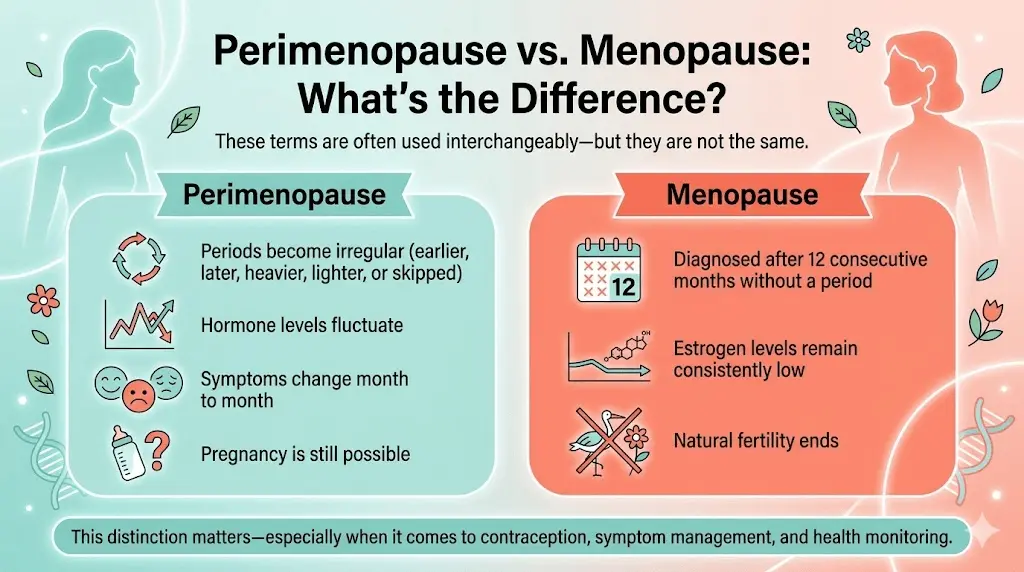
Perimenopause vs. Menopause: What’s the Difference?
These terms are often used interchangeably—but they are not the same.
Perimenopause
- Periods become irregular (earlier, later, heavier, lighter, or skipped)
- Hormone levels fluctuate
- Symptoms change month to month
- Pregnancy is still possible
Menopause
- Diagnosed after 12 consecutive months without a period
- Estrogen levels remain consistently low
- Natural fertility ends
This distinction matters—especially when it comes to contraception, symptom management, and health monitoring.
Early Signs of Perimenopause
The first signs are often subtle and easy to dismiss as stress or aging.
Irregular Periods
Your cycle may shorten, lengthen, become unpredictable, or skip altogether. These changes happen because ovulation becomes inconsistent.
Hot Flashes & Night Sweats
Sudden waves of heat, flushing, sweating, or chills—often disruptive and exhausting, especially at night.
Sleep Disturbances
Difficulty falling asleep, frequent waking, or feeling unrested no matter how long you sleep.
Mood Swings & Irritability
Estrogen influences brain chemistry. Fluctuations can lead to anxiety, irritability, low mood, or emotional sensitivity.
Vaginal Dryness & Libido Changes
Lower estrogen affects vaginal tissue, causing dryness, discomfort, or changes in sexual desire—something many women experience but rarely talk about.
Other Common Symptoms
As perimenopause progresses, additional changes may appear:
- Weight gain, especially around the abdomen
- Slower metabolism despite unchanged habits
- Hair thinning and drier, less elastic skin
- Breast tenderness that comes and goes
- Brain fog—forgetfulness, poor focus, mental fatigue
These symptoms are real, biological, and common.
Health Risks During Perimenopause
Perimenopause is natural—but it’s also a critical health window.
- Heart health: Declining estrogen increases the risk of high cholesterol, blood pressure, and cardiovascular disease
- Bone health: Rapid bone loss can occur, increasing osteoporosis risk
- Metabolic changes: Increased insulin resistance and abdominal fat
- Mental health: Higher vulnerability to anxiety and depression
- Genitourinary health: Vaginal and urinary discomfort, infections, or pain
This is why proactive care matters.
Preparing for Perimenopause: A Proactive Approach
Women who feel supported and informed tend to navigate this transition more smoothly.
Track Your Body
Keep a record of periods, symptoms, sleep, and mood. This information is invaluable during medical consultations.
Build a Healthcare Partnership
Discuss symptoms openly with a healthcare professional. Ask about hormonal and non-hormonal options, and monitor bone density and heart health when needed.
Support Your Body Daily
- Nutrition: Prioritize calcium, vitamin D, protein, fiber, and whole foods
- Movement: Combine cardio with strength training
- Stress management: Yoga, meditation, breathing practices
- Sleep hygiene: Consistent routines, cooler bedrooms, limited caffeine and alcohol
Small changes, done consistently, make a big difference.
🛒 Recommended Product
Shatavari — Ayurveda's primary female hormonal support herb — has clinical evidence for reducing perimenopausal symptoms including hot flashes and mood fluctuations. This standardised extract provides consistent potency unlike unprocessed Shatavari powder.
View Shatavari Supplement on Amazon →So… What Does Real Support Look Like?
Support doesn’t mean fixing.
It means listening.
- Ask “How are you really feeling?”
- Learn about perimenopause instead of dismissing it
- Normalize conversations at home and work
- Encourage routine health checks
- Share the mental and physical load
- Validate emotions—don’t label or diagnose
Presence is more powerful than advice.
The Bottom Line
If someone in your life is going through this transition—show up.
If you are going through it, remember this:
You are not weak.
You are not imagining it.
You are not alone.
Perimenopause is not an ending.
It’s a powerful biological transition—one that deserves understanding, respect, and compassion.
Let’s stop whispering.
Let’s start talking.
Out loud. Together.
Frequently Asked Questions About Perimenopause
Can I still get pregnant during perimenopause?
Yes. As long as you’re having periods, pregnancy is possible—even if cycles are irregular.
How long does perimenopause last?
Anywhere from a few months to 10 years. Most women experience it for 4–8 years.
Should I see a doctor?
Yes—especially if symptoms affect daily life, periods stop before 45, or bleeding is very heavy or irregular.
Are there natural ways to manage symptoms?
Absolutely. Exercise, balanced nutrition, stress reduction, quality sleep, and limiting caffeine and alcohol can all help.
References
- Harlow SD, et al. Executive summary of the Stages of Reproductive Aging Workshop + 10. Menopause. 2012;19(4):387-395.
- Santoro N. Perimenopause: from research to practice. J Womens Health. 2016;25(4):332-339.
- Sharma S, Mahajan N. Perimenopausal symptoms and their impact on quality of life. J Midlife Health. 2015;6(2):77-83.
Written by — Dharmil Pandya
Medical Writer | Founder, Healthier Tomorrow