
Prenatal Nutrition Myths in India: What Science Really Says
Pregnancy is a miraculous journey — a time when a woman’s body becomes a home for new life. During this delicate phase, every mom-to-be wants to do what's best for her baby, especially when it comes to food. But in India, age-old myths and misconceptions often cloud the truth about what’s safe and healthy to eat during pregnancy.
Let’s bust some common prenatal nutrition myths, backed by science, so you can nourish yourself and your baby with confidence.
Myth 1: Eating Papaya Causes Miscarriage
This is one of the most widespread myths in India — and it’s only partially true. Unripe papaya contains an enzyme called papain, which can trigger uterine contractions in high amounts. But ripe papaya is a completely different story!
✅ Truth: Ripe papaya is rich in vitamin A, C, and folate, which are essential for fetal development. As long as it’s fully ripe and eaten in moderation, papaya is safe and even beneficial during pregnancy.
Myth 2: “Eating for Two” is Necessary
We've all heard this one — but eating double doesn't mean eating right.
✅ Truth: You don’t need to double your portions. What you need is quality over quantity. Calorie needs increase by just 300–500 calories per day in the second and third trimesters. Focus on nutrient-dense foods — whole grains, fresh fruits, vegetables, dairy, and protein-rich foods. Overeating can increase the risk of gestational diabetes, high blood pressure, and unnecessary weight gain.
Tip: Listen to your body's hunger signals and consult your doctor for a personalized diet plan.
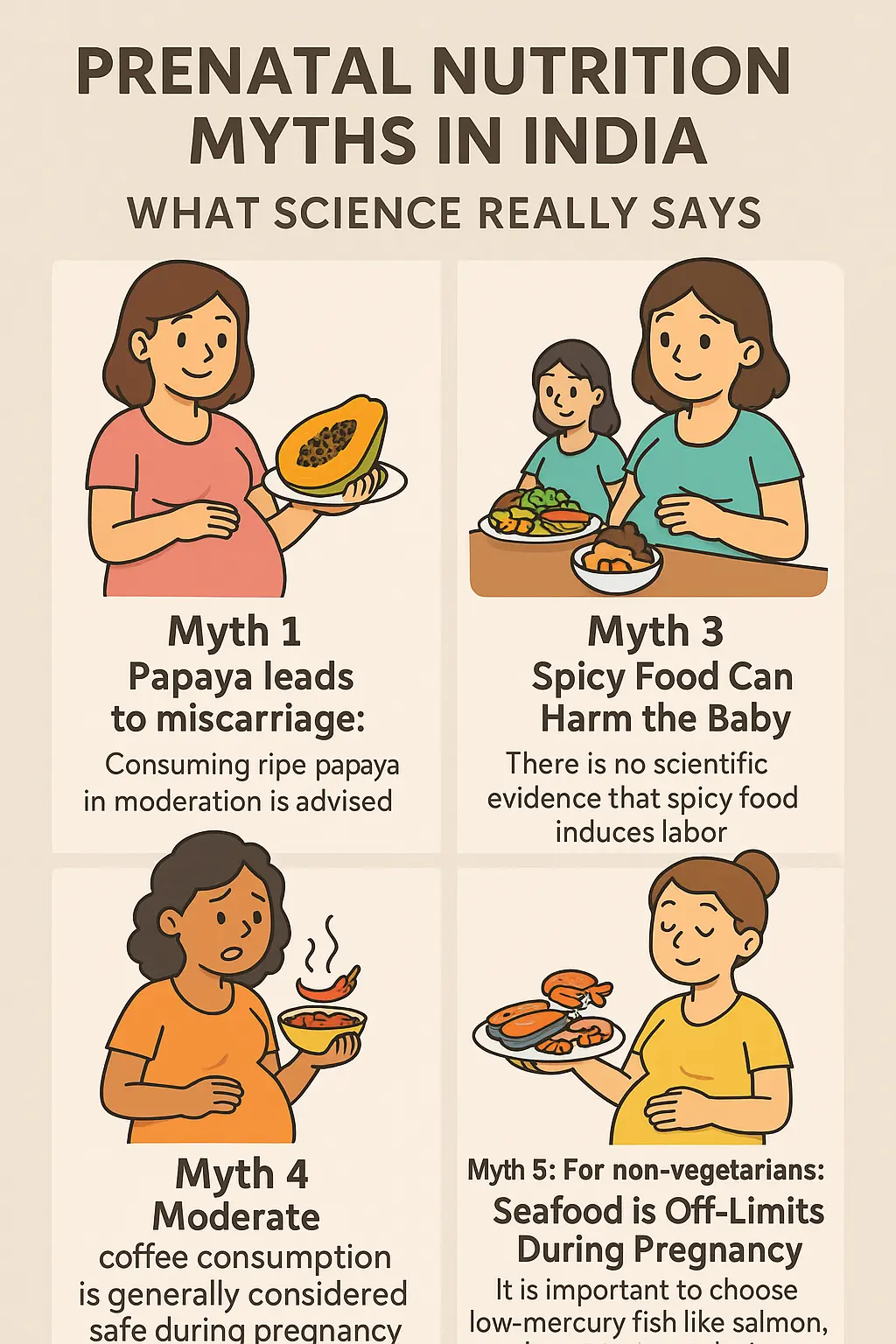
Myth 3: Spicy Food Can Harm the Baby or Induce Labor
Worried that eating spicy food might bring on early labor or hurt your baby? Relax.
✅ Truth: There is no scientific evidence that spicy food induces labor. Labor is triggered by hormonal and physiological signals from the baby, not by what you eat. If spicy food agrees with your stomach, there's no need to avoid it — though it might cause heartburn in some women, especially in the third trimester.
Myth 4: Coffee is Completely Unsafe During Pregnancy
Many moms-to-be avoid caffeine entirely — but is it really necessary?
✅ Truth: Moderate caffeine consumption — up to 200mg per day (roughly one 12 oz cup of coffee) — is generally safe during pregnancy. However, excessive caffeine intake has been linked to low birth weight and miscarriage risks. Be mindful of hidden sources of caffeine too — like chocolate, energy drinks, and certain teas.
Tip: Stick to 1 small cup a day and opt for decaf if you're craving more.
Myth 5: Seafood is Off-Limits for Pregnant Women
For non-vegetarian moms-to-be, this myth can be confusing. Is seafood a superfood or a danger?
✅ Truth: Seafood is a powerhouse of omega-3 fatty acids, iodine, zinc, and protein, which are crucial for your baby's brain and eye development. The key is to choose low-mercury fish like:
- Safe Options: Salmon, Sardines, Shrimp, Pollock, Cod, Catfish
- Avoid: Shark, King Mackerel, Swordfish, and Tilefish — these contain high mercury levels
Pro Tip: Always buy from reputable sources, check expiry dates, and cook thoroughly to avoid foodborne illnesses.
🌟 Final Thoughts
Pregnancy is a time of joy — don’t let food myths scare you away from eating right. Trust science over superstition, and always check with your doctor or a certified nutritionist when in doubt. A well-balanced diet, filled with real, nutrient-rich foods, is your best bet for a happy and healthy pregnancy.
📚 Want a Complete Pregnancy Guide?
If you found this article helpful, you will love the Healthier Tomorrow Pregnancy Guide Series — written specifically for Indian mothers by a pharmaceutical professional. Covers everything from Week 1 to Week 26 with Indian meal plans, symptom management and evidence-based guidance.
🛒 Recommended Product
A quality prenatal multivitamin covering folate, iron, DHA, iodine and Vitamin D is the most evidence-based nutritional intervention in pregnancy. Always choose methylfolate over folic acid for better bioavailability — and always confirm with your OB-GYN before starting any supplement during pregnancy.
View Prenatal Multivitamin on Amazon →References
- ICMR-NIN. Dietary guidelines for pregnant and lactating women. Hyderabad: NIN; 2020.
- Koletzko B, et al. Nutrition during pregnancy, lactation and early childhood. Ann Nutr Metab. 2019;74(2):93-106.
- Ramakrishnan U, et al. Effect of women's nutrition before and during early pregnancy on maternal and infant outcomes. Paediatr Perinat Epidemiol. 2012;26 Suppl 1:285-301.
Written by — Dharmil Pandya
Medical Writer | Founder, Healthier Tomorrow
#pregnancy myths in India, #prenatal diet myths, #pregnancy food facts, #Indian pregnancy nutrition, #papaya in pregnancy, #caffeine during pregnancy, #seafood during pregnancy India