
Do Indians Actually Need Protein Supplements? A Pharma Professional's Evidence-Based Answer
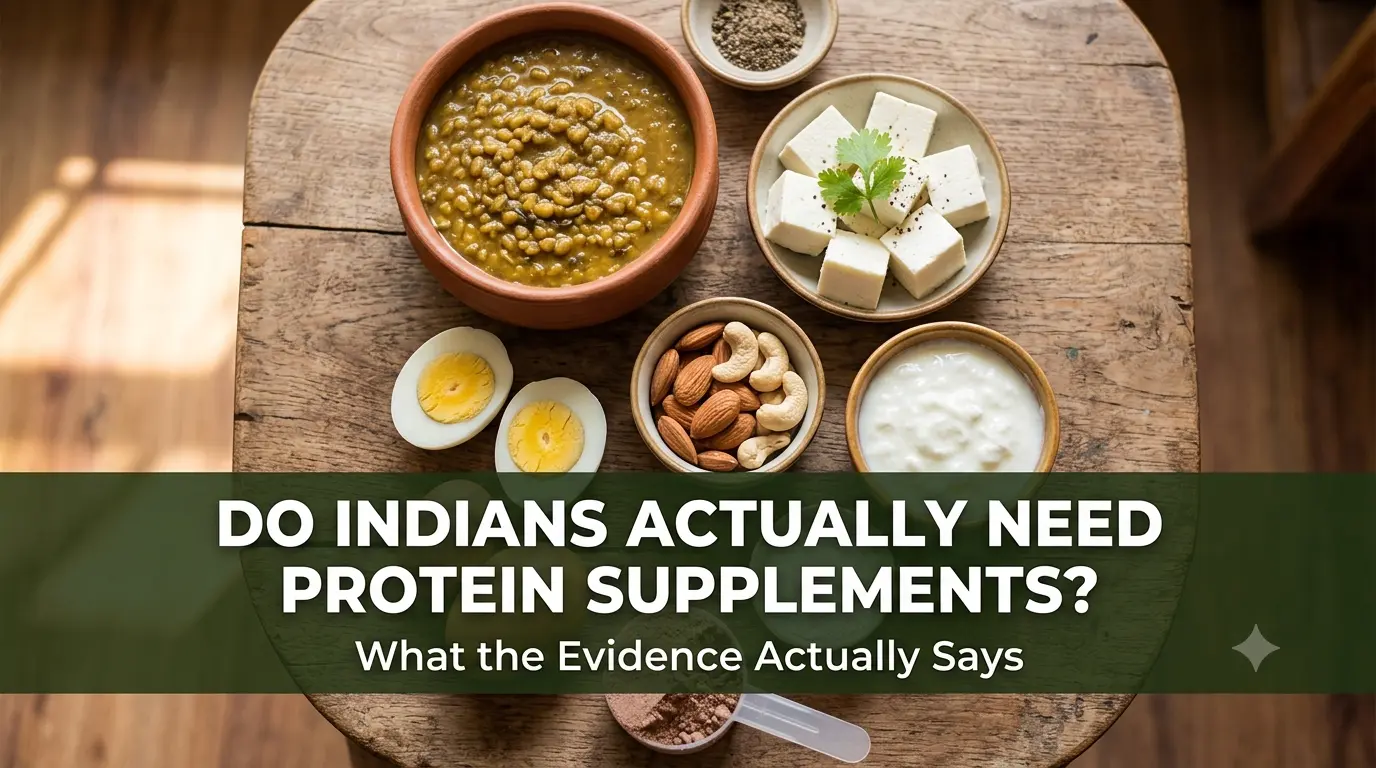
Walk into any gym in urban India in 2026 and you will find two things: protein shakes being consumed with religious devotion, and significant confusion about whether they are actually necessary. The Indian protein supplement market has grown into a multi-billion rupee industry, driven by aggressive marketing, influencer culture, and a genuine underlying nutritional problem that most Indians don't fully understand.
As a pharmaceutical professional, I want to give you an honest, evidence-based answer to the question that most fitness content either avoids or sensationalises: do Indians actually need protein supplements?
India's Protein Problem Is Real
Before discussing supplements, it is worth establishing the baseline: India genuinely has a protein deficiency problem, and it is more widespread than most people realise.
The Indian Market Research Bureau (IMRB) found that 73% of Indian households consume inadequate protein — a figure consistent across urban and rural populations, income levels and dietary patterns. A separate study by the Nutrition Foundation of India found that over 80% of Indians consumed less than the Recommended Dietary Allowance (RDA) for protein.
The Indian Council of Medical Research (ICMR) sets the protein RDA for Indian adults at approximately 0.8 to 1.0 grams per kilogram of body weight per day for sedentary individuals. For a 60 kg Indian adult, that is 48 to 60 grams of protein daily — a target that sounds modest but is consistently not met by most Indians eating typical dietary patterns.
Why? Several converging reasons:
- India has one of the world's largest vegetarian populations — estimated at 20 to 39% — and plant proteins are generally lower in biological value than animal proteins
- Dal, the primary protein source in most Indian households, is frequently consumed in quantities too small to meet daily requirements
- Indian meals are carbohydrate-heavy — rice, roti, bread — with protein as a secondary element
- High-protein animal foods are consumed inconsistently and in smaller portions than international dietary guidelines suggest
Why Protein Matters — Beyond Gym Culture
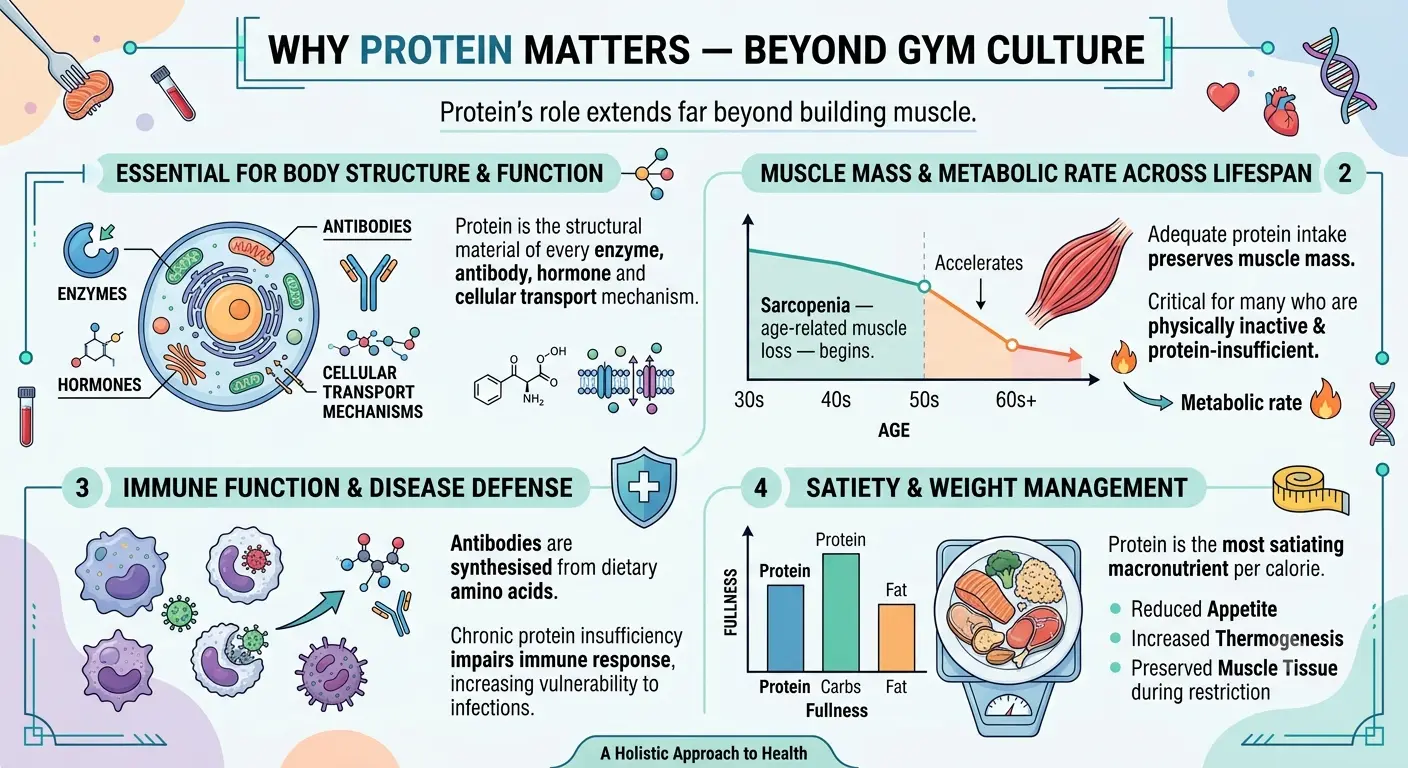
Protein's role in the body extends far beyond building muscle. Protein is the structural material of every enzyme, antibody, hormone and cellular transport mechanism in the body.
Muscle mass and metabolic rate
Sarcopenia — age-related muscle loss — begins in the 30s and accelerates from the 50s onward. Adequate protein intake is the single most important dietary factor in preserving muscle mass across the lifespan. For the large number of Indians who are simultaneously physically inactive and protein-insufficient, this creates a compounding problem.
Immune function
Antibodies are synthesised from dietary amino acids. Chronic protein insufficiency impairs antibody production and immune cell proliferation, increasing vulnerability to infections.
Satiety and weight management
Protein is the most satiating macronutrient per calorie. Higher protein diets consistently demonstrate superior weight management outcomes through reduced appetite, increased thermogenesis and preserved muscle tissue during caloric restriction.
How Much Protein Do You Actually Need?
- Sedentary adults: 0.8–1.0 g/kg/day minimum, 1.2 g/kg/day for better health outcomes
- Moderately active adults (exercise 3x/week): 1.2–1.6 g/kg/day
- Regularly strength training: 1.6–2.2 g/kg/day
- Adults over 60: 1.2–1.6 g/kg/day
- Pregnant women: +25 g/day above normal requirement
- Breastfeeding women: +19 g/day above normal requirement
Can You Get Enough Protein From Indian Food?
Yes — in theory. In practice, it requires deliberate effort that most Indians don't make. Here is the protein reality of common Indian foods:
- 1 cup cooked dal (moong/masoor): 8–10 grams protein
- 100g paneer: 18–20 grams protein
- 1 large egg: 6–7 grams protein
- 100g chicken breast (cooked): 25–30 grams protein
- 100g fish: 20–25 grams protein
- 1 cup curd (dahi): 8–10 grams protein
- 30g almonds (small handful): 6 grams protein
- ½ cup cooked rajma/chickpeas: 7–9 grams protein
So — Do You Need a Protein Supplement?
You probably do NOT need a protein supplement if:
- You eat non-vegetarian food regularly in adequate quantities
- You consistently hit 1.0–1.2 g/kg/day from whole foods
- You are sedentary or lightly active
You probably DO benefit from a protein supplement if:
- You are vegetarian and training regularly
- You have a busy schedule that makes cooking high-protein meals consistently impractical
- You are over 60 and experiencing any degree of muscle loss or weakness
- You consistently feel hungry 1–2 hours after meals
Choosing the Right Protein Supplement
Whey protein — the gold standard
Whey protein has a high Biological Value (BV of approximately 104), is rich in all essential amino acids including leucine, and is rapidly absorbed — making it well-suited for post-exercise consumption. Multiple meta-analyses confirm that whey protein supplementation combined with resistance training produces significantly greater gains in lean muscle mass than training alone.
What to look for on the label
- Protein per serving above 20g
- Low sugar content (below 5g per serving)
- FSSAI certification (mandatory for Indian market)
- Third-party testing certification where available
- Minimal unnecessary additives and artificial sweeteners
Final Thoughts
Most Indians are protein-insufficient by any reasonable standard — this is not marketing, it is consistent nutritional surveillance data. Whether that insufficiency warrants a supplement depends on your individual diet, activity level, age and health goals. Whole food protein sources should always be the foundation. A supplement is exactly that — a supplement to an already decent dietary foundation, not a replacement for it.
🛒 Recommended Product
If you decide protein supplementation is right for you, MuscleBlaze Whey Protein is one of the most trusted Indian brands — with transparent labelling, FSSAI certification and consistent quality. It provides 25g of protein per serving with low sugar content. Take one serving post-workout or between meals as a convenient protein top-up when whole food sources fall short.
View MuscleBlaze Whey Protein on Amazon →References
- Indian Market Research Bureau (IMRB). Protein consumption in Indian diet. 2017.
- Indian Council of Medical Research (ICMR). Nutrient Requirements for Indians. 2020.
- Morton RW, et al. A systematic review, meta-analysis and meta-regression of the effect of protein supplementation on resistance training-induced gains in muscle mass. Br J Sports Med. 2018;52:376-384.
- Stokes T, et al. Recent perspectives regarding the role of dietary protein for the promotion of muscle hypertrophy. Nutrients. 2018;10(2):180.
- Paddon-Jones D, Rasmussen BB. Dietary protein recommendations and the prevention of sarcopenia. Curr Opin Clin Nutr Metab Care. 2009;12(1):86-90.
Written by — Dharmil Pandya
Medical Writer | Founder, Healthier Tomorrow
#ProteinSupplements #IndianNutrition #WheyProtein #ProteinIndia #HealthierTomorrow #FitnessIndia #PlantProtein #NutritionScience #ProteinDeficiency #HealthyEating