
Your Skin Barrier — Why Every Indian Needs to Understand This in 2026
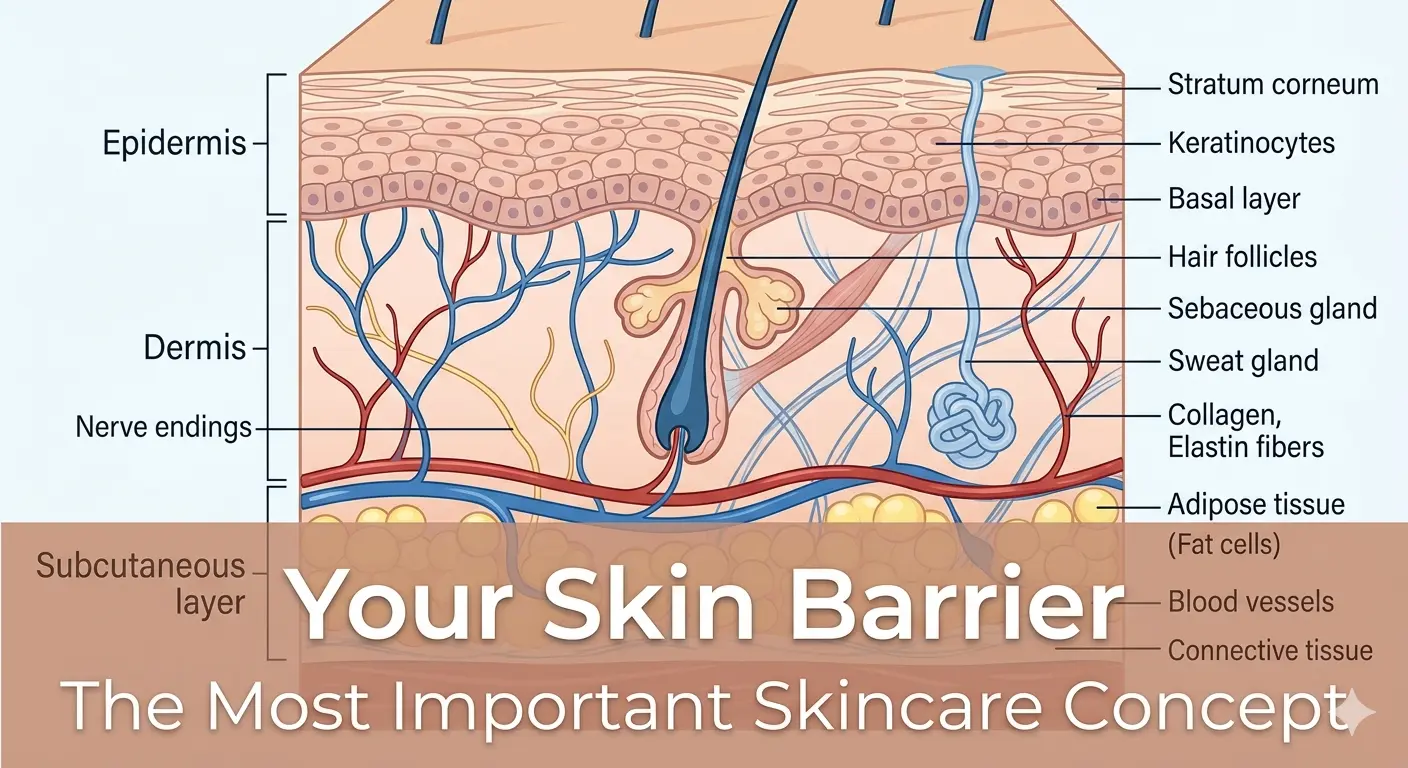
If you have ever wondered why your skin feels tight after washing, why your moisturiser stops working, why you suddenly developed sensitivity to products you've used for years, or why your acne keeps returning despite a full skincare routine — the answer almost certainly lies in one place.
Your skin barrier.
In 2026, skin barrier health has become the foundation of modern dermatology and skincare science. Dermatologists across India and globally are now describing a phenomenon they call "skin burnout" — skin that has been overwhelmed by pollution, humidity, aggressive products and overuse of strong active ingredients until it simply stops functioning properly.
Understanding your skin barrier is the single most important thing you can do for your skin health. And for Indian skin specifically — dealing with monsoon humidity, summer heat, heavy pollution and a market flooded with aggressive fairness products — this understanding is urgent.
What Exactly Is the Skin Barrier?
Your skin is composed of multiple layers. The outermost layer — the stratum corneum — is what we call the skin barrier. It is approximately 10-20 cells thick and is often described using a "brick and mortar" analogy:
The bricks are dead skin cells called corneocytes — flattened, protein-filled cells that provide physical structure.
The mortar is a complex mixture of lipids — primarily ceramides (approximately 50%), cholesterol (25%) and fatty acids (15%) — that fills the spaces between the cells, binding them together and preventing anything from passing through that shouldn't.
This seemingly simple structure performs extraordinarily complex functions:
- It keeps moisture in. The lipid matrix prevents transepidermal water loss (TEWL) — the evaporation of water from your skin into the environment. When the barrier is intact, your skin stays hydrated. When it's damaged, water escapes and your skin becomes dry, tight and dehydrated regardless of how much moisturiser you apply.
- It keeps threats out. The barrier prevents bacteria, fungi, allergens, pollutants, chemicals and irritants from penetrating into the deeper layers of your skin. When the barrier is compromised, these penetrate freely — causing inflammation, breakouts, sensitivity and accelerated aging.
- It maintains your skin microbiome. Just like your gut, your skin hosts trillions of beneficial bacteria — collectively called the skin microbiome — that protect against pathogenic organisms and support immune function. The barrier provides the environment these microorganisms need to thrive.
- It regulates immune response. The barrier contains specialised immune cells that respond to threats appropriately — neither overreacting (causing sensitivity and inflammation) nor underreacting (allowing infection).
Why India's Environment Is Particularly Harsh on the Skin Barrier
Indian skin faces a unique set of environmental stressors that make barrier damage especially common:
Extreme heat and humidity
India's climate — particularly during summer and monsoon — creates conditions that are paradoxically both dehydrating and moisture-trapping. High humidity causes sweat to sit on the skin's surface, disrupting the pH balance (your skin's natural pH is mildly acidic at 4.5-5.5). When pH rises, the enzymes that regulate the barrier's lipid production become less effective — gradually weakening the barrier even as the environment feels humid.
Air pollution
India's major cities consistently rank among the most polluted in the world. Particulate matter (PM2.5 and PM10), ozone, nitrogen dioxide and heavy metals in polluted air generate free radicals that degrade ceramides — the primary lipid component of your barrier. Studies show that urban Indians living in high-pollution environments have measurably thinner, more permeable skin barriers than those in rural areas.
Hard water
Most Indian cities have hard water — high in calcium and magnesium minerals. Hard water disrupts skin pH, strips natural oils and damages the lipid barrier with daily washing. If your skin feels tight and dry after showering despite using moisturiser, hard water is likely a significant contributing factor.
Aggressive skincare products
The Indian skincare market has historically been dominated by fairness products — many of which contain harsh bleaching agents, mercury compounds, high concentrations of kojic acid or aggressive exfoliants that strip the barrier. The cultural pressure around skin tone has led generations of Indian women to use products that actively damage their skin in pursuit of lighter colour.
Over-cleansing
Many Indians — conditioned by humidity and sweat — wash their face multiple times daily using harsh soaps or foaming cleansers. Each wash strips natural oils and disrupts the slightly acidic pH your barrier depends on. The industry standard is now clear: twice daily cleansing maximum, with a gentle, pH-balanced cleanser.
Signs Your Skin Barrier Is Damaged
Skin barrier damage exists on a spectrum — from mild to severe. Recognising where you are on this spectrum is the first step to repair.
Mild barrier damage:
- Skin feels tight or uncomfortable after cleansing
- Slight flakiness in certain areas
- Products that previously felt fine now sting or tingle
- Skin looks dull despite adequate sleep and hydration
Moderate barrier damage:
- Persistent dryness that moisturiser doesn't resolve
- Redness and uneven skin tone
- Frequent small breakouts or clogged pores
- Increased sensitivity to temperature changes
- Products that previously worked have stopped working
Severe barrier damage:
- Eczema or dermatitis flares
- Constant tightness, itching or burning
- Visible cracking or bleeding in dry areas
- Skin that reacts to almost every product
- Chronic acne that doesn't respond to treatment
- Rosacea flares triggered by minimal stimuli
The Most Common Ways Indians Damage Their Skin Barrier
Over-exfoliation
The skincare industry successfully convinced an entire generation that exfoliation is essential to good skin. While some exfoliation is beneficial, over-exfoliation is one of the most common causes of barrier damage in India today.
Physical exfoliation (scrubs, loofahs, Vico Turmeric scrub used daily) physically removes the corneocyte layer. Chemical exfoliation (AHAs like glycolic and lactic acid, BHAs like salicylic acid) dissolves the bonds between cells. Both are appropriate in moderation — but using them too frequently, at too high a concentration, or in combination destroys the lipid matrix faster than it can regenerate.
Signs you are over-exfoliating: shiny, tight skin immediately after exfoliation, increased breakouts despite exfoliating for acne, increased sensitivity, skin that looks good for one day then breaks out or becomes dry.
Using too many active ingredients simultaneously
The explosion of skincare content on Instagram and YouTube has led many Indians to layer multiple strong active ingredients — Vitamin C, retinol, niacinamide, AHAs, BHAs — without understanding how they interact. Combining incompatible actives or using too many simultaneously overwhelms the barrier's capacity to tolerate them, even when each individual ingredient would be fine alone.
Alcohol-heavy toners and astringents
Traditional Indian skincare wisdom — and many affordable toners on the Indian market — relied on alcohol-based astringents to "tighten pores" and control oil. Alcohol (denatured alcohol or ethanol) is one of the most damaging ingredients for the skin barrier — it strips ceramides, disrupts pH and impairs the barrier's repair mechanisms. Rosewater-based toners are a better option for Indian skin.
Hot water washing
Washing the face with hot water feels satisfying — particularly in winter — but significantly strips the skin's natural oils and ceramide content. Lukewarm water at most.
Skipping SPF
UV radiation from the sun degrades ceramides and oxidises the lipids in your skin barrier — causing both immediate barrier damage and accelerated long-term barrier thinning. Not wearing SPF daily is one of the single most damaging things you can do to your skin barrier, particularly in India's high-UV environment.
How to Repair Your Skin Barrier — A Practical Guide
Barrier repair is not complicated — but it requires patience. The barrier's natural regeneration cycle takes approximately 28 days, so consistent gentle care over 4-6 weeks is needed to see meaningful improvement.
Step 1 — Simplify immediately
Stop all active ingredients (retinol, AHAs, BHAs, Vitamin C) while your barrier heals. This is the most important step. Your barrier cannot repair itself while simultaneously dealing with chemical exfoliants.
Step 2 — Switch to a gentle cleanser
Use a gentle, fragrance-free, pH-balanced cleanser. Look for cleansers with a pH between 4.5 and 5.5. Avoid foaming cleansers with sulphates — they are too stripping for a damaged barrier. In India, affordable options include Cetaphil Gentle Skin Cleanser and Minimalist Amino Acid Cleanser.
Step 3 — Rebuild with ceramides
Ceramide-containing moisturisers are the most evidence-based intervention for barrier repair. They literally replenish the lipid component of your barrier's mortar layer. Apply immediately after cleansing while skin is slightly damp to lock in moisture.
Look for these ingredients on the label: ceramide NP, ceramide AP, ceramide EOP — or simply "ceramides" in the ingredient list. Affordable options available in India: CeraVe Moisturising Cream, Minimalist Ceramide Moisturiser, Dot and Key Barrier Repair Cream.
🛒 Recommended Product
A ceramide-containing moisturiser is the most evidence-based product for repairing and maintaining the skin barrier discussed in this guide. Ceramides are the primary lipid component of the skin barrier — replenishing them topically directly addresses the most common cause of barrier dysfunction.
View Ceramide Moisturiser on Amazon →Step 4 — Add hyaluronic acid for hydration
Hyaluronic acid is a humectant — it draws moisture into the skin from the environment. Apply a hyaluronic acid serum to damp skin before your moisturiser to boost hydration while your barrier heals. Important — in very dry environments, hyaluronic acid without an occlusive moisturiser on top can actually draw moisture out of skin. Always layer moisturiser on top.
Step 5 — Use SPF every single day
Mineral SPF (zinc oxide or titanium dioxide based) is gentler on a damaged barrier than chemical sunscreens. Apply as the last step in your morning routine. Minimum SPF 30, ideally SPF 50 for Indian UV conditions.
Step 6 — Let your skin breathe
Reduce makeup frequency while your barrier heals. Heavy foundations and concealers further stress a compromised barrier. Tinted moisturisers with SPF are a gentler alternative.
The Indian Kitchen as Barrier Support
Your diet directly influences your skin barrier — particularly your intake of essential fatty acids and antioxidants.
Foods that support barrier health:
- Ghee — rich in butyric acid and fat-soluble vitamins that support skin cell membrane integrity
- Sesame seeds (til) — high in linoleic acid, an essential fatty acid that is a direct component of skin barrier lipids
- Walnuts — the richest plant source of omega-3 fatty acids, which reduce skin inflammation and support barrier function
- Amla (Indian gooseberry) — the richest natural source of Vitamin C, which is essential for collagen production and barrier integrity
- Turmeric — curcumin reduces skin inflammation through multiple pathways, supporting barrier repair
- Flaxseeds (alsi) — alpha-linolenic acid directly incorporates into skin cell membranes
Foods that damage barrier health:
- High sugar diet — triggers glycation, which damages collagen and barrier proteins
- Refined vegetable oils high in omega-6 (sunflower, soybean) — promote inflammatory pathways that degrade barrier lipids
- Alcohol — directly damages skin barrier function systemically, worsening both barrier integrity and hydration

A Simple Indian Skin Barrier Routine
Morning:
- Rinse with lukewarm water (or gentle cleanser if needed)
- Hyaluronic acid serum on damp skin
- Ceramide moisturiser
- SPF 50 mineral sunscreen
Evening:
- Double cleanse if wearing SPF/makeup — oil cleanser first, then gentle cleanser
- Ceramide moisturiser
- Facial oil (rosehip, squalane or marula) as final seal if skin is very dry
Weekly:
- One gentle exfoliation maximum (not while barrier is damaged)
- Face mask — sheet mask or gentle hydrating mask only
That's it. Barrier-first skincare is minimalist skincare. The more products you layer, the more risk of disruption.
When to See a Dermatologist
If your skin barrier damage manifests as eczema, severe rosacea, chronic dermatitis or persistent acne that doesn't respond to 8 weeks of gentle barrier-focused care — please see a board-certified dermatologist.
Prescription treatments including topical corticosteroids, calcineurin inhibitors and newer biologic medications (for severe eczema) require professional assessment and prescription. Do not self-medicate with steroid creams — overuse causes skin thinning and paradoxically worsens barrier damage long term.
Conclusion
Your skin barrier is not a skincare trend. It is the fundamental biological structure that determines the health, appearance and resilience of your skin for life.
For Indian skin — battling pollution, UV, humidity, hard water and a market full of aggressive products — protecting and repairing your barrier is the most important skincare decision you can make.
Less is more. Gentleness is strength. Ceramides are everything.
Start there.
References
- Elias PM. Skin barrier function. Curr Allergy Asthma Rep. 2008;8(4):299-305.
- Proksch E, et al. The skin: an indispensable barrier. Exp Dermatol. 2008;17(12):1063-1072.
- Draelos ZD. The science behind skin care: cleansers. J Cosmet Dermatol. 2018;17(1):8-14.
Written by — Dharmil Pandya
Medical Writer | Founder, Healthier Tomorrow
#SkinBarrier #IndianSkincare #BarrierRepair #Ceramides #Dermatology #HealthySkin