
Why Indians Sleep Less Than Almost Any Country on Earth — And What the Science Says to Do About It
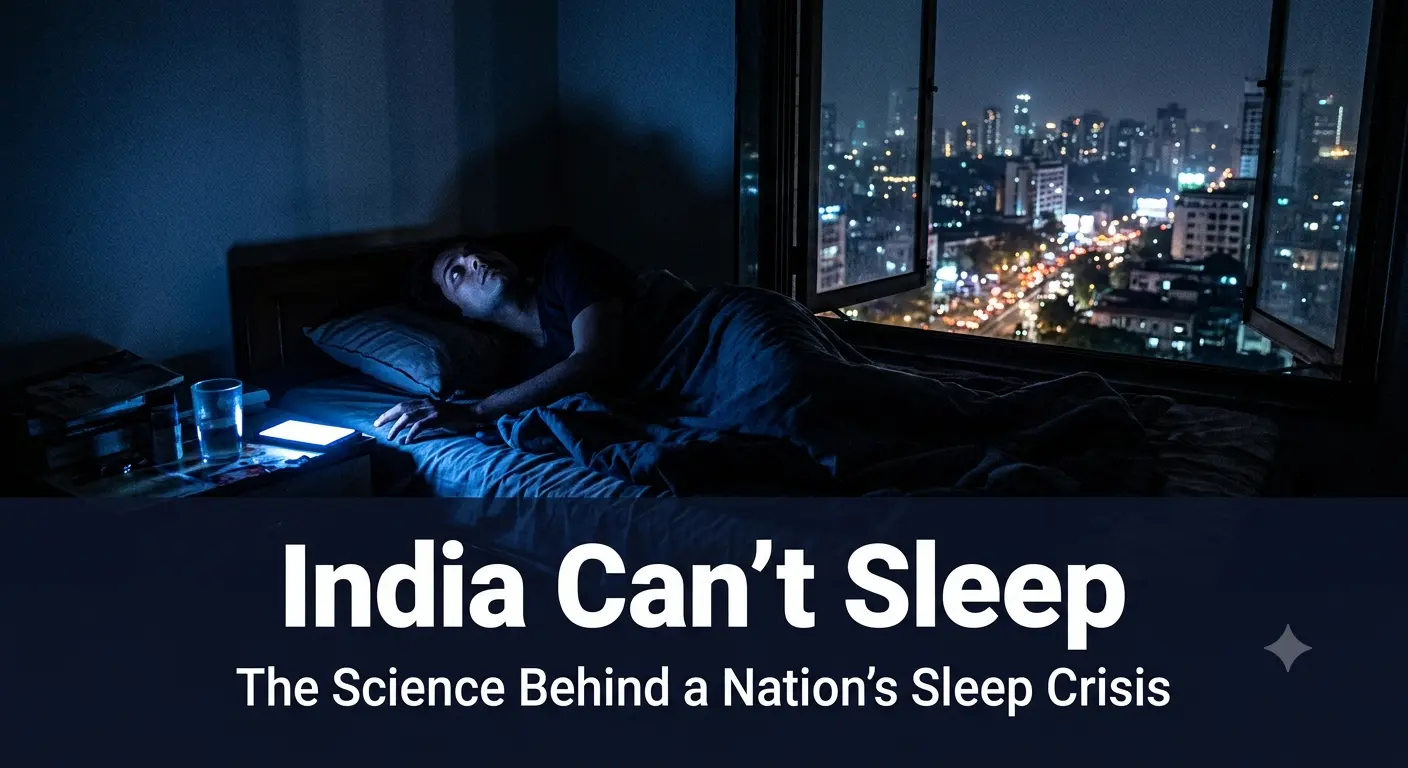
A large-scale sleep study analysing data from smartphone users across 100 countries found that India ranked among the most sleep-deprived nations in the world — with Indian adults averaging significantly less than the 7 to 9 hours that sleep science consistently identifies as the minimum for healthy adult function.
This is not simply a matter of busy schedules. The factors driving India's sleep deprivation epidemic are specific, identifiable and — to a significant extent — addressable. As a pharmaceutical professional, I want to give you the clearest possible picture of what sleep actually does, why Indians specifically struggle, and what the research says genuinely works to improve it.
What Sleep Actually Does — The Biology
Sleep is not passive rest. It is an intensely active physiological state during which the brain and body perform processes that are literally impossible during wakefulness.
The glymphatic system — your brain's cleaning mechanism
One of the most significant neuroscience discoveries of the past decade was the characterisation of the glymphatic system — a network of channels surrounding cerebral blood vessels through which cerebrospinal fluid flows during sleep, washing metabolic waste products from brain tissue. These waste products include beta-amyloid and tau proteins — the same molecules that accumulate in Alzheimer's disease plaques. The glymphatic system operates almost exclusively during sleep and shuts down during wakefulness. Chronic sleep deprivation literally impairs the brain's ability to clean itself.
Memory consolidation
During sleep, the hippocampus replays newly learned information and transfers it to cortical long-term storage. This is why studying and then sleeping produces better retention than equivalent additional study time without sleep.
Hormonal regulation
Growth hormone is secreted predominantly during slow-wave sleep. Cortisol follows a circadian rhythm calibrated by sleep timing — disrupted sleep produces dysregulated cortisol patterns that drive inflammation, insulin resistance and mood disorders. Leptin decreases and ghrelin increases with sleep deprivation — producing increased appetite and carbohydrate cravings.
Immune system function
Cytokines — immune signalling proteins — are produced primarily during sleep. Sleep deprivation reduces natural killer cell activity and impairs T-cell function. A landmark study found that individuals sleeping less than 6 hours were 4 times more likely to catch a cold when exposed to rhinovirus compared to those sleeping 7 or more hours.
Why India Specifically Has a Sleep Problem
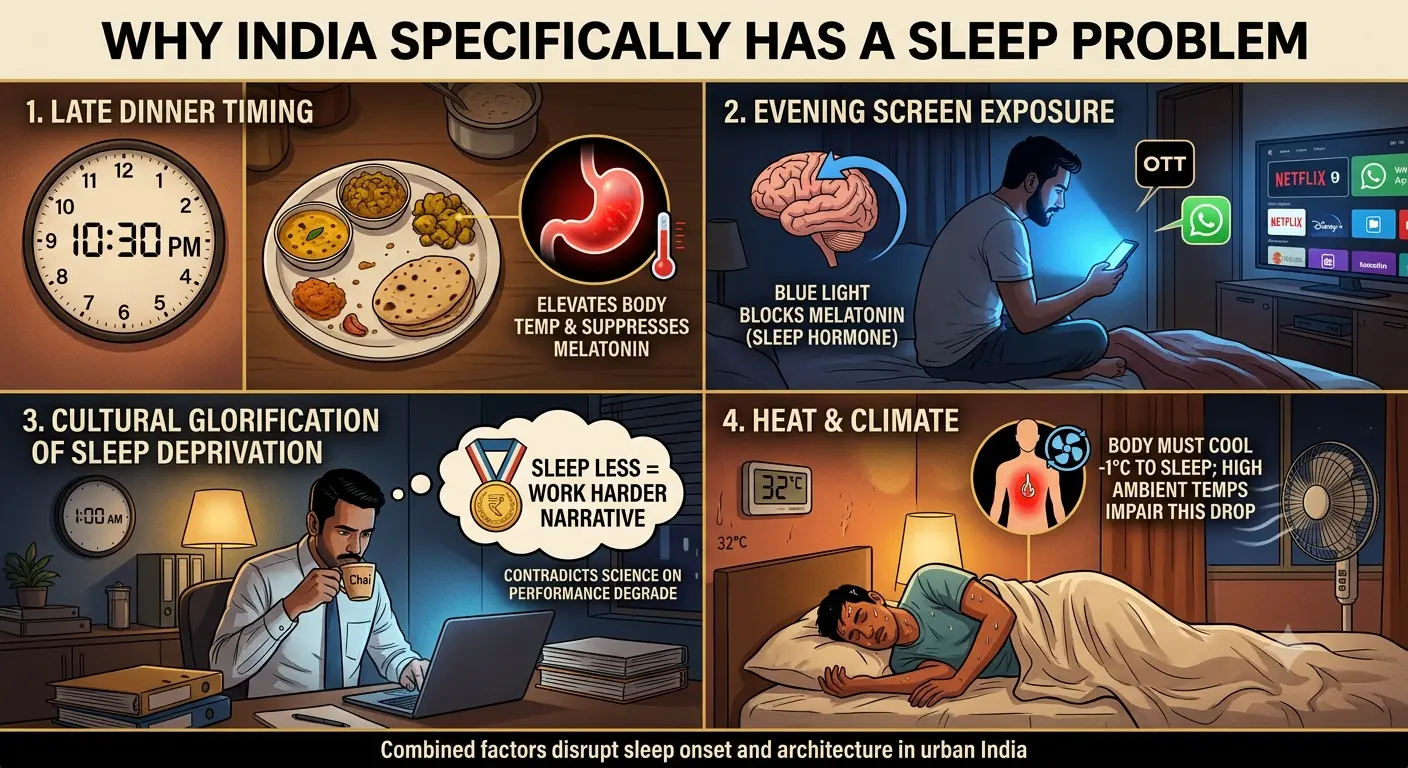
Late dinner timing
The traditional Indian dinner time — frequently 9pm to 10pm or later — creates a physiological conflict with early sleep. Digestion elevates core body temperature and suppresses melatonin secretion, both of which delay sleep onset. Eating a large meal within 2 to 3 hours of bedtime is one of the most consistent predictors of poor sleep onset latency in sleep research.
Screen exposure in the evening
Blue light emitted by smartphone and television screens suppresses melatonin secretion. India's extraordinary smartphone penetration combined with primetime OTT viewing habits and the ubiquitous evening WhatsApp scroll means that most urban Indians are actively suppressing melatonin during the critical 2 to 3 hour window before bed.
Cultural glorification of sleep deprivation
In professional Indian culture, sleeping less is frequently equated with working harder. This cultural narrative directly contradicts decades of sleep science demonstrating that performance, decision-making quality, creativity and physical recovery all degrade significantly below 7 hours.
Heat
Core body temperature must drop by approximately 1°C to initiate and maintain sleep. In India's climate, particularly during summer months and in cities without adequate air conditioning, ambient temperatures remain high enough to impair this temperature drop — directly disrupting sleep onset and architecture.
Consequences of Chronic Sleep Deprivation
- Cognitive impairment: 17 to 19 hours of wakefulness produces cognitive impairment equivalent to a blood alcohol level of 0.05%
- Metabolic disruption: Even one week of 6-hour sleep increases insulin resistance by 20 to 30% in previously healthy individuals
- Cardiovascular risk: Sleeping less than 6 hours is associated with 48% higher risk of developing or dying from heart disease
- Weight gain: Sleep-deprived individuals consume an average of 300 additional calories per day driven by leptin/ghrelin dysregulation
- Immune suppression: Chronic short sleep reduces natural killer cell activity by up to 70%
Evidence-Based Sleep Improvement — What Actually Works
Sleep timing consistency — the single most powerful intervention
Going to bed and waking at the same time every day — including weekends — is the most robustly evidenced sleep intervention available. The circadian rhythm is anchored by consistent sleep-wake timing. Catching up on weekends does not fully reverse the metabolic and cognitive consequences of weekday sleep restriction.
Temperature management
The optimal bedroom temperature for sleep is approximately 18 to 20°C. Where air conditioning is not feasible, a fan directed toward the body, a cool shower before bed, or cotton bedding that facilitates heat dissipation are practical alternatives. Using a sleep mask to block ambient light also significantly improves melatonin secretion and sleep depth.
Screen management
Stopping all screen use 60 to 90 minutes before bed and using night mode or blue-light-filtering glasses if screens are unavoidable are both supported by evidence.
Earlier dinner
Eating dinner at least 2 to 3 hours before your target bedtime removes the thermogenic and digestive interference with sleep onset. Even shifting dinner from 10pm to 8pm while keeping bedtime at 11pm produces measurable improvements in sleep onset latency.
Pranayama and relaxation techniques
Several pranayama techniques — particularly Bhramari (humming bee breath) and extended exhale breathing (inhale 4 counts, exhale 8 counts) — activate the parasympathetic nervous system through vagal stimulation, reducing heart rate, cortisol and the physiological arousal that delays sleep onset.
Final Thoughts
Sleep deprivation is the only form of self-inflicted harm that Indian culture actively celebrates. The evidence is unambiguous: 7 to 9 hours of consistent, quality sleep is a fundamental biological requirement — not a luxury. Most of the factors driving India's sleep deprivation epidemic are behavioural and therefore addressable. Start with one change: consistent wake time every morning regardless of when you slept. Everything else follows from that anchor.
🛒 Recommended Product
A sleep mask is one of the simplest, most evidence-backed sleep environment improvements available — blocking ambient light which suppresses melatonin even through closed eyelids. This is particularly useful in Indian homes where streetlights, corridor lights or early morning sunlight frequently disturb sleep. Look for one with a contoured design that does not press on the eyes and an adjustable strap for comfort through the night.
View Sleep Mask on Amazon →References
- Fitbit Global Sleep Study. Sleep patterns across 100 countries. 2019.
- Xie L, et al. Sleep drives metabolite clearance from the adult brain. Science. 2013;342(6156):373-377.
- Cappuccio FP, et al. Sleep duration and all-cause mortality: a systematic review and meta-analysis. Sleep. 2010;33(5):585-592.
- Cohen S, et al. Sleep habits and susceptibility to the common cold. Arch Intern Med. 2009;169(1):62-67.
- Spiegel K, et al. Sleep curtailment in healthy young men is associated with decreased leptin levels, elevated ghrelin levels, and increased hunger and appetite. Ann Intern Med. 2004;141(11):846-850.
Written by — Dharmil Pandya
Medical Writer | Founder, Healthier Tomorrow
#SleepHygiene #IndianHealth #SleepScience #HealthierTomorrow #BetterSleep #SleepDeprivation #Melatonin #SleepTips #MentalHealth #Insomnia