
Stress vs Anxiety: How to Tell the Difference and Manage Both
Feeling tense, worried, or drained? You're not alone. But here’s the big question: Are you experiencing stress or anxiety—or is it all just in your head?
In today's fast-paced world, the lines between stress and anxiety often blur. Many people use these terms interchangeably, but they're not the same. Recognizing the difference can be life-changing. Let's break it down in simple, relatable language.
🌪️ What Is Stress?
Stress is your body’s immediate reaction to a challenge or demand—be it work pressure, deadlines, family responsibilities, or a sudden life event like job loss. It’s your "fight or flight" system kicking in to help you survive and push through.
✅ Good to know: Stress isn’t always bad. In small doses, it can boost performance and motivate action. But chronic stress? That’s where the real problem begins.
😰 What Is Anxiety?
Anxiety goes deeper than everyday stress. It’s that persistent feeling of fear or dread that doesn’t go away—even when there’s no clear cause. Think of it as stress without an off switch.
⚠️ If worry takes over your daily life, interferes with sleep, or makes it hard to focus, you may be dealing with an anxiety disorder—not just stress.
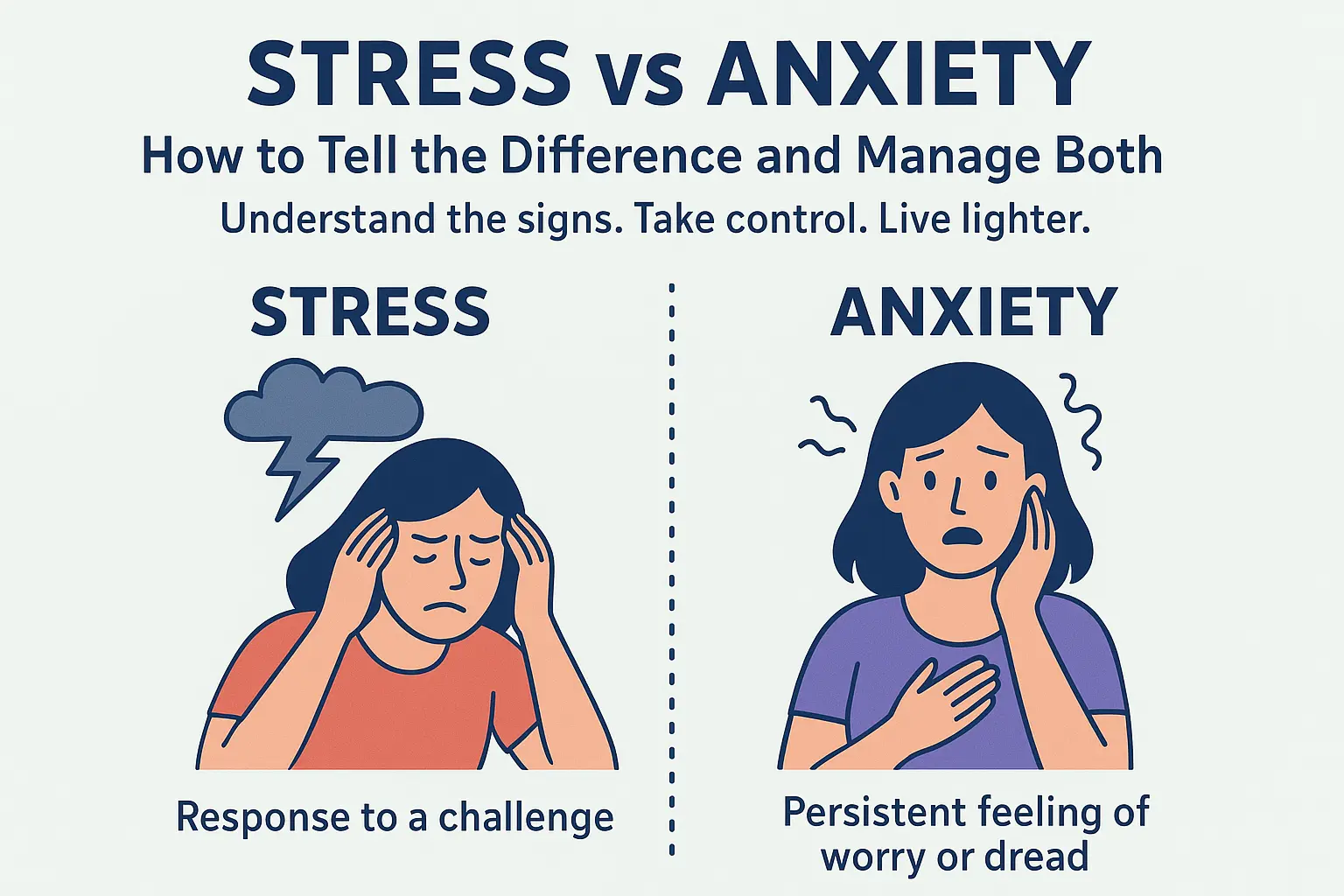
🤯 Stress vs Anxiety: How to Tell Them Apart
| Symptoms | Stress | Anxiety |
|---|---|---|
| Mental | Irritability, overwhelm | Constant worry, fear of worst-case |
| Physical | Headaches, stomach upset, tiredness | Tense muscles, restlessness, fatigue |
| Sleep | Trouble sleeping due to external factors | Insomnia without obvious reason |
| Concentration | Affected during tough situations | Long-term focus issues |
| Duration & Trigger | Temporary, situation-based | Persistent, can happen without a cause |
| Impact on life | Manageable with rest | Affects daily functioning, work, and relationships |
🎯 Real Talk: Why It Matters
Stress is a normal part of life—but if left unmanaged, it can lead to chronic health problems like high blood pressure, heart issues, and burnout.
Anxiety disorders are medical conditions that need attention and are very treatable. Understanding the difference helps you take the right steps toward relief.
🛠️ Managing Stress: Simple Yet Powerful Habits
🧘 1. Practice Relaxation
Deep breathing, meditation, yoga, or a quiet walk can help calm your nervous system.
🕒 2. Master Time
Use to-do lists, set boundaries, and avoid multitasking. Good time management reduces overwhelm.
💪 3. Move Your Body
Exercise isn’t just for fitness. It’s one of the best stress busters out there.
😴 4. Prioritize Sleep & Hobbies
Recharge by doing what you love and getting 7–8 hours of quality sleep.
💡 Managing Anxiety: A Holistic Approach
🧠 1. Psychotherapy
Cognitive Behavioral Therapy (CBT) teaches you to challenge anxious thoughts and break the worry cycle.
💊 2. Medication
For more severe cases, medications like SSRIs or anti-anxiety drugs can help. Always consult a professional.
🌱 3. Self-Care Essentials
- Eat nutritious meals
- Avoid alcohol and recreational drugs
- Stick to a sleep routine
- Practice daily mindfulness
🛑 When to Seek Help
If your symptoms are:
- Lasting longer than 2–3 weeks
- Interfering with work, relationships, or personal life
- Making you feel hopeless or out of control
📞 Please talk to a mental health professional. Seeking help is a sign of strength, not weakness.
✨ Final Thoughts
Stress and anxiety are part of life—but they don’t have to take over your life. The key is awareness, small consistent steps, and knowing when to ask for support.
✅ Remember:
- You’re not broken. You’re human.
- Take a breath. Take a break. Take control.
🛒 Recommended Product
Magnesium deficiency is one of the most underrecognised contributors to chronic stress and anxiety. Magnesium glycinate — the most bioavailable and gentlest form — supports the nervous system's stress response and improves sleep quality, addressing two of the most common consequences of chronic stress simultaneously.
View Magnesium Supplement on Amazon →References
- McEwen BS. Stressed or stressed out: what is the difference? J Psychiatry Neurosci. 2005;30(5):315-318.
- Kivimäki M, Steptoe A. Effects of stress on the development and progression of cardiovascular disease. Nat Rev Cardiol. 2018;15(4):215-229.
- Bandelow B, Michaelis S. Epidemiology of anxiety disorders in the 21st century. Dialogues Clin Neurosci. 2015;17(3):327-335.
Written by — Dharmil Pandya
Medical Writer | Founder, Healthier Tomorrow
#StressVsAnxiety #MentalHealthAwareness #StressRelief #AnxietySupport #Mindfulness #SelfCareTips #MentalWellness #StressManagement #AnxietyHelp #HealthyMind