
📱 Trapped in the Screen: Are We Becoming Technology Addicts Without Even Realizing It?

Have you ever felt anxious when your phone battery drops below 10%? Or found yourself scrolling through social media, long after you promised you’d stop? If your answer is yes, you’re not alone — and you may be closer to digital addiction than you think.
Technology has become our best friend, our diary, and our entertainment hub — all rolled into one glowing screen. But while it keeps us connected, informed, and productive, it’s also quietly rewiring our brains. Researchers now warn that technology addiction is as real and dangerous as alcohol, drugs, or gambling.
🌐 What Exactly Is Technology Addiction?
The World Health Organization (WHO) classifies excessive technology use as a public health concern. It’s now often called Internet Addiction Disorder (IAD) — a compulsive need to use devices, apps, or online platforms, even when it harms your health or relationships.
This addiction can take many forms:
- 🎮 Excessive gaming
- 🛒 Compulsive online shopping
- 💬 Endless chatting or scrolling
- 📱 Constant social media use
- 🔞 Overuse of adult content
- 💻 Compulsive web surfing or emailing
Sounds familiar? You’re not alone — studies show that over 210 million people worldwide struggle with some form of digital addiction.
🚨 How to Know If You’re Addicted to Technology
Here are some red flags experts say to watch for:
- You feel restless or anxious without your phone or laptop.
- You check notifications constantly, even in conversations.
- You spend “just five more minutes” online — that turn into hours.
- You use screens to escape stress or negative emotions.
- You neglect real-life interactions or hobbies.
- You lie or feel guilty about your screen time.
If these sound like your daily life, you might be caught in what psychologists call a “compulsive-impulsive spectrum disorder.”
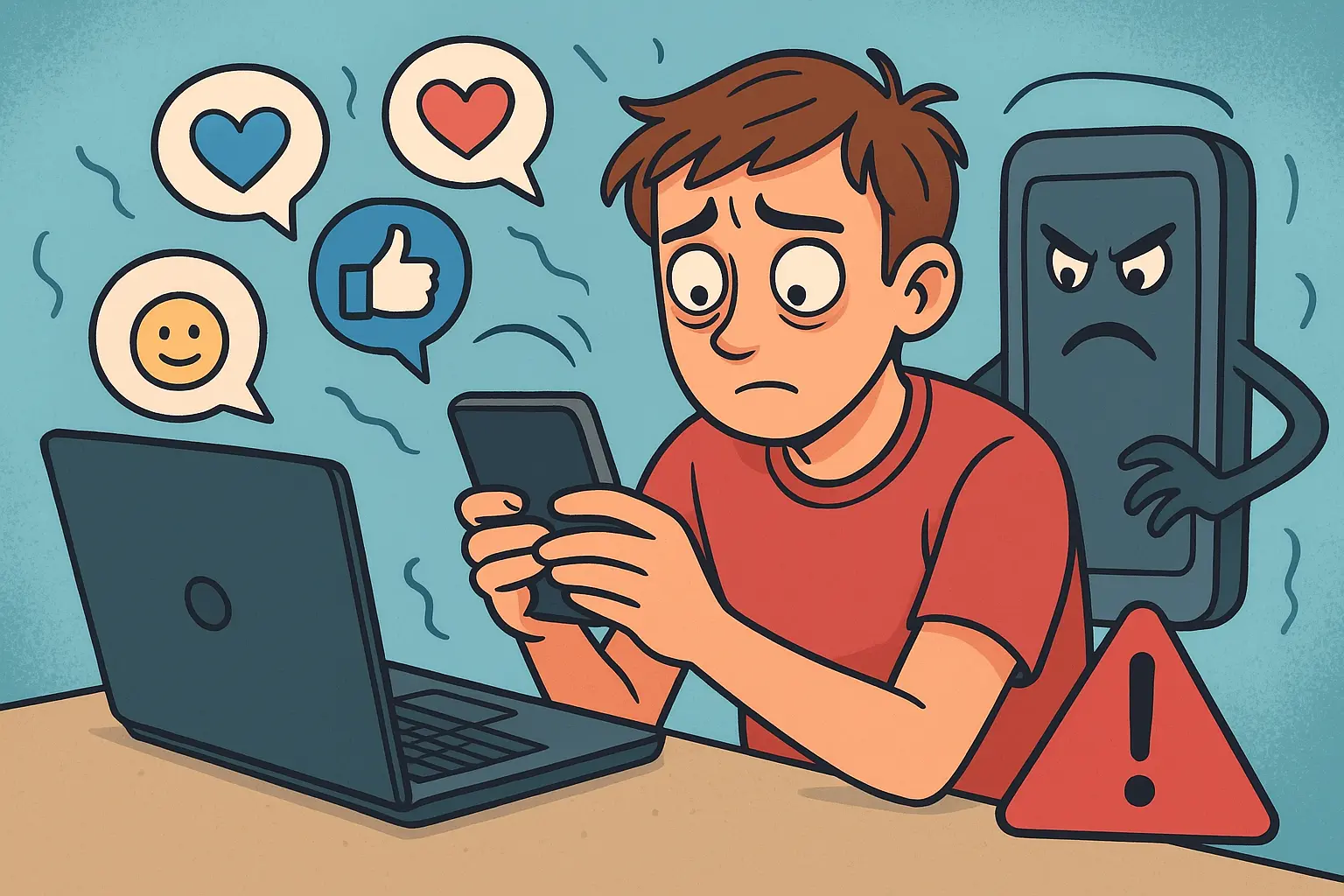
⚠️ The Hidden Side Effects of Technology Addiction
Let’s explore the less talked about consequences of our screen-obsessed world — and what research says about each.
1. 💢 Musculoskeletal Pain
Hours of slouching over a phone or laptop can lead to chronic back, neck, and wrist pain. A survey by the British Chiropractic Association found that 56% of adults reported pain linked to tech use — yet only 27% actually reduced their usage.
💡 Try this: Adjust your posture, take frequent breaks, and stretch every 30 minutes. Your spine will thank you!
2. 👀 Eye Strain and Blurred Vision
“Digital Eye Strain” is now an official clinical term. The blue light from screens not only causes dry eyes and headaches, but also messes with your sleep-wake cycle.
💡 Quick fix: Use blue-light filters, blink often, and follow the 20-20-20 rule — every 20 minutes, look 20 feet away for 20 seconds.
3. ⚖️ Weight Gain
More screen time = less movement. Studies link each extra hour of internet use to an 8% higher risk of obesity.
💡 Try this: Replace your late-night scrolling with a short walk, light stretching, or even a few minutes of dancing.
4. 🌙 Sleep Disturbances
Blue light tricks your brain into staying awake by suppressing melatonin — the “sleep hormone.” Falling asleep with your phone is a modern sleep killer.
💡 Bedtime ritual: Keep your phone out of reach, dim the lights, and unwind with calming music or deep breathing.
5. 🤕 Headaches
Excessive screen exposure can trigger tension headaches and migraines, especially in children and office workers.
💡 Relief tip: Step away from screens hourly, hydrate well, and gently massage your temples.
6. 😔 Depression & Anxiety
Numerous studies link internet addiction to depression, anxiety, and irritability. Constant comparison, digital validation, and social pressure can erode mental well-being.
💡 Your move: Try dopamine-boosting activities — exercise, sunlight, journaling, or connecting with real people.
7. 😶 Dissociation
Ever “zone out” while scrolling and lose track of time? That’s digital dissociation. Too much of it can blur the line between your real and virtual life.
💡 Fix it: Replace endless scrolling with mindful activities — reading, painting, or even meditating for five minutes.
8. 💔 Low Self-Esteem
Social media is a highlight reel — not reality. Constant comparison can lower your confidence and distort self-image, especially among young users.
💡 Reframe it: Follow accounts that inspire you, not ones that trigger insecurity. Compliment yourself as much as you do others.
9. 🎲 Recognized Mental Disorders
WHO and APA now officially recognize Gaming Disorder and Gambling Disorder. Both are linked to prolonged digital exposure and reward-seeking behaviors. For example, online gambling is now found to be more addictive than casino gambling due to 24/7 access.
10. ⚡ Risky Behavior
Teens and young adults addicted to screens show higher rates of impulsive and risky behaviors, prompting experts to recommend early screening for internet addiction.
11. 💬 Cyberbullying
Nearly 59% of American teens have faced online bullying — often linked to overuse of social media. Victims of cyberbullying are also more likely to become addicted to the internet, creating a painful cycle.
💡 Need help? Visit The Cybersmile Foundation for free support and resources.
12. 🧍 Loneliness in a “Connected” World
Ironically, the more we connect online, the lonelier we often feel. Studies show frequent social media users report greater feelings of isolation, not connection.
💡 Reconnect offline: Volunteer, attend a local event, or meet a friend for coffee — no screens allowed!
13. 💞 Relationship Struggles
Half of Americans say their partner gets distracted by their phone during conversations. Social media jealousy, emotional distance, and “phubbing” (phone snubbing) are now common relationship challenges.
💡 Try this: Have a “tech-free dinner” once a week — just you, your partner, and real conversation.
14. ⚠️ Sexual Disorders
With online pornography and dating apps easily accessible, technology addiction is contributing to rising rates of sexual compulsivity and intimacy issues.
💡 Seek balance: Open communication, therapy, and mindful tech use can restore emotional connection.
📊 The Global Picture: Digital Addiction by the Numbers
- 1 in 8 adults in the UK now suffers from a form of digital addiction.
- The average UK user spends 2 hours 24 minutes daily on social media.
- Over 745 people have sought treatment for gaming addiction at the NHS National Centre for Gaming Disorders since 2019.
These numbers prove one thing: Digital addiction is not a phase — it’s an epidemic.
🧠 Breaking Free: How to Regain Control Over Your Tech Habits
If you’ve read this far, chances are you’ve already felt the impact of tech overload. But recovery is possible. Here’s how to start:
- Set “tech-free zones” — like your dining table or bedroom.
- Schedule screen breaks using built-in focus apps.
- Turn off non-essential notifications.
- Replace scrolling with hobbies that make you feel alive.
- Seek professional help if you can’t cut down on your own.
Remember — technology should serve you, not control you.
🌱 Final Thought: It’s Time to Reclaim Your Mind
Technology is incredible — when used intentionally. But when screens start dictating your sleep, mood, relationships, and self-worth, it’s time to pause and unplug.
So, the next time you reach for your phone out of habit, ask yourself: 👉 Am I using it — or is it using me?
🛒 Recommended Product
Blue light glasses reduce the dopaminergic stimulation of evening screen exposure — making it easier to wind down and reducing the compulsive checking behaviour that technology addiction reinforces. A simple structural change that costs nothing in willpower.
View Blue Light Glasses on Amazon →References
- Kuss DJ, Griffiths MD. Internet and gaming addiction: a systematic literature review. Brain Sci. 2012;2(3):347-374.
- Twenge JM, et al. Increases in depressive symptoms, suicide-related outcomes. Clin Psychol Sci. 2018;6(1):3-17.
- Andreassen CS, et al. The relationship between addictive use of social media and video games. Psychol Addict Behav. 2016;30(2):252-262.
Written by — Dharmil Pandya
Medical Writer | Founder, Healthier Tomorrow
#TechnologyAddiction #DigitalWellness #ScreenTime #MentalHealth #BreakFree #DigitalDetox #TechAddiction #PhoneAddiction #InternetAddiction