
Ultra-Processed Foods: Why Calories Aren’t the Only Problem for Your Health
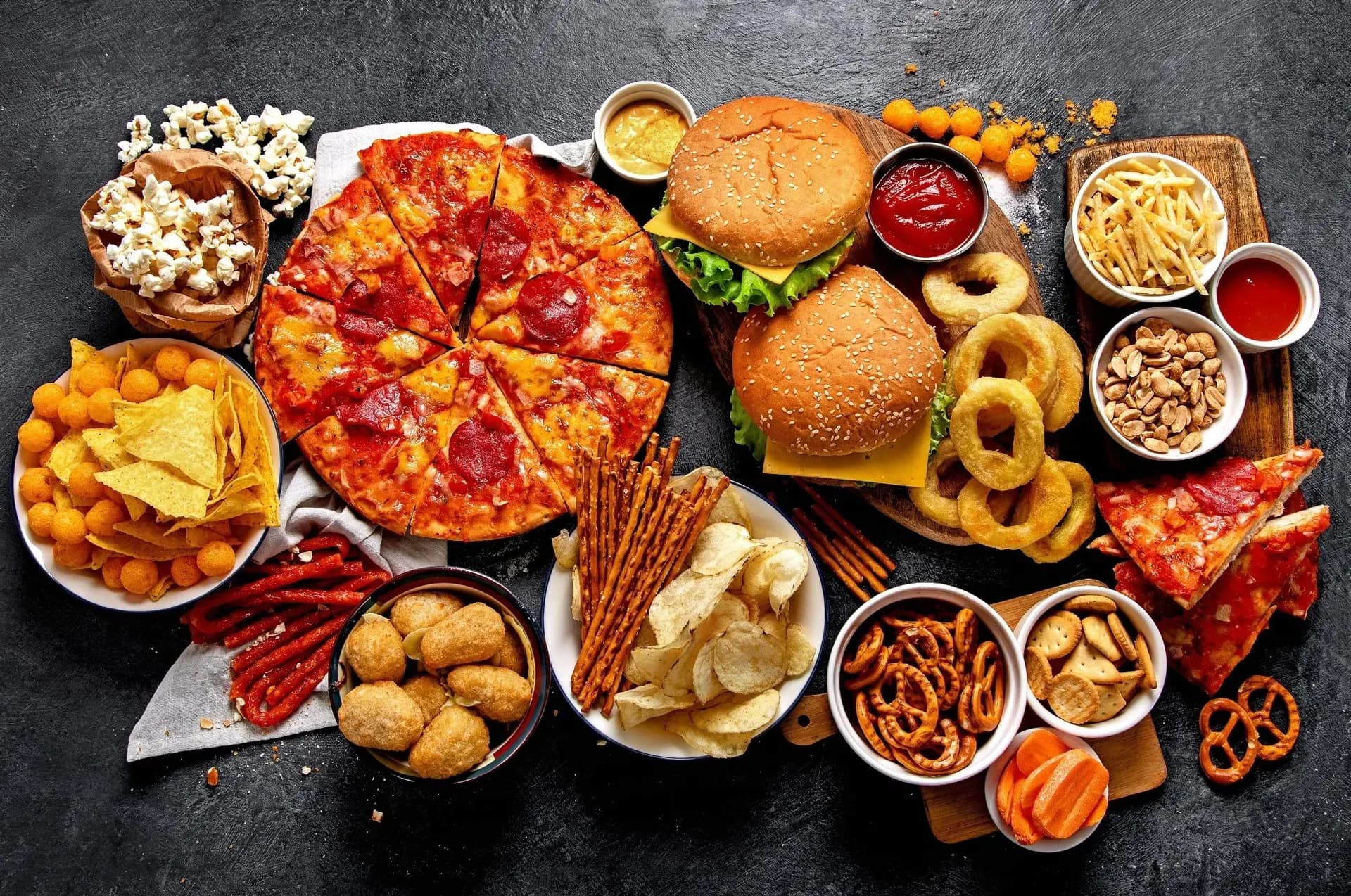
Anyone who has ever promised themselves to “eat better” knows how hard it is to maintain that goal. Fresh, home-cooked meals take time, planning, and money—resources many people struggle to spare. When time or access to fresh food is limited, ultra-processed foods often become the default choice.
They’re convenient, affordable, and tasty—but beneath that convenience lies a serious health concern. Ultra-processed foods aren’t just high in calories; they are engineered products that can disrupt metabolism, gut health, and long-term wellbeing.
Understanding Food Processing: Not All Processing Is Bad
By the time food reaches your plate, most of it has been processed in some way—washed, cooked, frozen, canned, packaged, or pasteurized. This kind of processing is often necessary and sometimes beneficial. Cooking meat, fermenting foods, or freezing vegetables can actually improve safety and nutrition.
The problem begins when processing goes too far.
“Processing is anything done to food beyond its natural state,” explains Dr. Rappaport, an obesity and internal medicine specialist.
“Ultra-processed foods are made with industrial ingredients you wouldn’t use at home. They often contain additives and food-like substances designed for taste, shelf life, and profit—not health.”
What Are Ultra-Processed Foods?
According to the NOVA classification system, ultra-processed foods are formulations made mostly from industrial ingredients and additives such as:
- Preservatives
- Artificial colors and flavorings
- Emulsifiers and texturizers
These foods are designed to be hyper-palatable, inexpensive, and ready to eat—making them hard to resist and easy to overconsume.
Common Examples of Ultra-Processed Foods
- Soft drinks, soda, and energy drinks
- Packaged salty or sweet snacks
- Ice creams and frozen desserts
- Sweetened juices
- Breakfast cereals and energy bars
- Margarines and spreads
- Meal-replacement shakes
- Packaged meat and fish products
Why “A Calorie Is Not Just a Calorie”
Traditionally, a calorie is defined as a unit of energy. But the human body is not a simple calorie-burning machine. Your metabolism, hormones, gut microbiome, and the type of food you eat all influence how calories affect your body.
A landmark 2019 randomized controlled trial published in Cell Metabolism compared two diets:
- One high in ultra-processed foods
- One based on whole, minimally processed foods
Both diets had the same calories and macronutrients, and participants could eat freely.
The Results Were Shocking:
- Participants gained nearly 1 kg in just 14 days on the ultra-processed diet
- They lost nearly 1 kg on the whole-food diet
This proves that ultra-processed foods promote overeating and weight gain independent of calories.
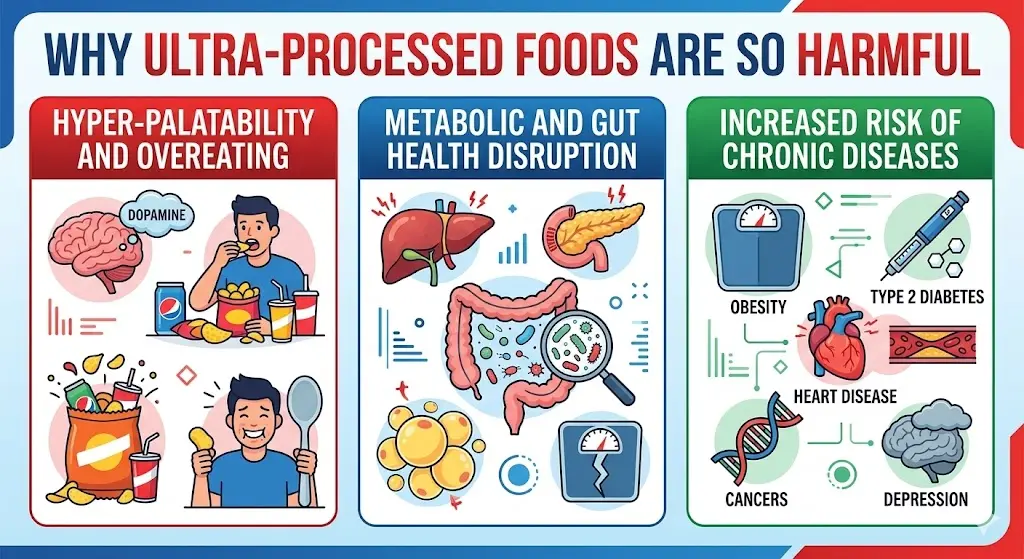
Why Ultra-Processed Foods Are So Harmful
1. Hyper-Palatability and Overeating
Ultra-processed foods are engineered to stimulate the brain’s reward system using sugar, salt, fat, and additives. These ingredients trigger pleasure without satiety, making it easy to eat more without feeling full.
“A thousand calories of sugary cereal puts far more metabolic stress on your liver and pancreas than a thousand calories of broccoli,” says Dr. Rappaport.
“One is food. The other is engineered.”
2. Metabolic and Gut Health Disruption
Ultra-processed foods negatively affect:
- Your metabolism – increasing insulin resistance and fat storage
- Your gut microbiome – reducing beneficial bacteria and increasing inflammation
- Hormonal balance – affecting hunger and fullness signals
3. Increased Risk of Chronic Diseases
Multiple studies link high consumption of ultra-processed foods with:
- Obesity and metabolic syndrome
- Type 2 diabetes
- Heart disease
- Certain cancers
- Depression and mental health disorders
The danger isn’t just extra calories—it’s how these foods interact with your biology.
A Growing Concern for Children
Children and adolescents are especially vulnerable. Research shows that in some populations, over 50% of daily calories come from ultra-processed foods, particularly among disadvantaged communities.
Early exposure can lead to:
- Childhood obesity
- Early metabolic dysfunction
- Lifelong health challenges
This makes reducing ultra-processed food intake not just a personal choice—but a public health priority.
Progress, Not Perfection: Practical Tips to Reduce Ultra-Processed Foods
Completely avoiding ultra-processed foods isn’t realistic—and it doesn’t have to be. Small, consistent changes make a big difference.
Simple Strategies You Can Start Today:
- Shop the perimeter of the supermarket – fresh produce, dairy, and whole foods are usually there
- Read ingredient labels – long lists with unfamiliar names often signal ultra-processing
- Choose whole foods more often – foods you can recognize and cook at home
- Use convenience foods mindfully – occasionally is fine; regularly is risky
The Bottom Line
Ultra-processed foods are not just “empty calories.” They are carefully engineered products that hijack appetite control, disrupt metabolism, harm gut health, and increase the risk of chronic disease.
When it comes to nutrition, quality matters as much as quantity.
The next time you reach for a quick snack, remember:
👉 A calorie is more than a number—it’s information for your body.
🛒 Recommended Product
Replacing ultra-processed snacks starts with having better alternatives accessible. Roasted makhana provides satisfying crunch with real nutritional value — high protein, high fiber, no artificial additives — and is one of the best direct substitutes for packaged snack foods in Indian homes.
View Roasted Makhana on Amazon →References
- Monteiro CA, et al. NOVA — the star shines bright. World Nutr. 2016;7(1-3):28-38.
- Hall KD, et al. Ultra-processed diets cause excess calorie intake and weight gain. Cell Metab. 2019;30(1):67-77.e3.
- Srour B, et al. Ultra-processed food intake and risk of cardiovascular disease. BMJ. 2019;365:l1451.
Written by — Dharmil Pandya
Medical Writer | Founder, Healthier Tomorrow
#UltraProcessedFoods #HealthyEating #MetabolicHealth #GutHealth #NutritionScience #WholeFoods #DietAndHealth #LifestyleDiseases #PreventiveHealth #FoodAwareness