
Understanding Acne: Causes, Myths, and Medical Treatments
Acne is one of the most common skin conditions, affecting teenagers, young adults, and even people well into their 30s and 40s. It doesn’t just show up on your face—it can affect your chest, back, and shoulders too. And let’s be real: it impacts more than just skin; it often affects confidence and self-esteem.
In this blog, we’ll explore what acne really is, why it happens, the myths that confuse us, and the medical treatments that actually work. If you’ve ever wondered, “Why me?” or “What’s the best way to treat this?”, you’re in the right place.
🌱 What Exactly is Acne?
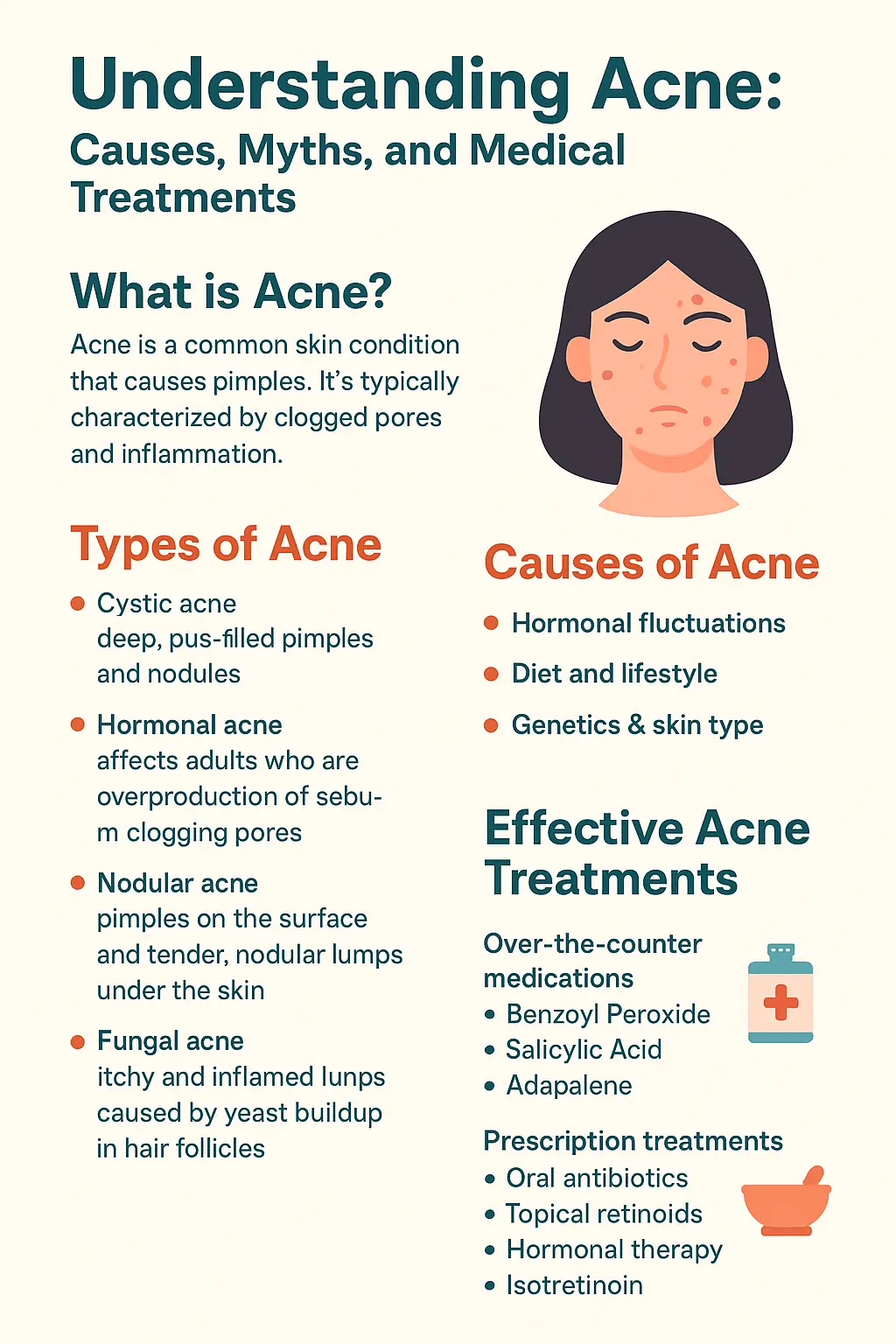
At its core, acne is caused by clogged pores. Your skin’s sebaceous (oil) glands release sebum to keep it hydrated. But when sebum mixes with dead skin cells and bacteria, pores get blocked, creating pimples. If inflammation kicks in, you’ll notice redness, swelling, and sometimes pain.
🔍 Types of Acne You Should Know
Not all acne looks or feels the same. Here are some common types:
- Cystic acne – deep, pus-filled pimples that may cause scarring.
- Hormonal acne – often seen in adults, especially around the jawline and chin.
- Nodular acne – painful lumps beneath the skin.
- Fungal acne – itchy, inflamed bumps caused by yeast buildup.
👉 Severe forms like cystic and nodular acne can leave scars, so early treatment matters.
⚡ Main Causes of Acne
1. Hormonal Fluctuations
Puberty, menstrual cycles, pregnancy, or menopause—all can trigger excess oil production, leading to breakouts.
2. Diet and Lifestyle
Yes, your plate does affect your skin! High-glycemic foods (white bread, sweets, dairy) and habits like stress, poor sleep, and smoking worsen acne.
3. Genetics & Skin Type
If your parents struggled with acne, you’re more likely to face it too. Oily skin types are especially prone to clogged pores.
💊 Effective Treatments for Acne
Over-the-Counter (OTC) Options
- Benzoyl Peroxide – kills acne-causing bacteria.
- Salicylic Acid – unclogs pores and fights blackheads.
- Adapalene (Differin Gel) – promotes cell turnover and prevents breakouts.
👉 Pro tip: Start simple. Don’t overload your skin with too many actives at once.
Prescription Treatments
For moderate to severe acne, dermatologists may recommend:
- Topical Retinoids (tretinoin, tazarotene)
- Oral Antibiotics (doxycycline, minocycline)
- Hormonal Therapy (birth control pills, spironolactone)
- Isotretinoin (for severe nodulocystic acne)
Natural Remedies
While natural ingredients like tea tree oil, aloe vera, and green tea can help mild acne, they’re not one-size-fits-all. Always consult a dermatologist before trying DIY remedies.
🚫 Busting the Biggest Acne Myths
❌ Myth: Acne is only a teenage problem
✔️ Acne can affect anyone, at any age.
❌ Myth: It will go away on its own
✔️ Many cases need treatment to prevent scarring and stress.
❌ Myth: Chocolate & greasy food cause acne
✔️ Not directly—but sugar and dairy can worsen it.
❌ Myth: Never pop pimples
✔️ True in most cases, but if you must, do it safely (clean hands + gentle pressure).
❌ Myth: Tanning clears acne
✔️ Nope. UV rays may hide redness temporarily but worsen acne long-term.
🌟 Final Takeaway
Acne is not just a “skin thing”—it’s a complex condition influenced by hormones, lifestyle, and genetics. The good news? With the right treatment plan, tailored skincare, and patience, clearer skin is absolutely possible.
If you’re struggling, don’t wait—consult a dermatologist to get a personalized solution.
Remember: clear skin is not about chasing trends, it’s about finding what works for YOU.
🛒 Recommended Product
Salicylic acid is the most evidence-based over-the-counter ingredient for acne — penetrating pores to dissolve comedones and reduce sebum. This 2% salicylic acid face wash provides the clinically relevant concentration without requiring a prescription.
View Salicylic Acid Face Wash on Amazon →References
- Zaenglein AL, et al. Guidelines of care for the management of acne vulgaris. J Am Acad Dermatol. 2016;74(5):945-973.e33.
- Tan JK, Bhate K. A global perspective on the epidemiology of acne. Br J Dermatol. 2015;172 Suppl 1:3-12.
- Fabbrocini G, et al. Acne scars: pathogenesis, classification and treatment. Dermatol Res Pract. 2010;2010:893080.
Written by — Dharmil Pandya
Medical Writer | Founder, Healthier Tomorrow
#acne #skincare #acnetreatment #hormonalskin #skincaremyths #naturalskincare #clearskinjourney #dermatologistapproved #skinhealth #acneawareness