
Wearable Health Technology in India — How Smartwatches Are Becoming Medical Devices
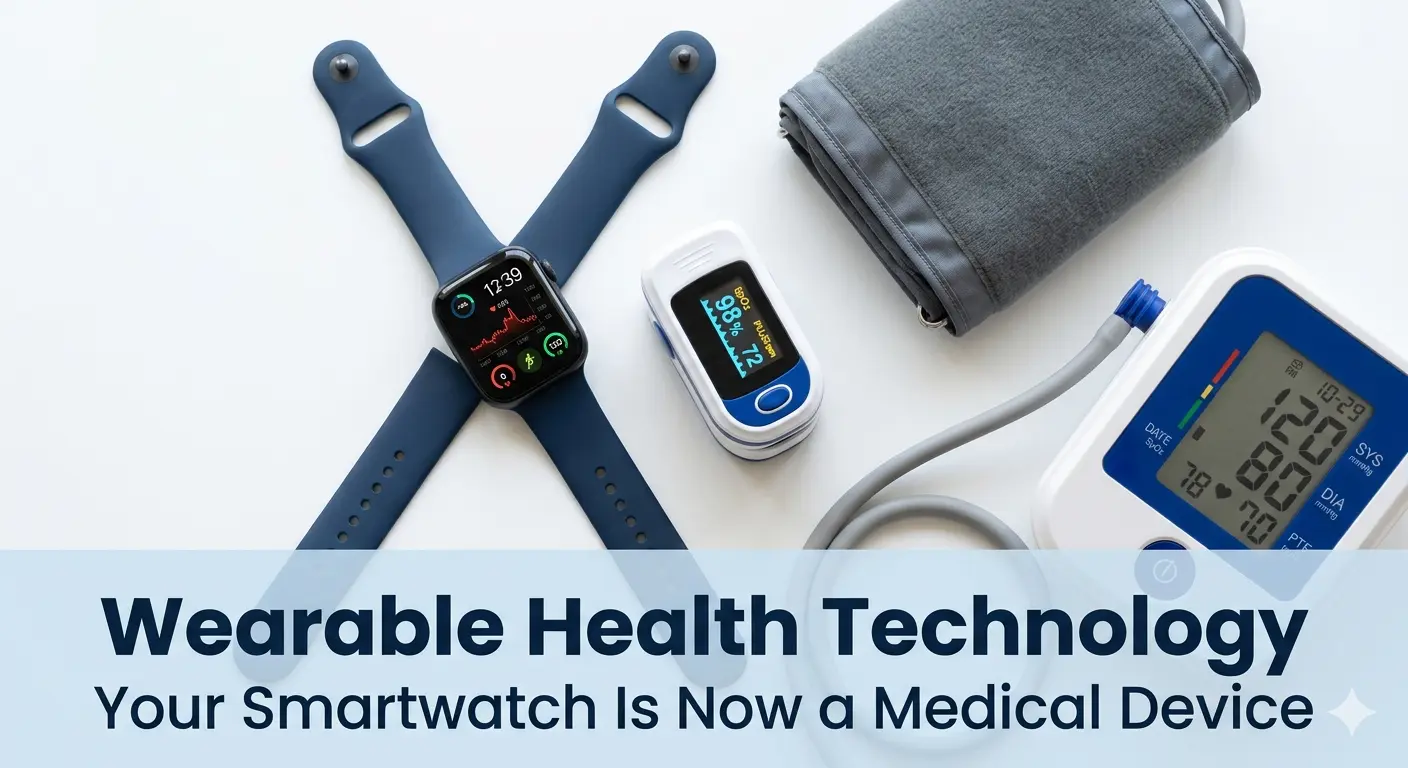
Look around any urban Indian office, gym or park and you will see them everywhere — smartwatches and fitness bands tracking steps, heart rate, sleep and stress. India has become the world's second largest wearable technology market, with over 100 million wearable devices sold in 2025 alone.
But here is what most Indian wearable users don't know: the device on their wrist is undergoing a profound transformation — from a fitness accessory to a genuine medical monitoring tool.
The American College of Sports Medicine has ranked wearable technology as the number one fitness trend globally, with longevity and healthspan as defining themes for 2026, driven by growing evidence around biomarker tracking, preventive diagnostics and lifestyle-based disease reversal.
In India specifically, where cardiovascular disease, diabetes and hypertension are epidemic — and where access to regular medical monitoring is severely limited for much of the population — wearable health technology represents something genuinely significant: the democratisation of health monitoring.
As a pharma professional who follows medical technology closely, I want to give you an honest, evidence-grounded guide to what wearable health technology can currently do, what the limitations are and how Indians should use it intelligently.
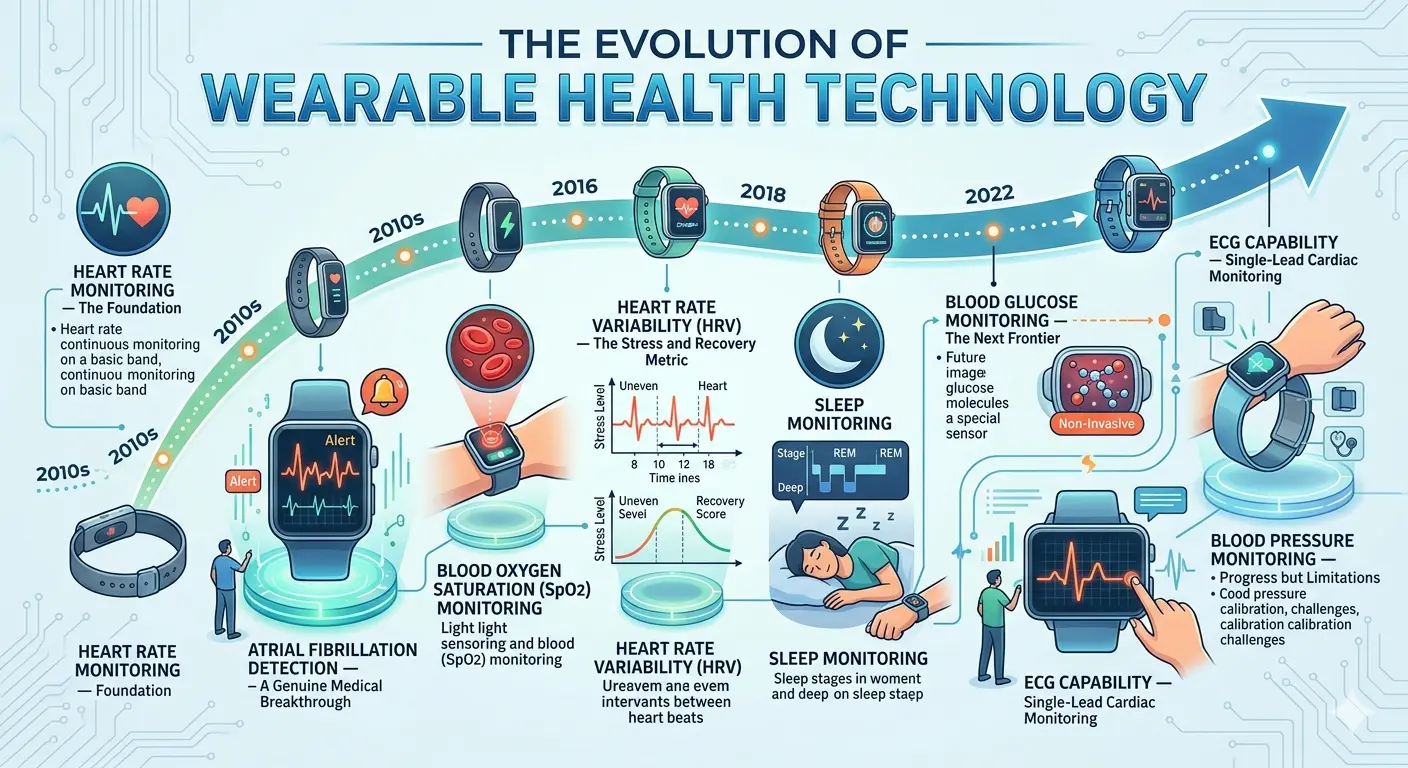
The Evolution of Wearable Health Technology
The first generation of wearable devices — fitness bands from companies including Fitbit and Mi Band — did one thing: count steps. They were accelerometer-based pedometers in wristband form.
The second generation added heart rate monitoring through photoplethysmography (PPG) — an optical technique that shines light into the skin and measures the variation in light absorption caused by blood volume changes with each heartbeat. This enabled continuous heart rate tracking but with significant accuracy limitations.
We are now in the third and fourth generation — devices that incorporate multiple sensors, sophisticated algorithms and machine learning to extract clinical-grade health information from continuous physiological monitoring.
The transformation is remarkable. Let me walk through the key health monitoring capabilities of current-generation wearables — and what the evidence actually says about each.
Heart Rate Monitoring — The Foundation
How it works: Photoplethysmography (PPG) — an LED light source (green for surface heart rate, red and infrared for SpO2) shines into the skin. The amount of light reflected or absorbed varies with blood volume changes from each heartbeat. A photodetector measures these variations and an algorithm extracts heart rate.
What it measures reliably: Resting heart rate during sleep or stationary periods. Resting heart rate is a meaningful health metric — lower resting heart rate generally indicates better cardiovascular fitness, with resting heart rates above 80 bpm associated with increased cardiovascular risk.
Limitations: During exercise — particularly high-intensity activities and activities involving wrist movement like weight training — PPG heart rate accuracy degrades significantly. Motion artefacts from arm movement corrupt the signal. Chest strap heart rate monitors remain significantly more accurate for exercise heart rate measurement.
Clinical relevance for Indians: Monitoring resting heart rate trends over time can identify:
- Cardiovascular fitness improvements from exercise
- Early signs of overtraining or inadequate recovery (elevated resting heart rate)
- Potential illness before symptoms appear (resting heart rate typically rises 1-2 days before fever from infection)
- Atrial fibrillation detection (see below)
Atrial Fibrillation Detection — A Genuine Medical Breakthrough
This is where wearable technology has made its most significant and validated medical contribution.
Atrial fibrillation (AFib) is the most common sustained cardiac arrhythmia — affecting an estimated 2-3% of the Indian population above 40 years and significantly more in older age groups. AFib dramatically increases the risk of stroke — by 5-fold — because the chaotic atrial contractions allow blood to pool and clot, and these clots can travel to the brain.
The problem with AFib detection has historically been that it is often intermittent — occurring in episodes rather than continuously — making it easy to miss on a standard 12-second ECG performed at a clinic visit.
How wearables detect AFib:
Modern smartwatches use their PPG sensors to analyse heart rate variability patterns continuously. AFib produces a distinctive irregular irregularity in beat-to-beat intervals that differs from normal heart rate variability. Machine learning algorithms trained on thousands of confirmed AFib episodes can detect this pattern from the PPG signal with meaningful accuracy.
What the evidence shows:
The Apple Heart Study — a landmark study of over 400,000 participants — demonstrated that Apple Watch's AFib detection algorithm produced a positive predictive value of 84% for AFib when it generated a notification. Subsequent studies of other wearables have shown similar performance.
More recent ECG-capable smartwatches — which can record a single-lead ECG using electrodes on the watch case — have demonstrated even higher accuracy for AFib detection.
The Indian context: India has a high prevalence of undiagnosed AFib — particularly in the elderly and in those with hypertension, diabetes and heart disease. Many Indians' first presentation of AFib is a devastating stroke. Continuous wrist-worn monitoring that can detect early AFib and prompt medical evaluation represents a potentially life-saving application for the Indian population.
Important caveat: Wearable AFib detection generates both false positives (alerts in people without AFib) and false negatives (misses AFib in people who have it). It is a screening tool — not a diagnostic device. Any notification suggesting potential AFib should be followed by proper medical ECG evaluation, not acted upon independently.
Blood Oxygen Saturation (SpO2) Monitoring
How it works: Using red and infrared LED light at two wavelengths that are absorbed differently by oxygenated and deoxygenated haemoglobin — wearables can estimate the percentage of haemoglobin in arterial blood carrying oxygen.
Normal values: 95-100% SpO2 is normal. Below 90% indicates significant hypoxia requiring medical attention.
Validated use cases:
The COVID-19 pandemic dramatically accelerated SpO2 monitoring adoption in India — with millions of Indians using pulse oximeters to monitor oxygen saturation during infection. The phenomenon of "silent hypoxia" — dangerously low SpO2 without proportionally severe breathlessness — made continuous monitoring genuinely valuable during COVID illness.
Beyond COVID, SpO2 monitoring is useful for:
- High-altitude trekking — monitoring for altitude sickness
- Sleep apnoea screening — significant SpO2 drops during sleep indicate apnoeic episodes
- Monitoring of respiratory conditions — COPD, asthma
Accuracy limitations: Wearable SpO2 accuracy is significantly lower than medical pulse oximeters — particularly at lower SpO2 values where accuracy matters most clinically. Studies have found wearable SpO2 readings can be off by 3-5% compared to clinical standards. For most health monitoring purposes this is acceptable — for clinical decision-making it is not.
Skin tone and accuracy: Research has identified that PPG-based SpO2 measurements are less accurate in people with darker skin tones — including many Indians. The FDA has issued guidance acknowledging this limitation. Wearable manufacturers are working on algorithmic improvements but this remains a clinically significant limitation.
Heart Rate Variability (HRV) — The Stress and Recovery Metric
Heart rate variability — the variation in time between consecutive heartbeats — is one of the most clinically meaningful metrics that wearables measure, yet one of the least understood by users.
The physiology: Your heart rate is not perfectly regular — it speeds up slightly during inhalation and slows during exhalation, in a phenomenon called respiratory sinus arrhythmia. More broadly, beat-to-beat variability reflects the balance between sympathetic (stress/activation) and parasympathetic (recovery/calm) nervous system tone.
Higher HRV generally indicates:
- Greater cardiovascular fitness
- Better autonomic nervous system balance
- More effective stress recovery
- Better sleep quality
Lower HRV indicates:
- Higher physiological stress load
- Inadequate recovery
- Overtraining
- Poor sleep
- Potential illness (HRV drops before fever in many infections)
Indian relevance: India's epidemic of chronic stress, sleep deprivation and cardiovascular disease makes HRV a particularly meaningful metric. Tracking HRV trends over time — rather than absolute values, which vary enormously between individuals — can reveal whether lifestyle interventions (yoga, pranayama, sleep improvement, exercise) are measurably improving autonomic balance.
Pranayama specifically — a core Indian practice — has been shown in multiple studies to significantly increase HRV. Wearables that track HRV allow you to see this improvement quantified — which can be a powerful motivator for maintaining the practice.
Sleep Monitoring
Modern wearables track sleep through a combination of accelerometry (movement detection) and heart rate variability analysis to estimate sleep stages — light sleep, deep sleep and REM sleep.
What sleep tracking does reasonably well:
- Total sleep time estimation — generally within 30 minutes of polysomnography (gold standard)
- Sleep and wake time detection
- Identifying nights of severely disrupted sleep
- Tracking sleep trends over time
What it does poorly:
- Accurate sleep stage classification — particularly distinguishing light from deep sleep — remains significantly less accurate than polysomnography
- Individual night accuracy is lower than trend accuracy
The value for Indians: India's sleep crisis — 61% of Indians sleeping less than 6 hours, second most sleep-deprived nation globally — makes sleep tracking behaviorally valuable. Seeing your actual sleep duration and quality quantified nightly creates accountability and motivation in a way that abstract recommendations cannot.
Blood Glucose Monitoring — The Next Frontier
For India's 77 million diabetics and the hundreds of millions at risk, continuous glucose monitoring (CGM) is perhaps the most potentially impactful wearable health application.
Current CGM devices — including FreeStyle Libre and Dexcom — use a small sensor inserted just under the skin to measure interstitial glucose continuously. While not exactly "wearable" in the smartwatch sense, they represent the most clinically validated continuous health monitoring available and have transformed diabetes management globally.
The truly non-invasive CGM challenge:
Multiple technology companies are working on truly non-invasive blood glucose monitoring — measuring glucose through optical or electromagnetic techniques without any skin penetration. Samsung, Apple and various Indian startups have been developing this technology.
The challenge is formidable — glucose concentrations in blood are small relative to interfering substances, and the optical signal must penetrate skin reliably despite individual variation in skin thickness, pigmentation and tissue composition.
As of 2026, no truly non-invasive CGM with clinical-grade accuracy has received regulatory clearance. Several devices claim glucose estimation but none has demonstrated accuracy equivalent to blood glucose testing. This remains an active and exciting area of development — but buyers should be cautious of current marketing claims.
ECG Capability — Single-Lead Cardiac Monitoring
Several current smartwatches — including Apple Watch, Samsung Galaxy Watch and Indian-market devices from Noise and Boat premium ranges — incorporate ECG recording capability.
By touching the watch crown with a finger while the watch is on the opposite wrist, a single-lead ECG is recorded over 30 seconds. This ECG can detect atrial fibrillation, atrial flutter and various abnormal rhythm patterns, and is cleared as a medical device in multiple regulatory jurisdictions.
Clinical value for Indians: Single-lead wearable ECG is genuinely useful for:
- AFib screening and documentation of intermittent episodes
- Palpitation documentation — recording an ECG at the moment of symptom occurrence when you cannot get to a clinic
- Monitoring patients on antiarrhythmic medications
Limitations: Single-lead ECG cannot replace the 12-lead ECG performed in clinical settings for diagnosis of coronary artery disease, heart attack or most conduction abnormalities. It is a screening tool and a documentation tool — not a diagnostic replacement.
Blood Pressure Monitoring — Progress but Limitations
Hypertension affects an estimated 25-30% of Indian adults — yet the vast majority remain unmonitored between doctor visits. Continuous blood pressure monitoring through a wearable would be genuinely transformative for Indian cardiovascular health management.
Several smartwatches now include blood pressure estimation — including Samsung Galaxy Watch. These use PPG waveform analysis and pulse transit time to estimate blood pressure.
The honest assessment: Wearable blood pressure accuracy currently falls short of clinical standards required for medical decision-making. The oscillometric cuff method — used in standard blood pressure monitors — remains significantly more accurate. Current wearable BP estimation may be useful for detecting relative trends but should not be relied upon for clinical blood pressure values.
This technology is improving rapidly. Within the next 2-3 years, cuffless blood pressure monitoring with clinically acceptable accuracy is likely to become available — which would represent a genuine revolution for India's hypertension management.
How to Use Wearable Health Technology Intelligently — A Guide for Indians
What to trust and act on:
- Resting heart rate trends — useful for fitness and early illness detection
- Sleep duration tracking — behaviorally valuable even if stage accuracy is limited
- AFib alerts — warrant medical follow-up (not independent action)
- SpO2 drops during sleep — worth discussing with a doctor (potential sleep apnoea)
- HRV trends — meaningful for stress and recovery management
- Step counting and activity monitoring — well-validated and motivationally valuable
What to interpret cautiously:
- Absolute SpO2 values in the low-normal range (90-95%) — verify with a medical pulse oximeter
- Sleep stage breakdowns — use as directional indicators, not precise measurements
- Blood pressure estimates — cross-check with cuff-based measurements
- Stress scores — algorithm-generated, useful as one input not definitive measurement
What wearables cannot replace:
- Blood pressure monitoring with a validated cuff device
- Blood glucose testing with a glucometer or CGM for diabetics
- Formal sleep study (polysomnography) for sleep disorder diagnosis
- 12-lead ECG for cardiovascular diagnosis
- Regular consultation with a doctor for interpretation of health data
The data conversation with your doctor: One of the most valuable uses of wearable health data in India is bringing it to your doctor's appointment. A week of resting heart rate data, sleep trends or an ECG recording from the moment of your palpitations provides information that was previously impossible to obtain without hospital admission.
Indian doctors are increasingly comfortable interpreting wearable data — and some specialties, particularly cardiology, are beginning to integrate it into clinical workflows.
The Privacy Dimension — What Happens to Your Health Data
This is a dimension of wearable health technology that Indian users rarely consider but should.
Wearable devices continuously collect intimate physiological data — heart rate, sleep patterns, activity, location and increasingly ECG and SpO2. This data is stored on company servers, analysed by algorithms and in some cases shared with third parties.
Questions worth asking about any wearable health service:
- Where is my data stored? (India's DPDPA 2023 requires consent for health data processing)
- Is it shared with insurance companies or employers?
- Can I export and delete my data?
- What happens to my data if the company is acquired?
Premium devices from established companies (Apple, Samsung, Garmin) have clearer and generally more protective privacy policies than many budget Indian-brand wearables whose data practices are less transparent.
The Indian Wearable Market — What to Buy
India's wearable market spans an enormous price range — from ₹1,500 budget bands to ₹80,000+ premium smartwatches. Here is an honest assessment of value at different price points:
Budget (₹1,500-3,000): Noise, Boat, Realme basic bands
- Suitable for: Step counting, basic heart rate, sleep duration tracking
- Not suitable for: Medical-grade monitoring of any kind
- Best for: Fitness motivation and activity tracking
Mid-range (₹5,000-15,000): Noise ColorFit Ultra, Boat Wave, Samsung Galaxy Fit
- Suitable for: All of the above plus SpO2 monitoring, HRV tracking, improved sleep staging
- Some devices in this range offer single-lead ECG
- Best for: General health monitoring with some medical screening capability
Premium (₹25,000+): Apple Watch Series 10, Samsung Galaxy Watch 7, Garmin Fenix
- Suitable for: All above plus clinically validated AFib detection, ECG recording, emergency SOS, blood oxygen monitoring with higher accuracy
- Best for: Those with cardiovascular risk factors, regular exercisers, those who want data they can meaningfully share with doctors
The honest recommendation for Indians with health concerns: If budget allows, the Apple Watch or Samsung Galaxy Watch represent genuinely different levels of health monitoring capability and regulatory clearance compared to budget devices. The AFib detection alone — particularly relevant for Indians above 45 with hypertension or diabetes — justifies the premium for those at cardiovascular risk.
The future of preventive healthcare in India is on your wrist.
🛒 Recommended Product
If you are looking for an affordable Indian smartwatch with genuine health monitoring features — heart rate, SpO2, sleep tracking and stress monitoring — the Noise ColorFit Pro is a well-reviewed option. As discussed in this guide, consistent daily tracking of resting heart rate and sleep duration alone provides meaningful health insights over time.
View Noise ColorFit Pro on Amazon →Conclusion
Wearable health technology is not a fitness toy. It is a rapidly evolving category of medical devices that, used intelligently, can provide Indians with continuous health monitoring previously available only in clinical settings.
The rise of preventive healthcare and longevity thinking in India is showing up as rising demand for comprehensive health assessment, metabolic testing and long-term wellness planning. Wearable technology is at the centre of this shift.
For India specifically — with its epidemic of cardiovascular disease, diabetes and hypertension, its limited access to regular medical monitoring outside cities and its enormous health-conscious urban professional population — intelligent use of wearable health technology could meaningfully improve early detection and prevention of serious disease.
Know what your device can and cannot do. Use its data to have better conversations with your doctor. And choose devices whose capabilities match your health monitoring needs.
References
- Dunn J, et al. Wearable sensors enable personalized predictions of clinical laboratory measurements. Nat Med. 2021;27(6):1105-1112.
- Piwek L, et al. The rise of consumer health wearables. PLoS Med. 2016;13(2):e1001953.
- IMARC Group. India wearable medical devices market report. 2024.
Written by — Dharmil Pandya
Medical Writer | Founder, Healthier Tomorrow
#WearableTech #Smartwatch #HealthTechIndia #MedTech #DigitalHealth #IndianWellness