
Workplace Burnout: Spotting the Red Flags

We spend almost half of our lives at work. Whether your workplace feels like a second home or a toxic trap, its culture shapes your mood, energy, and overall mental health. But here’s the catch: burnout often creeps in silently—until it starts affecting your performance, relationships, and even physical health.
👉 So, how do you know if your workplace is fueling burnout? Let’s break down the five biggest red flags of a burnout culture—and most importantly, how to manage them.
🚩 1. Limited Autonomy
Do you feel like every small decision is micromanaged? A lack of control over your work schedule or process is one of the strongest burnout triggers.
✅ Manage It:
- Ask for flexible schedules or results-only work environments (ROWE) where output matters more than desk time.
- Pitch a pilot project to show how autonomy can boost both productivity and job satisfaction.
🚩 2. Inequitable Treatment
Unequal pay, lack of promotions, or exclusion can silently crush morale. Burnout thrives in workplaces where employees feel undervalued.
✅ Manage It:
- Push for transparent promotion processes.
- Support Employee Resource Groups (ERGs) to encourage inclusivity.
- Advocate for regular pay equity checks and diversity training.
🚩 3. Overwhelming Workloads
Long hours, unrealistic deadlines, and “always-on” expectations lead to chronic stress.
📊 Fun fact: According to Gallup, employees are 70% less likely to feel burned out when given enough time to complete tasks.
✅ Manage It:
- Speak up about workload realities—sometimes leaders simply aren’t aware.
- Suggest workload management tools and enforce disconnect policies after hours.
- Encourage project planning with realistic timelines.
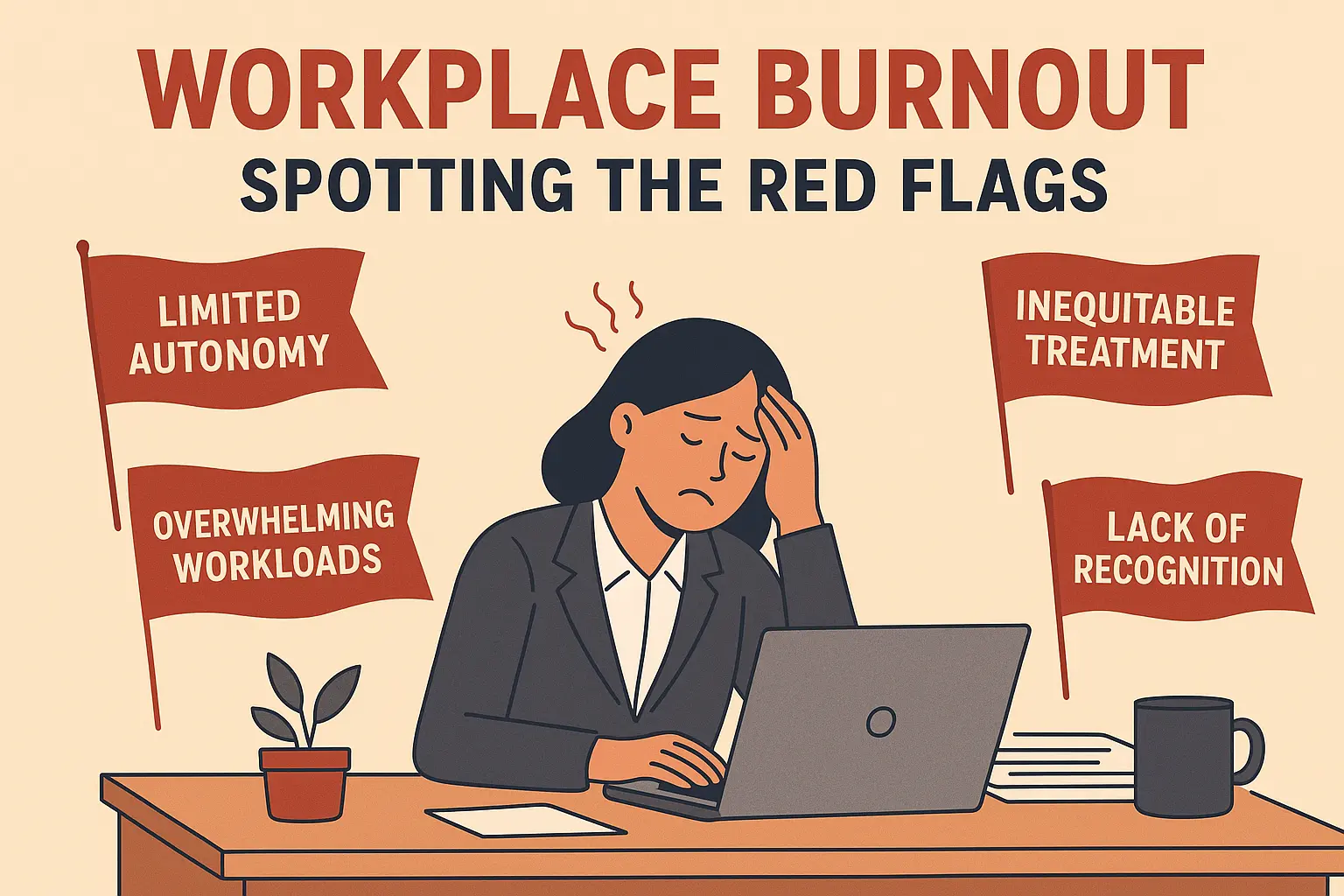
🚩 4. Lack of Recognition
Burnout isn’t always about too much work—sometimes it’s about not being seen. When employees feel invisible, motivation plummets.
✅ Manage It:
- Build a recognition culture—acknowledge small wins and big milestones alike.
- Suggest reward systems (peer-to-peer shoutouts, monthly awards, etc.).
🚩 5. Poor Community Support
Is your workplace more competitive than collaborative? Lack of trust and support drains energy fast.
✅ Manage It:
- Encourage team-building activities to strengthen bonds.
- Advocate for open communication channels and regular check-ins.
- Ask leadership to listen actively to employee concerns.
🧠 What Can Workplaces Do to Prevent Burnout?
It’s not just on employees—organizations need to step up too. Here are five proven strategies:
- Promote Psychological Safety – Employees should feel safe sharing struggles without judgment.
- Encourage Work-Life Boundaries – Normalize saying “no” to after-hours work.
- Offer Mental Health Resources – Employee Assistance Programs (EAPs), therapy support, wellness check-ins.
- Revisit Policies Through a Mental Health Lens – Include burnout training in wellness programs.
- Walk the Talk – Leaders must model balance. When leaders respect boundaries, employees will too.
✨ Final Thoughts
Workplace burnout isn’t just an individual problem—it’s a culture problem. By spotting the red flags early and implementing smart strategies, employees and leaders can create a healthier, more supportive, and more productive workplace.
🔔 Remember: Burnout prevention is not a one-time fix—it’s an ongoing practice.
🛒 Recommended Product
Ashwagandha is the most evidence-based adaptogen for burnout recovery — reducing cortisol, improving energy and reducing the exhaustion that characterises the burnout state. Clinical trials show significant improvements in perceived stress and energy levels within 60 days of consistent use.
View Ashwagandha on Amazon →References
- Maslach C, Leiter MP. Understanding the burnout experience. World Psychiatry. 2016;15(2):103-111.
- Salvagioni DAJ, et al. Physical, psychological and occupational consequences of job burnout. PLoS One. 2017;12(10):e0185781.
- WHO. Burn-out an "occupational phenomenon": International Classification of Diseases. WHO; 2019.
Written by — Dharmil Pandya
Medical Writer | Founder, Healthier Tomorrow
#WorkplaceWellness #BurnoutPrevention #HealthyWorkCulture #EmployeeWellbeing #MentalHealthAtWork #WorkLifeBalance #LeadershipMatters #HRInsights